

Commercial vessels are showing hesitance to navigate the Strait of Hormuz, even with the protection of a U.S. military escort. This reluctance stems from the significant safety threats posed by Iran’s suicide drones and extensive naval minefields, experts informed The Post.
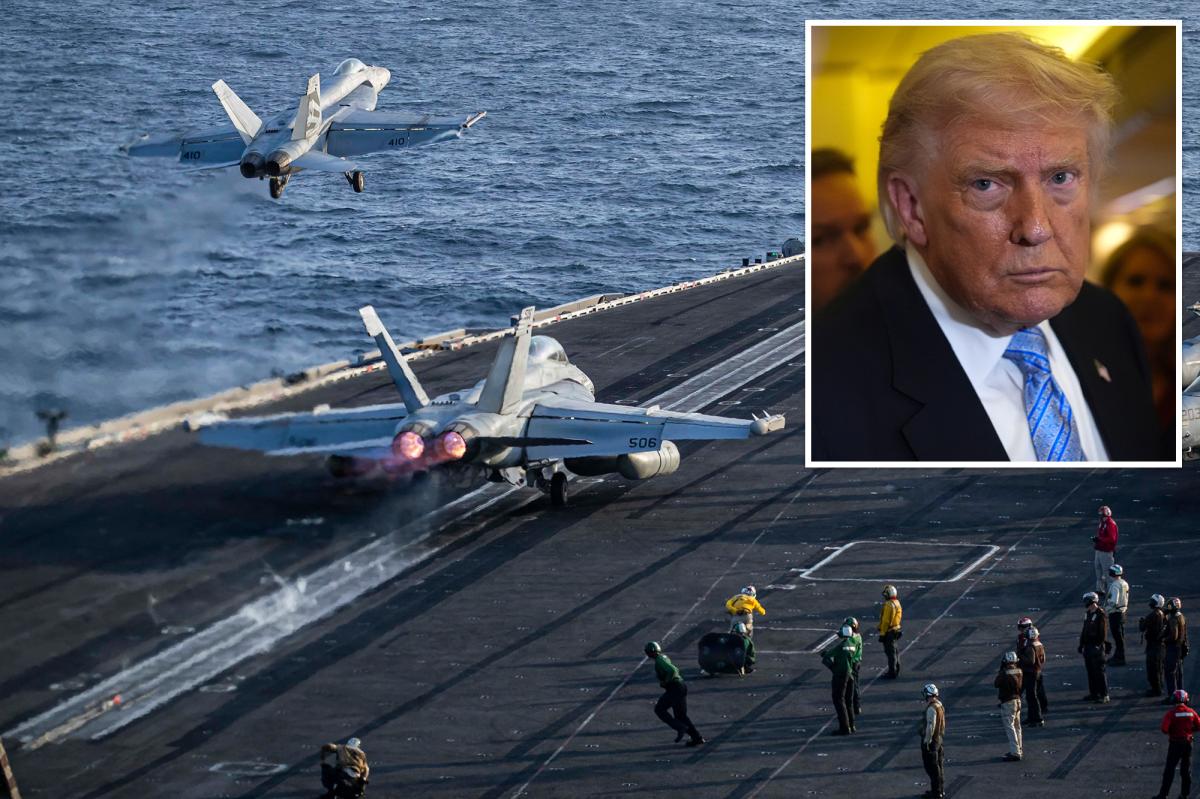
The U.S. launched “Operation Freedom” to assert control over this crucial maritime passage. However, the initiative was short-lived, lasting less than 48 hours, with only two American vessels making the passage before President Trump opted to suspend the operation in favor of pursuing diplomatic solutions.
Despite efforts to diplomatically reopen the strait, the situation remains unstable. Experts in military and maritime affairs caution that any renewed U.S. attempts to facilitate normal shipping operations would expose American military forces and commercial vessels to Iran’s increasingly sophisticated threats, including drones, missiles, and mines.
Such actions could also potentially provoke conflict, as Iran has consistently warned it would attack any vessels attempting to pass through the strait, according to Retired Rear Adm. Mark Montgomery. Montgomery, now a senior fellow at the Foundation for Defense of Democracies, shared this insight with The Post on Wednesday.
“The American public would not take kindly to Iranian attacks on our ships,” Montgomery commented. “They would likely expect President Trump to respond with comprehensive military action against Iran.”
Iran’s drone warfare a tactical dilemma for US
Iran, along with its affiliated terrorist groups, has been increasingly utilizing one-way attack drones, specifically the Shahed kamikaze drones. These drones are cost-effective, challenging to detect, and can be deployed in large numbers, enhancing their threat potential.
Tehran used these drones during its mass retaliation campaign, striking US bases and critical infrastructure of American allies across the Middle East.
The growing use of drones has altered naval threat calculations because relatively cheap unmanned systems can force advanced warships into constant defensive operations.
US destroyers defending shipping lanes may have to repeatedly launch interceptor missiles costing far more than the incoming drones themselves, while simultaneously monitoring for cruise missiles and ballistic missiles.
“This asymmetric approach creates a persistent, dispersed threat that is harder to target and neutralize compared to traditional naval threats of those previous conflicts,” Jack Kennedy, Head of MENA Country Risk at S&P Global Market Intelligence, said.
While the US has enjoyed an advantage of distance when it comes to warding off Iran’s drones, that perk would be lost during long-term escort missions in the Strait of Hormuz, Montgomery added.
“If you’re going to park your ships in the Strait of Hormuz, or do constant transiting in the Strait of Hormuz in support of convoy operations, now your ships are much closer. Now you don’t have that distance advantage,” he told The Post.
Follow The Post’s coverage on the latest in the war with Iran:
Prior to the war, about 20% of the world’s oil supply flowed through the Strait of Hormuz, with more than 130 ships passing through every day. Its closure has sown chaos in the global energy market, causing gas prices to spike, including by nearly 50% in the US.
Threats by air — and sea
It’s not just a threat from the air, but also from the sea — as Iran and its proxies have expanded into maritime drone operations.
Iran has historically invested heavily in naval mines and small fast-attack craft designed for asymmetric Gulf operations, with the Islamic Republic still retaining much of its underwater explosives and vessels along the Strait of Hormuz.
To fully secure the strait, the US would need to deploy continuous air defense operations, surveillance, mine countermeasure missions, electronic warfare support and sustained naval deployments under the threat of persistent drone and missile attacks.
With so many variables at play, it’s difficult for the US to provide commercial ships with full certainty that they can go through the Strait of Hormuz worry-free, Montgomery noted.
“There’s a manageable solution, but each one leaves a little residual risk, and what the US Navy accepts is risk to send ships through tends to be different than what the merchant ships do,” he said. “So that’s the challenge.”
The Baltic and International Maritime Council (BIMCO), the world’s largest international shipping association, said Iran’s mines in particular pose too much of a risk for any captain to want to navigate through.
“Given the Iranian indications that mines have been laid in parts of the Strait of Hormuz, a mine clearance effort will most likely be needed to fully re-open the Strait,” BIMCO said in a statement. “It is not clear exactly how long such an effort will take but it is likely that it will take several weeks.”
Mine-clearing missions are among the most dangerous and time-consuming tasks in naval warfare and could complicate any effort to keep commercial traffic moving during a prolonged confrontation.
What’s more, safe passage away from the mines could push the ships closer to the Iranian coastline, BIMCO added, making them an easier target for the Islamic Republic’s drones.
The threat Iran still poses — even after Operation Fury decimated its missile and suicide drone capabilities — is evident by the fact that the Strait of Hormuz remains closed, Sen. Elissa Slotkin (D-Mich.) said during a hearing on the war last week.
Follow The Post’s live coverage of President Trump and national politics for the latest news and analysis
“It may be diminished power, but if the United States military is not physically opening the strait right now, it’s because the Iranians do have the real capability to [send] drone strikes into Gulf countries, affecting their oil infrastructure and sending the price of oil worldwide even higher.”
Sen. Lindsey Graham, (R-SC), has been urging Trump to resume the war and open up the Strait of Hormuz through force, saying it’s “more than worth the risk.”
“I think the status quo is hurting us all. The longer the [Strait of Hormuz] is closed, the more we try to pursue a deal that never happens, the stronger Iran gets,” Graham told NBC News’ “Meet the Press” on Sunday.
It’s not lack of insurance — the risk is just too high
While reports have emerged since the war began that insurance costs were the primary reason why ships don’t risk sailing through the Strait, the Trump administration’s offer of $40 billion in reinsurance guarantees failing to gain traction reflects the reality of the situation.
“The reason ships are not moving is not through a lack of insurance — it is a question of the risk to crew and vessel safety being assessed by the ship masters and owners as too high,” Lloyd’s Market Association said in a briefing.
The ever-looming threat of Iran’s drones and mines is at the forefront of the captains who would rather wait for peace as supplies dwindle, rather than risk the lives of their crew.
Raman Kapoor, a captain of an Indian-flagged ship trapped in the Persian Gulf, has been vocal about keeping his 23-member crew safe, saying a shot through the Strait of Hormuz, even under US military escort, is not worth the risk.
“As a captain, it is my duty as well to assess the situation. I have to take the consent of [the] whole crew – whether they are willing to put their lives at risk. It’s a long process,” he told BBC Radio 4.
Until a stable cease-fire is secured and ships get the green light from both the US and Iran to cross, the shipping industry is unlikely to resume transit, BIMCO said.
“Companies need assurance that Iran’s attack capabilities have been sufficiently reduced and that the risks of interdiction, seizure, or attack—whether from mines or other asymmetric threats—are manageable,” Kennedy added.