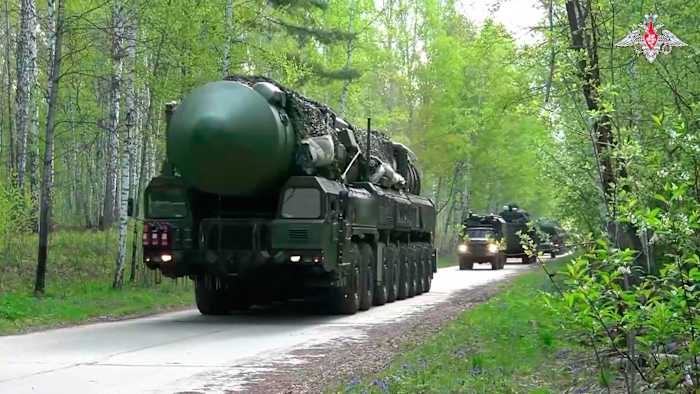

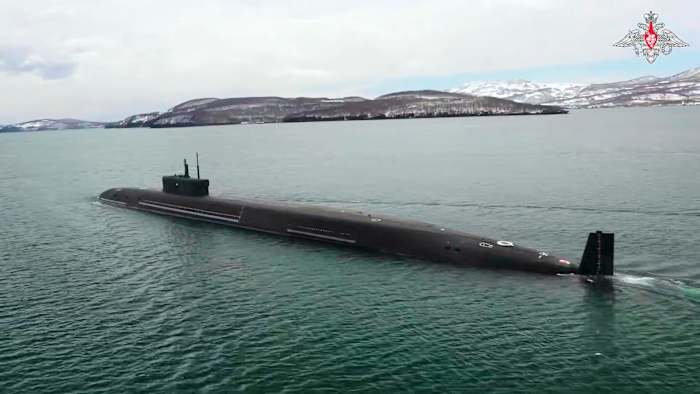
MOSCOW – As part of an expansive joint nuclear exercise, convoys of trucks transporting intercontinental ballistic missiles navigated through dense forest roads, nuclear-powered submarines deployed from ports in the Arctic and the Pacific, and military personnel swiftly boarded aircraft in Russia and Belarus on Thursday.
During these maneuvers, Belarusian President Alexander Lukashenko reviewed Russian Iskander ballistic missiles, known for their short-range nuclear capability, at a participating military site, expressing, “This machine has been a long-time aspiration of mine.”
Commencing on Tuesday, the three-day exercises coincide with an increase in Ukrainian drone attacks, including those targeting Moscow’s outskirts, resulting in three fatalities and damage to multiple structures and industrial sites. These incidents challenge Kremlin narratives portraying the Ukraine conflict—now in its fifth year—as a distant issue, disconnected from the everyday lives of Russian citizens.
The Russian Defense Ministry reported that the drill involved 64,000 personnel, over 200 missile launchers, upwards of 140 aircraft, 73 surface vessels, and 13 submarines, including eight equipped with nuclear-armed intercontinental ballistic missiles (ICBMs). The exercises are centered on “preparing and employing nuclear forces in response to aggression threats,” according to the ministry.
The maneuvers are also designed to enhance collaboration with Belarus, a strategic partner that hosts Russian nuclear arms, including the cutting-edge Oreshnik missile system, capable of intermediate-range nuclear strikes.
Since the deployment of troops into Ukraine in February 2022, Russian President Vladimir Putin has consistently highlighted Moscow’s nuclear capabilities to dissuade Western nations from escalating their assistance to Kyiv.
In 2024, Putin adopted a revised nuclear doctrine, noting that any nation’s conventional attack on Russia that is supported by a nuclear power will be considered a joint attack on his country. That threat was clearly aimed at discouraging the West from allowing Ukraine to strike Russia with longer-range weapons and appears to significantly lower the threshold for the possible use of Moscow’s nuclear arsenal.
The revised doctrine that placed Belarus under the Russian nuclear umbrella. Putin has said that Moscow will retain control of its nuclear weapons deployed in Belarus but would allow its ally to select the targets in case of conflict.