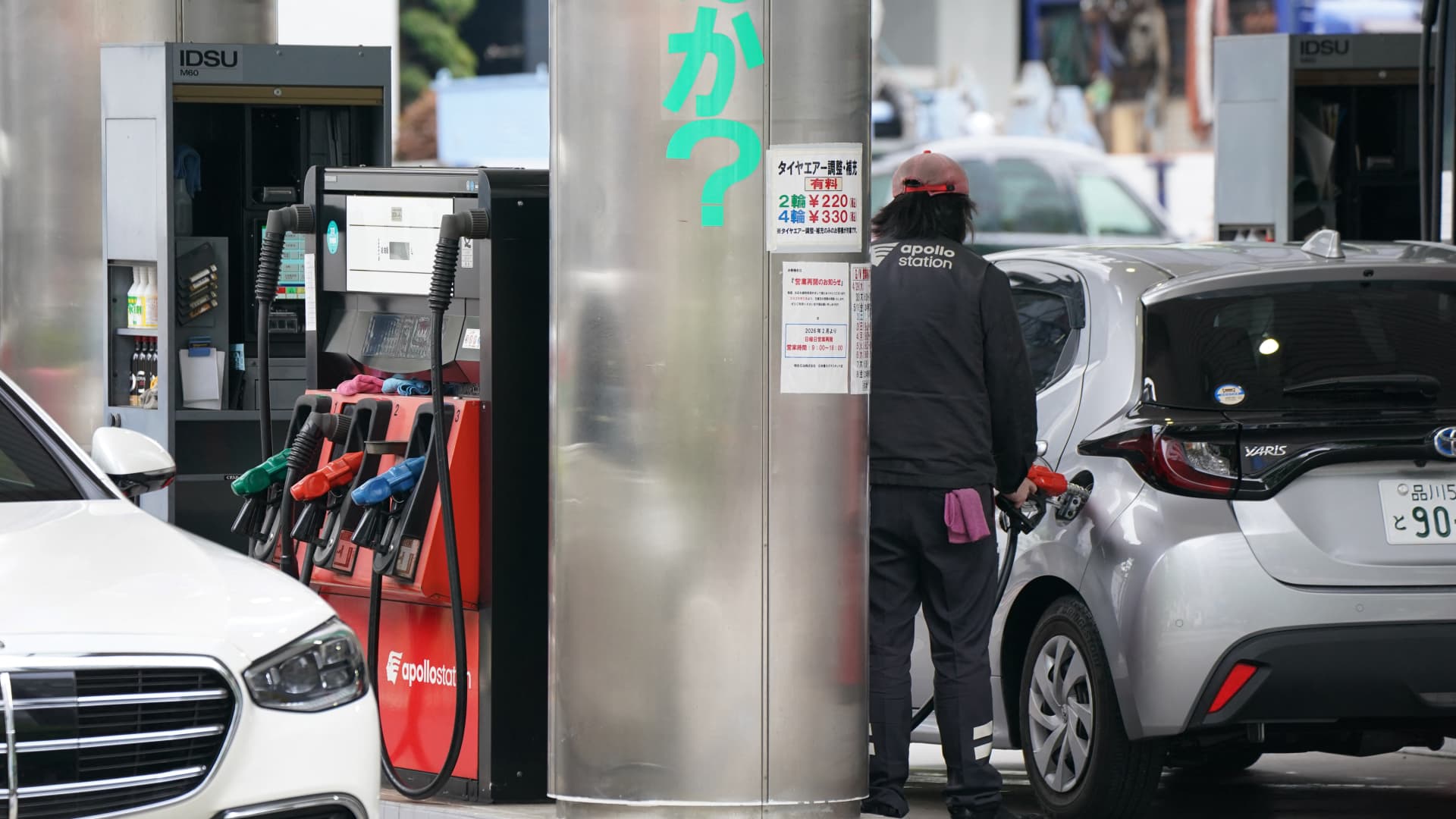
On April 24, 2026, a gas station attendant in Tokyo was captured on camera refueling a customer’s vehicle, a routine sight that coincided with significant economic developments in Japan.
Japan’s core inflation figures for April revealed a more pronounced drop than anticipated, marking the lowest point since March 2022. This decline could potentially dampen the prospects for a swift interest rate increase by the Bank of Japan.
The core inflation rate, which excludes the volatile prices of fresh food, settled at 1.4%. This figure was notably below the 1.7% forecast by economists surveyed by Reuters, and a decrease from the 1.8% recorded in March.
Overall, headline inflation stood at 1.4%, a slight reduction from March’s 1.5%, and represented the fourth consecutive month where inflation remained under the central bank’s 2% target.
The inflation rate excluding both food and energy costs, often referred to as the “core-core” inflation rate and closely monitored by the Bank of Japan, also saw a decrease, dropping to 1.9% from the previous month’s 2.4%.
The so-called “core-core” inflation rate, which is watched by the Bank of Japan and strips out food and energy prices, fell to 1.9% from 2.4%.
Energy prices fell 3.9% in April compared with a 5.7% decline in March, amid the Iran war.
Japan’s Nikkei 225 opened up 0.96% following the data release, leading major Asian indexes, while the yen weakened marginally to 159.03 against the dollar.
The inflation figure was “a little bit of a surprise, but not too much of a concern,” said Andrew McCagg, customer portfolio manager at Nomura Asset Management on CNBC’s “Squawk Box Asia.”
He explained that headline inflation was expected to dip below 2% due to government fuel subsidies, but the lower-than-expected figure was also due to government subsidies for school tuition.
The Iran war, he added, would push inflation back up in the coming months.
“Unlike in other markets, when we talk about inflationary concerns in Japan, it’s still more of a concern that we fall back into deflation rather than inflation getting out of hand,” McCagg added.
The Bank of Japan sharply raised its core inflation outlook to 2.8% from 1.9% at its April meeting, citing higher crude oil prices linked to the conflict in the Middle East and businesses passing on higher costs to consumers.
The data also follows reports that Prime Minister Sanae Takaichi signaled she was open to a supplementary budget to address rising energy costs.
According to Japanese public broadcaster NHK, opposition lawmakers had proposed a 3 trillion yen ($18.8 billion) package, including an extension of petrol subsidies and relief for electricity bills.

Japan is currently struggling with a weak yen, having reportedly spent 10 trillion yen on intervening in the yen at the end of April and the start of May. A weak currency has increased import costs and eroded consumers’ purchasing power.
Still, a BOJ rate hike may be on the horizon, as the country’s economy seems to be holding up, posting a better-than-expected 2.1% annualized expansion in the first quarter of 2026.
The growth was partly powered by strong exports, which could give the BOJ confidence to hike rates, according to DBS analysts in a Thursday note.