

NICOSIA – According to European Union representatives, the cost of oil and gas in Europe is anticipated to stay elevated beyond pre-Iran war levels until at least the end of 2027, with other goods also likely to become more expensive.
Valdis Dombrovskis, the EU Economy Commissioner, highlighted that the spike in energy prices is a major contributor to the projected inflation rate of 3.1% this year, tapering off to 2.4% by 2027. This marks a notable increase from the previously expected rate of 1.9% for this year.
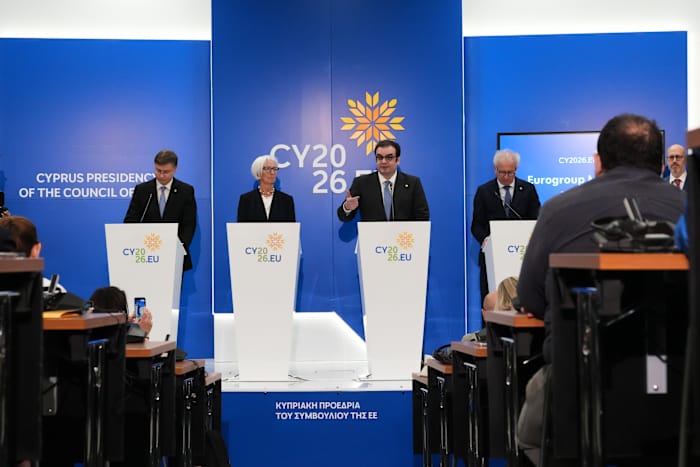
“We believe that this rise in energy inflation will progressively impact various sectors of the economy,” Dombrovskis noted following discussions among the 21-member Eurogroup, comprising finance ministers from the eurozone.
Christine Lagarde, President of the European Central Bank, remarked that even if Middle Eastern tensions were resolved immediately, the residual effects would continue to sustain high prices for goods.
“It’s likely that prices will remain elevated by the time this crisis concludes,” Lagarde observed.
She assured that the ECB is prepared to take “all necessary measures” to maintain price stability at 2%, closely monitoring the repercussions of the initial economic disruptions caused by the surge in energy costs. Additionally, she emphasized the strategic reserves of oil the EU has at its disposal to address potential demand needs.
Eurogroup President Kyriakos Pierrakakis said that for the EU, an end to the crisis would mean a return to free navigation without the imposition of any tolls through the Strait of Hormuz, from which roughly a fifth of the world’s oil and gas passes.
Pierrakakis affirmed that economic growth within the eurozone would reach 0.9% this year and 1.2% in 2027, lower than the previous forecast, “but clearly far from a recession scenario.”
Although higher inflation projections have led to predictions that the ECB would raise its interest rate benchmarks to combat inflation, Lagarde didn’t offer any indication of how the bank would act.
“We will continue to follow a data-dependent and meeting-by-meeting approach in order to determine the most appropriate monetary policy stance in order to deliver on our 2% medium-term target,” Lagarde said.