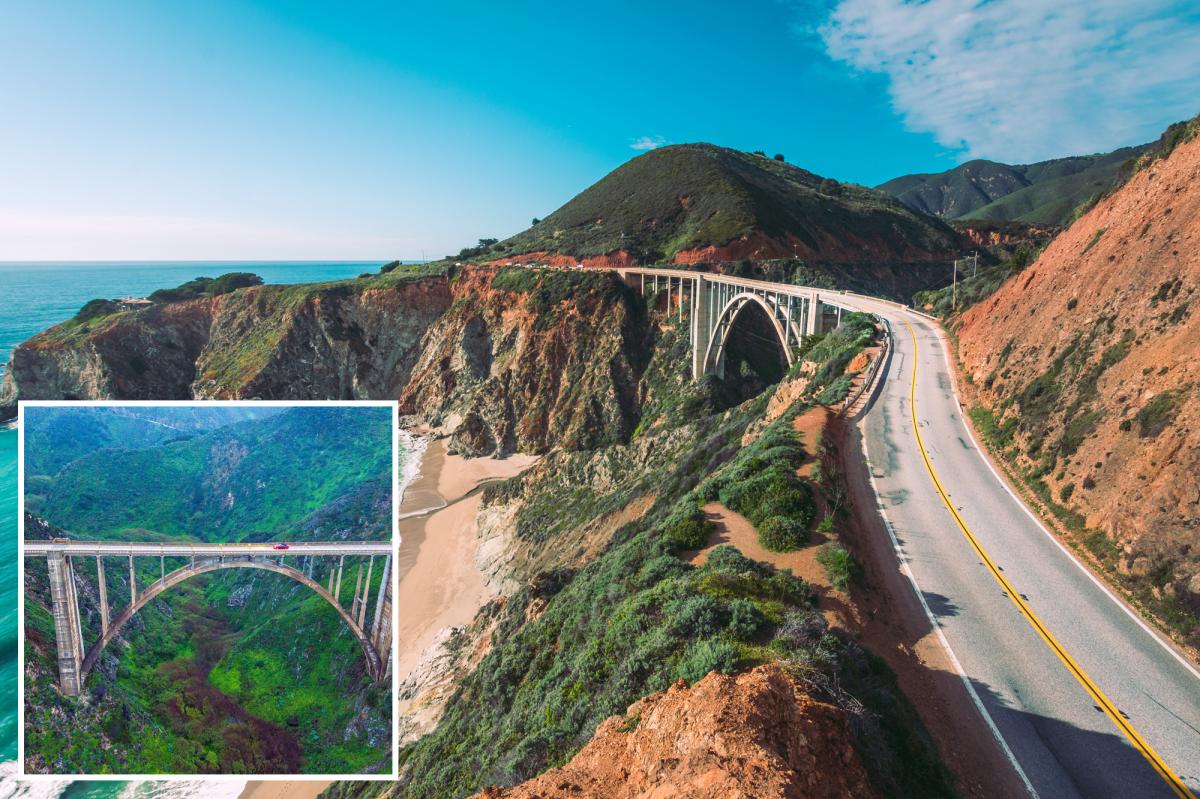


Visitors hoping to capture the ideal photograph of one of California’s iconic bridges might soon face disappointment.
Monterey County supervisors are considering a significant proposal to enforce a year-long parking ban at the renowned Bixby Bridge. This comes in response to years of chaos driven by social media influencers, which has transformed this picturesque Highway 1 landmark into what residents describe as a hazardous free-for-all.
On Tuesday, the board decided to have their staff investigate the possibility of implementing a temporary, year-long prohibition on parking in the vicinity of the bridge. This site has become a magnet for selfie enthusiasts, photographers, and tourists, creating congestion along the narrow coastal highway.
However, before any measures can be enacted, officials need to address several critical issues, including enforcement strategies, ensuring emergency access, and navigating legal challenges related to California’s coastal regulations.
Located approximately 60 miles north of the San Luis Obispo-Monterey county line, the bridge has become notorious for reckless tourist activities. Drivers often stop abruptly, execute dangerous U-turns, and crowd the roadway in pursuit of the perfect picture.
This behavior has resulted in severe traffic congestion, with jams extending up to a mile in both directions, fueling growing concerns that a serious accident is inevitable.
Some incidents have already pushed locals to the brink.
“I once had the (driver of a) car in front of me stop just before the bridge, heading south, get out of his car, lock it, then walk off to take a photo. Left his locked car in the middle of the road,” Kate Novoa, better known as “Big Sur Kate”, told The Tribune.
“It happens more often than one can imagine … selfie people are killing Big Sur.”
The recent reopening of Highway 1 after three years of landslide repairs has only intensified the madness.
“Visitation has surged significantly since the roadway reopened on Jan. 15. Northbound traffic at Ragged Point has grown more than 900% year-over-year — clear evidence of restored access and pent-up demand for travel to this iconic coastal corridor,” Visit California said in a recent Caltrans release.
Monterey County Supervisor Glenn Church warned the situation is becoming a ticking time bomb.
“I’m really concerned about the safety issue,” Church said. “If people get hurt there, (or) when the first young kid gets killed crossing the road.”
Right now, tourists looking for a closer look at the bridge have almost nowhere safe to pull over.
Drivers routinely park haphazardly along the narrow highway — sometimes partially inside traffic lanes — creating massive backups and dangerous driving conditions.
Officials previously blocked off 12 unofficial parking spaces near the bridge with barriers in an attempt to keep traffic moving. Parking has also been banned since September 2024 along portions of nearby Old Coast Road.
Supervisor Kate Daniels, a lifelong Big Sur resident, pushed the issue before the board after months of talks with the California Coastal Commission and county staff.
With no alternate routes around the bridge, Daniels argued a temporary emergency ban would buy officials time to find a long-term solution.
“12 months gives us the time to come up with a safer means to travel this stretch of highway,” she said.
Still, any ban could face a rocky road ahead.
County officials warned supervisors that parking restrictions in coastal areas are frequently challenged by the Coastal Commission, especially when public access is affected.
That concern prompted Supervisors Luis Alejo and Chris Lopez to abstain from the vote.
Alejo warned that even installing “no parking” signs would require a coastal development permit that could spark years of legal battles.
Then came the question of who would actually enforce the rules.
“Enforcement issues come back to who,” Lopez said, pointing to limited staffing from the California Highway Patrol and Monterey County Sheriff’s Office.
Lopez suggested other options may work better, including reopening some parking areas and hiring private contractors to direct traffic and issue citations.
The board is expected to revisit the issue in the coming weeks.


