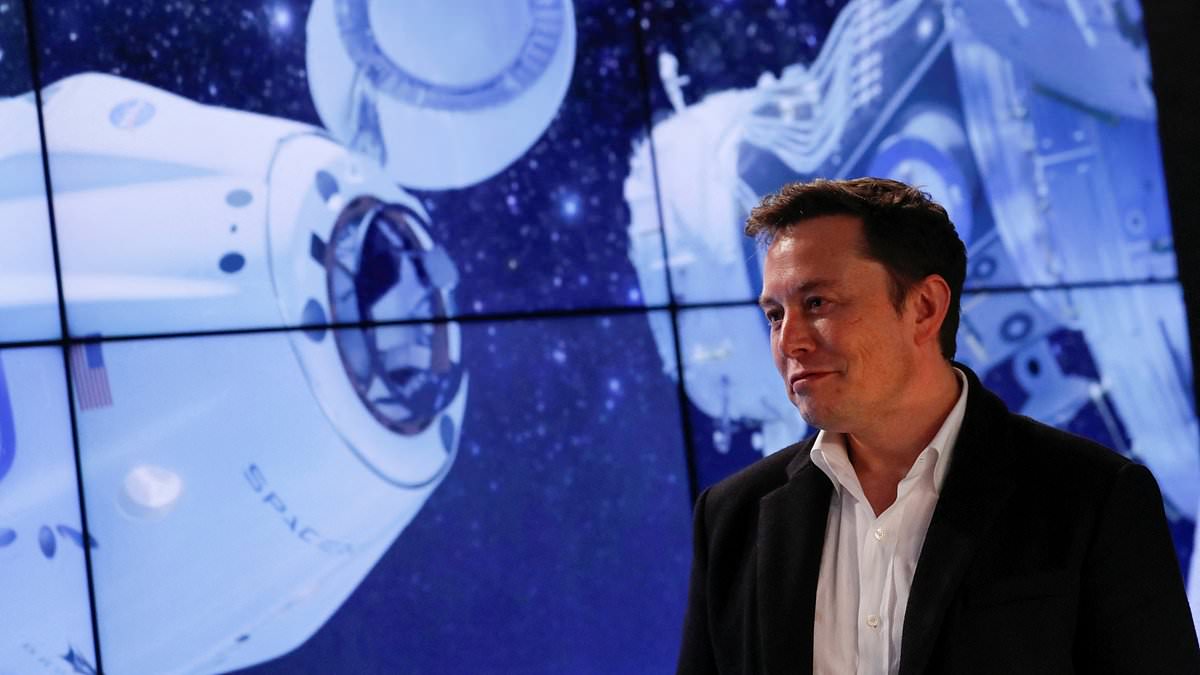

Elon Musk’s SpaceX is poised to potentially make him the world’s first trillionaire, with Musk viewing space as the most expansive economic frontier in history.
Musk envisions utilizing the Sun’s almost limitless energy to drive artificial intelligence into the global economy, heralding an era of unparalleled prosperity.
He foresees humanity becoming a species of space explorers, establishing civilizations characterized by “continuous innovation across new frontiers.”
Addressing potential investors, Musk claims he has identified the largest “total addressable market” ever, valued at $28.5 trillion, excluding potential earnings from China or Russia. According to him, Mars offers more lucrative possibilities.
However, separating fiction from reality reveals challenges. Firstly, SpaceX reported a net loss of almost $4.28 billion in the first quarter of this year, with a cumulative deficit exceeding $41 billion.
Secondly, while some might dismiss Musk’s vision as far-fetched, the potential inclusion of SpaceX in the Nasdaq index could mean its integration into countless British pension plans and ISAs.
Cashing in: Elon Musk is set to become the world’s first dollar trillionaire with the float of his rocket company Space X
Three: the corporate governance is, let’s say, unorthodox. Musk is stupendously well-rewarded and unsackable.
Either you think that’s ridiculous, considering his volatile temperament, in which case it is a risky set-up.
Or you go along with the maverick genius justification, implying the endeavour is dangerously dependent on a single, irreplaceable visionary.
The prospectus verges at times on unintended comedy. It warns that some of the industries in Musk-topia, such as energy production and manufacturing on Mars, do not exist.
Many products and services envisaged depend on innovations and technologies that don’t exist either.
It reminds me of a story in Charles Mackay’s 1841 book Extraordinary Popular Delusions And The Madness Of Crowds about a promoter who issued a share prospectus during the South Sea bubble.
It was for ‘a company for carrying on an undertaking of great advantage, but nobody to know what it is’.
What a time to be alive.
Branching out
Beaming back from Mars to Middlesbrough, Makerfield and the earthbound existence of mortals who are not Musk, it turns out that in their everyday lives, people like having bank branches.
Who knew? After years of relentless closures by her rivals, Debbie Crosbie, the chief executive of Nationwide building society and a valiant lone swimmer against the tide, says it may be turning.
Her stance may have seemed hopelessly retro to rivals, who have treated branches as a costly encumbrance.
They appeared to want to have as little to do with customers as possible, by shutting branches and making it super-difficult to discuss finances on the phone.
But Barclays has frozen closures and is looking to increase its bricks-and-mortar presence, after closing 80 per cent of its outlets. Others are having similar thoughts.
Nationwide has promised to keep its nearly 700 sites open at least until the end of the decade. It wants its network to support communities: it is expanding initiatives such as dementia clinics and safe spaces for victims of financial and domestic abuse.
Crosbie is not a sentimental softie. A seasoned banker, she sees a thriving branch network as a commercial opportunity, not an excursion into do-goodery.
Customers are angry when the nearest branch is miles away. That feeling will intensify the more the other banks fob them off with bots.
Foot-in-mouth
Nationwide may be inhaling Jimmy Stewart, in his role as the lender with a heart in the Frank Capra film It’s A Wonderful Life, but none the worse for that.
Bill Winters, the CEO of Standard Chartered, seems to have watched Michael Douglas in Wall Street once too often.
Regulators in Hong Kong and Singapore, where StanChart has most of its activities, will be interested in his description of colleagues as ‘lower-value human capital’.
By inadvertently revealing how he – and no doubt many of his peers – really think, Winters has done the world a favour.
No one can stop the march of the machines, but it cannot be left to overwhelm us unchecked, with power concentrated in the hands of a few arrogant men who seem to have about as much empathy as a chair leg.
DIY INVESTING PLATFORMS
AJ Bell
AJ Bell
Easy investing and ready-made portfolios
Hargreaves Lansdown
Hargreaves Lansdown
Free fund dealing and investment ideas
interactive investor
interactive investor
Flat-fee investing from £4.99 per month
Freetrade
Freetrade
Investing Isa now free on basic plan
Trading 212

Trading 212
Free share dealing and no account fee
Affiliate links: If you take out a product This is Money may earn a commission. These deals are chosen by our editorial team, as we think they are worth highlighting. This does not affect our editorial independence.
Compare the best investing account for you


