
In an effort to reclaim its position from competitors like Walmart, Costco, Aldi, and Amazon, America’s largest traditional grocery retailer is preparing to implement significant price reductions on thousands of everyday products.
According to Kroger’s CEO, Greg Foran, the supermarket giant is strategizing to introduce substantial price cuts as consumers, burdened by inflation, increasingly seek value in their grocery purchases.
This strategic pivot is one of the most significant for Kroger in recent years, arriving at a time when consumers are grappling with rising fuel costs, persistent inflation, and a shaky economic outlook.
“The reality is, the basket has to come down,” Foran shared with Bloomberg News in his first major interview since taking on the CEO role in February.
Kroger, which encompasses 21 regional grocery brands such as Fred Meyer, City Market, Ralphs, Harris Teeter, and King Soopers, generates close to $150 billion in annual revenue, maintaining its status as the largest supermarket operator in the United States.
However, despite its expansive reach, Kroger has been losing ground to retailers renowned for their low prices and convenience. Stores like Walmart and Costco have successfully drawn middle-class customers eager to maximize their grocery budgets.
Foran compared the grocery battle to a Formula One race, admitting Kroger currently sits behind the industry leaders.
‘There’s a lead group of cars that are doing a very good job,’ he said. ‘Our objective is to get out of the midfield and start lapping faster.’
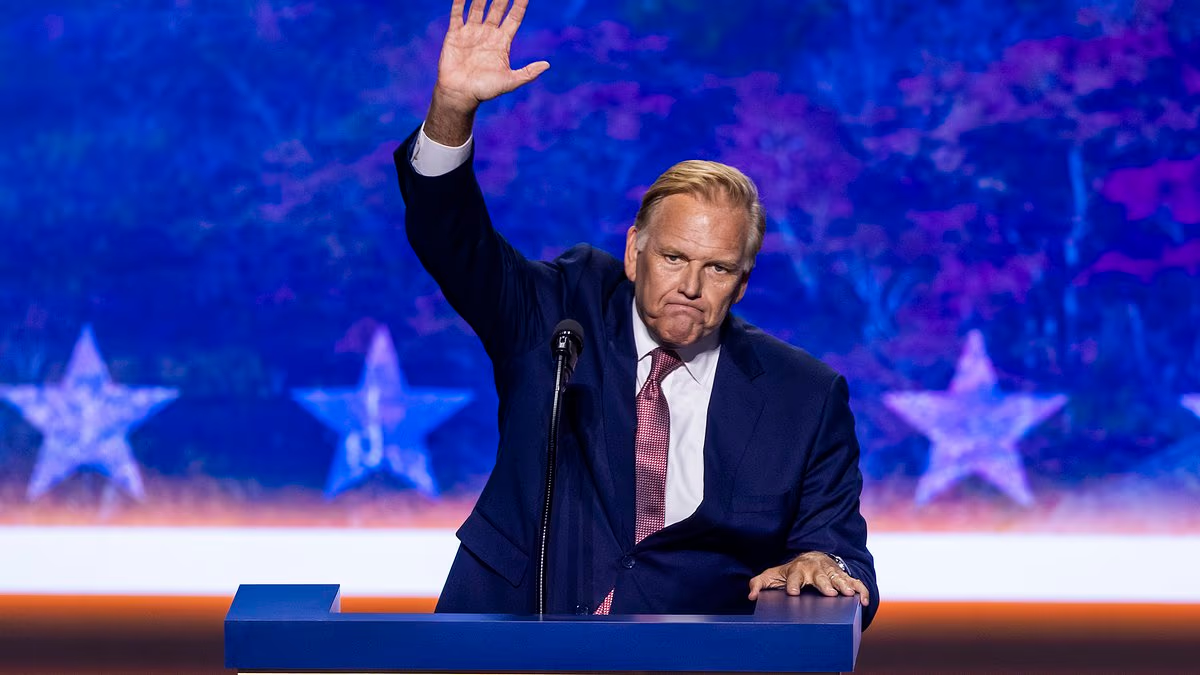
Kroger CEO Greg Foran said the supermarket giant is laying the groundwork for major price cuts across its stores as inflation-weary consumers increasingly prioritize value
The retailer plans to test price reductions before expanding them more widely across stores nationwide.
Executives say the cuts will affect thousands of products rather than isolated promotions or temporary discounts.
To fund the lower prices, Kroger is looking internally for savings.
Foran said the company plans to reduce costs by importing more merchandise directly, streamlining operations and using technology more efficiently before reinvesting those savings into cheaper shelf prices.
The strategy mirrors tactics already being deployed by Walmart, which recently revealed it had reduced prices on around 7,200 items – more than 20 percent higher than a year ago.
Walmart executives said low prices are continuing to help the retail giant gain market share across all income groups, especially as consumers become more cautious about discretionary spending.
Foran acknowledged Kroger is facing a particularly challenging environment as shoppers grow more nervous about rising living costs.
‘Consumers are wary of what they’re seeing at the gas pump,’ he said. ‘They’re wary of some of the commentary about what might be coming down the line.’
Join the discussion
Will deep discounts at big chains help struggling families or hurt local grocers and workers?
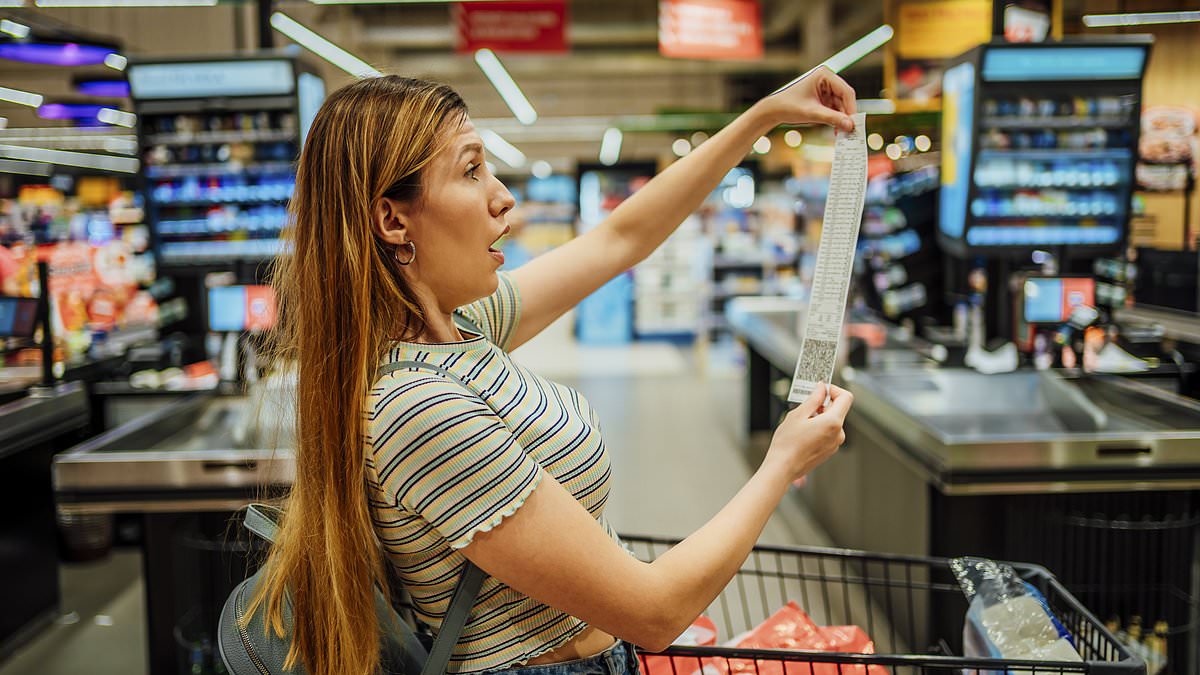
Walmart executives said low prices are continuing to help the retail giant gain market share across all income groups
Kroger is now attempting to reposition itself as both affordable and more customer-friendly under Foran
The pressure on grocery retailers has intensified in recent months as Americans pull back on spending across many categories.
Industry analysts say consumers are increasingly shopping around, buying store brands, hunting promotions and splitting trips between multiple chains to save money.
Discount-focused retailers have been some of the biggest winners. Costco continues drawing shoppers with bulk bargains and low-priced essentials, while Aldi and Trader Joe’s have expanded aggressively across the country.
Kroger is now attempting to reposition itself as both affordable and more customer-friendly under Foran, who is credited with helping revive Walmart’s US stores before leaving in 2020 to run Air New Zealand.
During his time at Walmart, Foran became known for aggressively focusing on lower prices, cleaner stores and fresher food – strategies Kroger now hopes to replicate.
The company has internally developed what Foran calls the ‘Five Fs’: fresh, fast, affordable, friendly and ‘for you,’ with the final category focused on more personalized shopping experiences tailored to local communities.
Kroger is also planning a major expansion push.
The company expects to open between 70 and 80 new stores next year – roughly double the number opening in 2026 – while continuing to invest heavily in e-commerce and delivery operations.

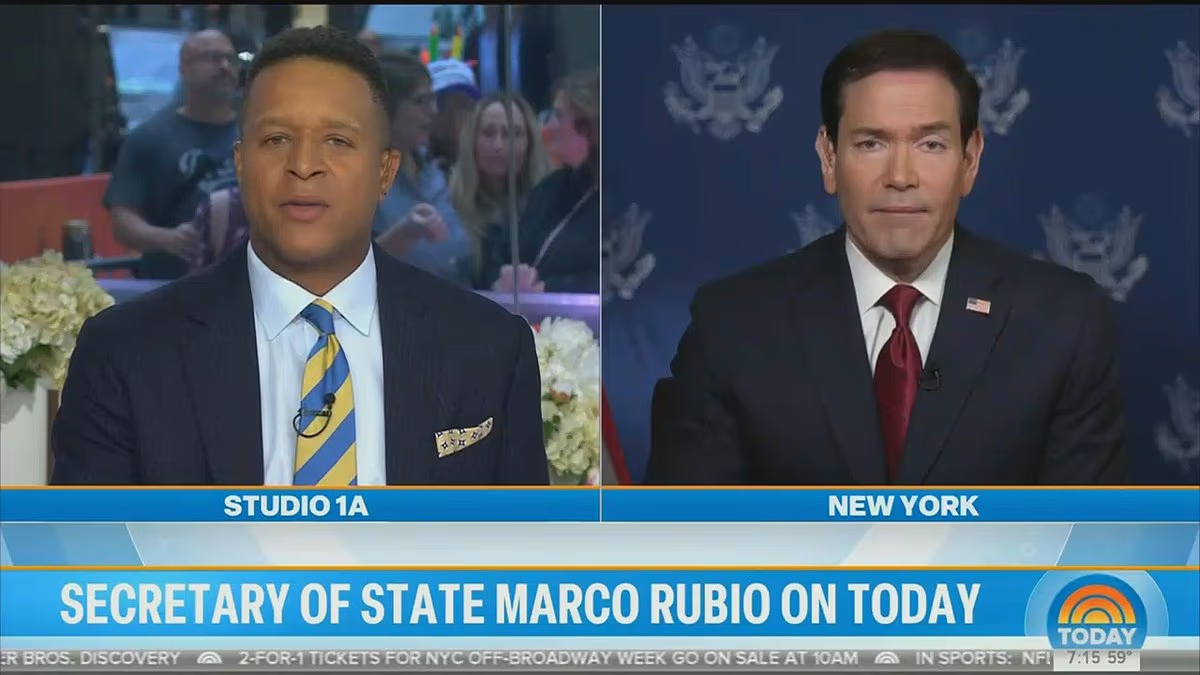
Kroger CEO Foran says the cuts will affect thousands of products rather than isolated promotions or temporary discounts
The expansion will target fast-growing regions including Texas, Florida and the Carolinas, while Kroger also sees opportunity to strengthen its presence in the Northeast.
The renewed focus on affordability comes after a turbulent period for the company.
Kroger’s proposed merger with rival Albertsons collapsed following regulatory opposition, while longtime CEO Rodney McMullen abruptly departed last year.
Now, the company is trying to reassure investors and customers alike that it can compete in a grocery market increasingly dominated by discount giants.
Retail analysts say the challenge for Kroger will be balancing lower prices with already-thin grocery profit margins.
Supermarkets traditionally operate on much tighter margins than warehouse clubs or big-box retailers, making sustained price wars difficult.
Still, Foran insists Kroger must adapt to changing consumer behavior if it wants to regain momentum.
‘Our objective is to execute what we think is a very clear, sensible plan,’ he said. ‘We want to be America’s best grocer.’