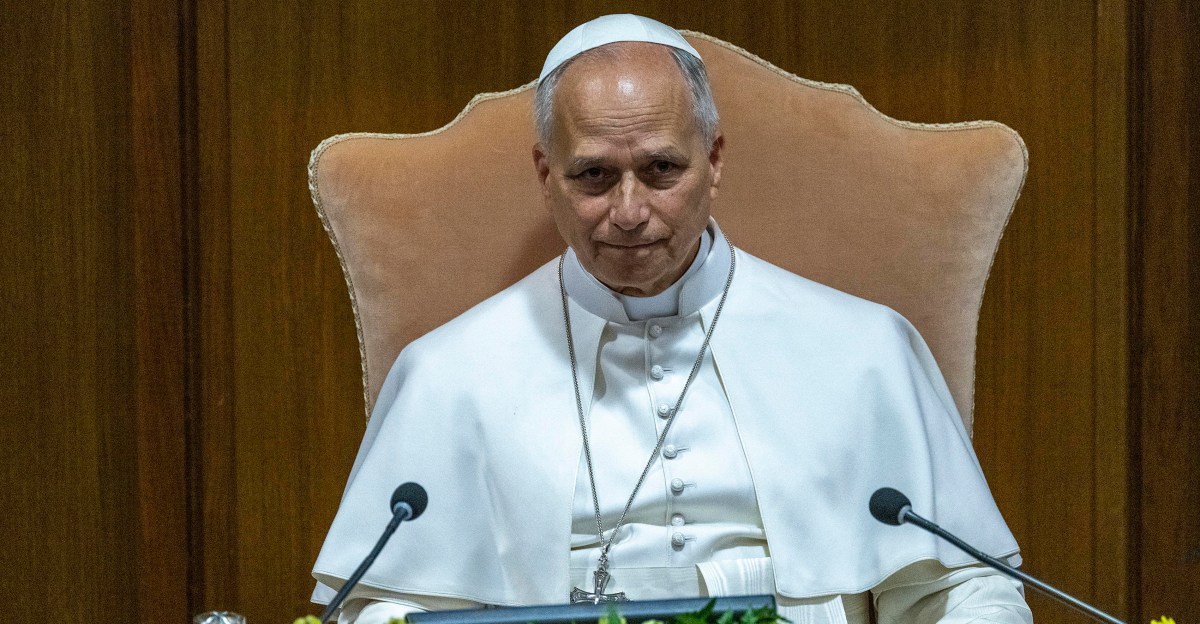

Pope Leo XIV has issued a cautionary message about the potential perils of artificial intelligence and unchecked technological advancement in his inaugural papal document, released this past Monday. Titled Magnifica Humanitas, the document serves as a manifesto outlining the pope’s vision for “protecting the human spirit in the era of artificial intelligence.” Within its pages, Pope Leo addresses the threats posed by AI-driven warfare, the impact on employment, and the urgent need for new legal and ethical standards to regulate technology.
In this papal encyclical—a form of open letter from the Catholic Church—Pope Leo highlights the widespread economic and social disruption being caused by the swift adoption of AI, emphasizing the lack of adequate protections for individuals, which he believes jeopardizes human dignity. He draws an analogy to the Tower of Babel, urging society to avoid falling into what he calls the “Babel syndrome.” This term refers to the “idolatry of profit that sacrifices the weak, a uniformity that erases differences, and the illusion that a single language—even a digital one—can encapsulate everything, including the profound mystery of the human being, into data and performance metrics.”
The letter delves into various facets of contemporary life where AI has established a significant presence, such as job displacement, AI-driven warfare, and the exposure of children to AI technologies and content. Above all, the encyclical emphasizes the necessity for human dignity to be a cornerstone in decision-making and governance. It serves as a plea for “moral and social discernment that protects the primacy of the human individual, ensuring that human intelligence, with its conscience and freedom, remains at the helm of technological innovations, guiding responsibly their use and limitations,” writes Pope Leo.
Spanning over 42,000 words, the letter advocates for “prudence, thorough evaluation, and occasionally, a more measured approach to adopting AI” as essential components of “responsible stewardship for the human family.” Some of the key proposals include:
Addressing the profound implications of AI on humanity is a central theme for Pope Leo, who intentionally chose his papal name to echo the industrial revolution era. During that time, his predecessor Pope Leo XIII issued a similar encyclical about safeguarding workers amidst technological progress. Pope Leo XIV has actively engaged with leaders in the AI sector, exemplified by the presence of Anthropic co-founder Christopher Olah during the document’s presentation. According to Politico, representatives from tech giants such as Amazon, Meta, and Google have consulted with Vatican officials prior to the encyclical’s release, in efforts to influence the church’s stance. Notably, a faction is also attempting to sway the pope on artificial general intelligence, though Magnifica Humanitas does not explicitly address AGI.
Importantly, the encyclical does not outright reject AI. Instead, Pope Leo advocates for the “disarmament” of AI technology, both in military and socio-economic contexts. He warns against utilizing AI for power accumulation or societal monopolization, urging a more balanced and ethical approach.
“To disarm means discrediting the assumption that technical power automatically confers the right to govern. To disarm does not mean rejecting technology, but preventing it from dominating humanity.”