
Associates of Israeli Prime Minister Benjamin Netanyahu, known for their hawkish views, are urgently trying to convince him to obstruct a peace deal between the U.S. and Iran that could be finalized as early as today.
Israel’s National Security Minister, Ben Gvir, has urged Netanyahu to take a firm stand against former President Donald Trump by declaring Israel’s intent to reignite conflict in Lebanon. This demand arises amidst discussions that the proposed U.S.-Iran agreement aims to establish lasting peace in the Middle East, including resolving issues between Israel and Hezbollah.
Prominent Israeli figures, including opposition leader Yair Lapid, are also urging Netanyahu to dismantle this peace initiative.
Lapid has criticized the potential U.S.-Iran accord, labeling it detrimental to Israel, the broader region, and Iranian citizens. He argues that the deal inadequately addresses Iran’s nuclear ambitions, missile capabilities, and its support for proxy groups in the region.
Furthermore, Lapid accused Prime Minister Netanyahu of losing influence with Trump, suggesting he has been excluded from critical discussions.
This Israeli resistance surfaces as U.S. Secretary of State Marco Rubio hinted on Monday, during his visit to India, that an announcement regarding the deal might be imminent. Rubio mentioned to reporters that substantial progress has been made, focusing on reopening the Strait of Hormuz and initiating a temporary nuclear negotiation.
Trump blasted critics who suggested his agreement would mirror the 2015 Obama-era nuclear pact that he tore up during his first term.
‘The deal with Iran will either be a great and meaningful one, or there will be no deal. It will be the exact opposite of the JCPOA disaster negotiated by the failed Obama Administration, which was a direct and open path to a Nuclear Weapon for Iran. No, I don’t do deals like that!’ Trump wrote.
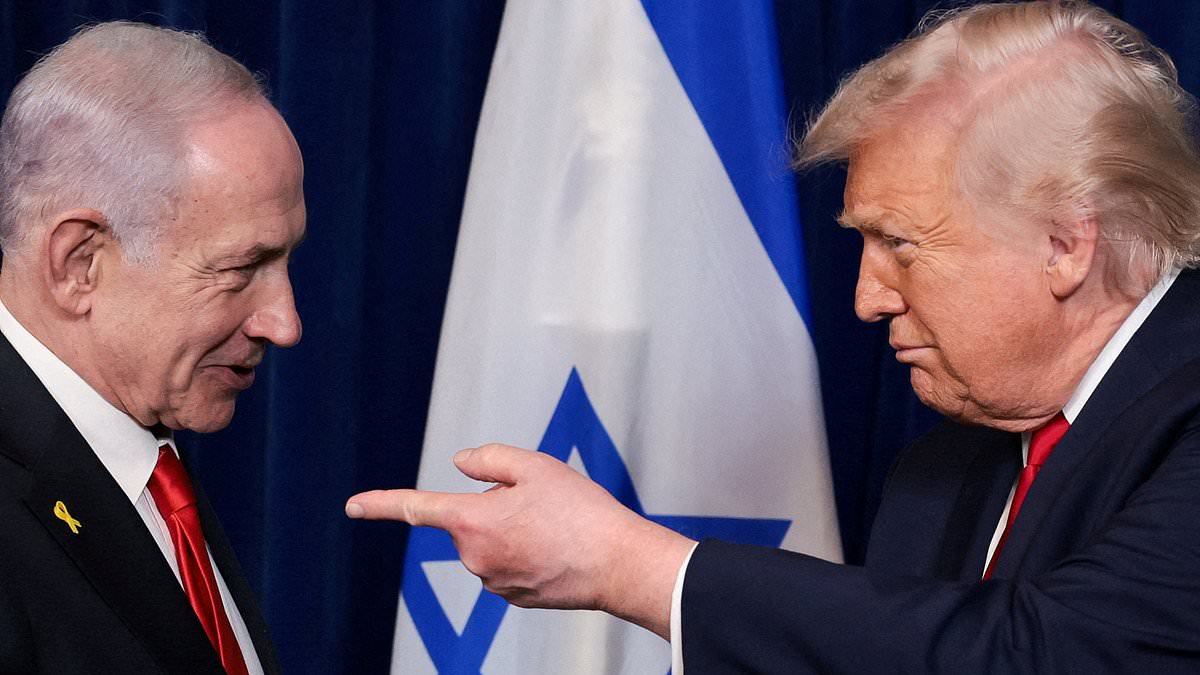
Benjamin Netanyahu’s hawkish associates are scrambling to pressure the Israeli prime minister into derailing Donald Trump’s looming peace deal with Tehran as the agreement nears finalization, potentially today
An oil tanker burns after being hit by an Iranian strike in the ship-to-ship transfer zone at Khor al-Zubair port near Basra, Iraq, late Wednesday, March 11
Rubio told reporters there is a ‘pretty solid thing on the table’ covering the reopening of the strait of Hormuz and a time-limited nuclear negotiation

Netanyahu’s national security minister Ben Gvir said the Israeli leader must ‘bang on Trump’s table and inform him that we are returning to war in Lebanon’
Trump announced yesterday afternoon that the Iranian peace agreement was ‘largely negotiated’ but still ‘subject to finalization.’
‘In addition to many other elements of the Agreement, the Strait of Hormuz will be opened,’ he said on Truth Social.
At the center of negotiations is a disagreement over how to deal with Iran’s enriched uranium stockpile.
The US is demanding that Iran turn over its stockpile to the US or have it destroyed. Iran has declined to hand it over but is reportedly open to discussing ways in which it can be disposed of.
The regime is also demanding that the US unfreeze upwards of $100 billion in frozen Iranian assets before agreeing to reopen the Strait of Hormuz.
A deal would mark a significant breakthrough following months of escalating tensions in the Gulf, where the closure of the Strait of Hormuz has sent global oil prices surging and disrupted shipping routes critical to the world economy.
Gas prices in the US have skyrocketed to $4.50 a gallon on average, while the price of oil has remained near $100 dollars a barrel since the start of the war.
In a sprawling Truth Social post, Trump said negotiations with Iran are ‘proceeding nicely’ but warned it would be ‘a Great Deal for all or, no Deal at all.’
Trump also called on Saudi Arabia, Qatar, Pakistan, Türkiye, Egypt, and Jordan to immediately sign onto the Abraham Accords as part of the broader settlement.
He added that Iran itself would be welcomed into the coalition if it finalizes its agreement with the US.