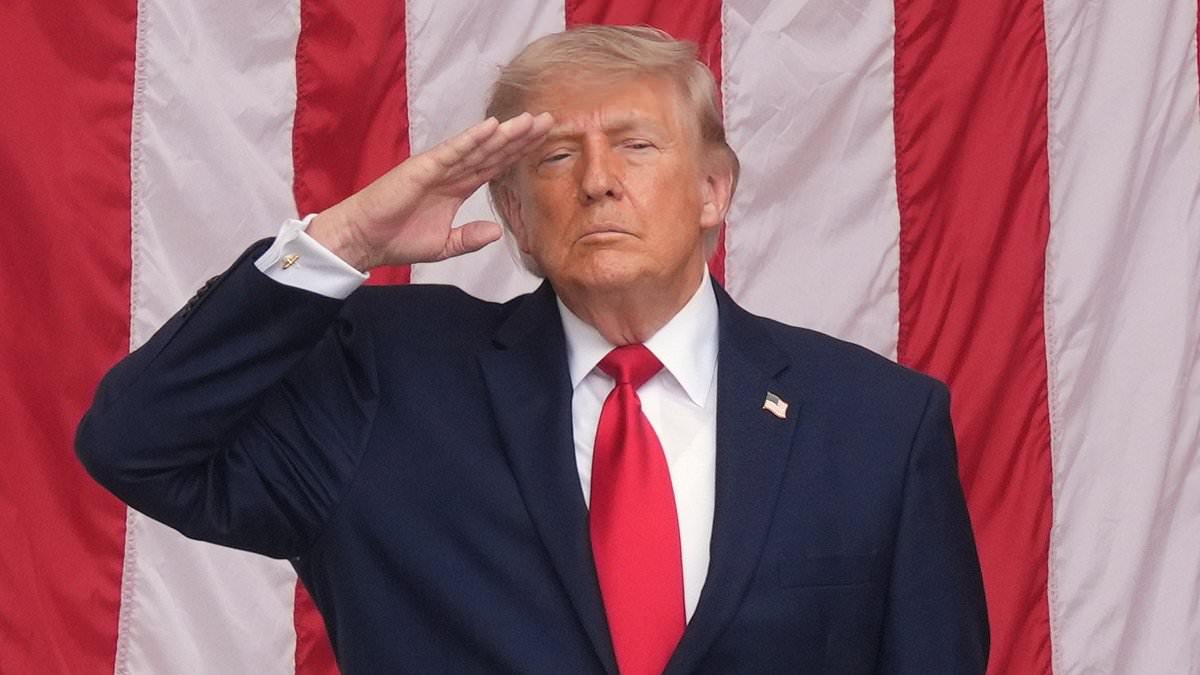

President Donald Trump recently unveiled a strategy to dismantle Iran’s enriched uranium reserves as part of his broader effort to broker a peace agreement between Arab nations and Israel. A consistent element of Trump’s agenda has been the cessation of Iran’s nuclear activities, which he deems essential for any prospective peace deal. On Monday, he disclosed his approach to eliminating the enriched uranium that Iran has already amassed. The International Atomic Energy Agency reports that Iran possesses approximately 970 pounds of uranium enriched to around 60 percent.
The Isfahan Bombing Plans
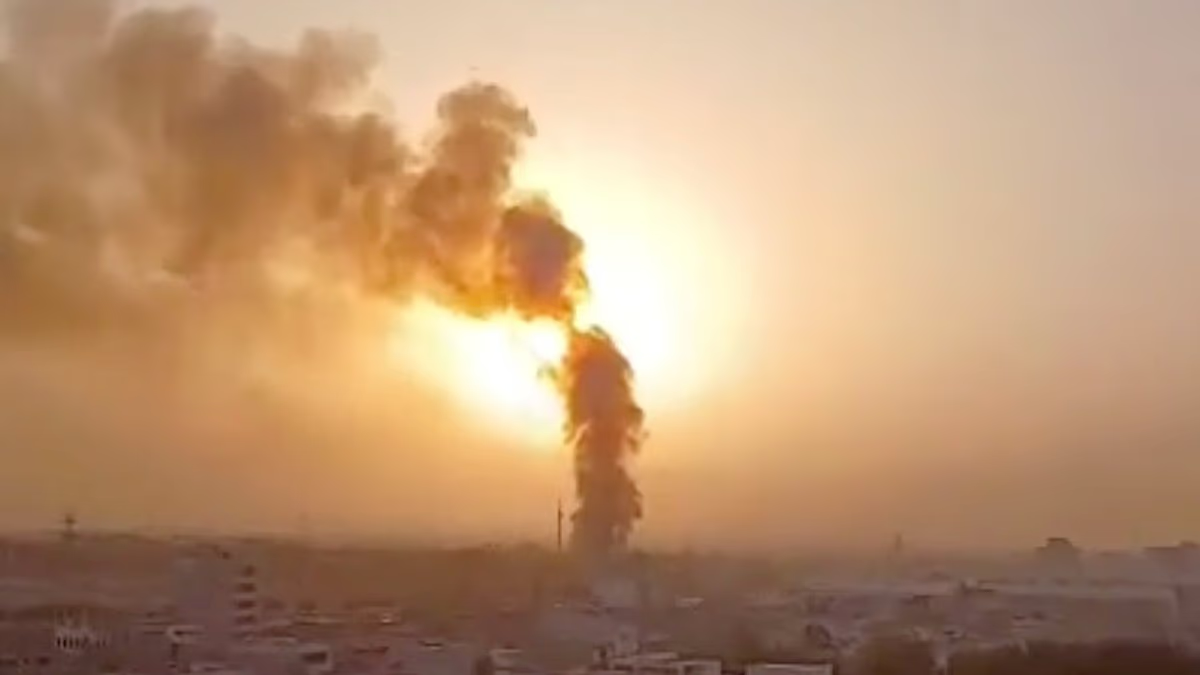
In a post on his Truth Social platform, Trump outlined that the enriched uranium, referred to as “Nuclear Dust,” should be either immediately transferred to the United States for destruction or, ideally, dismantled in collaboration with Iran at a mutually agreeable location. This process, he suggested, should occur under the supervision of the Atomic Energy Commission or a similar entity. According to The New York Times, military strategists have devised scenarios for Trump to target Iran’s nuclear stockpile, primarily housed at the Isfahan facility. One proposed tactic involves deploying bunker-busting bombs to obliterate the underground reserves.
A Strategic Breakthrough
Amidst these discussions, Trump announced on Saturday that the US is nearing a pact with Iran aimed at concluding hostilities and reopening the critical Strait of Hormuz, through which a significant portion of the world’s oil supply flows. US officials emphasized the importance of a formal commitment from Iranian leaders to relinquish their nuclear stockpile as a cornerstone of the agreement. Failing this, negotiations would halt, and the US would persist with its airstrike strategy. By Sunday, Iranian authorities tentatively agreed to dispose of their highly-enriched uranium, as reported by a senior Trump administration official to CBS News. The preliminary agreement involves a two-phase approach, beginning with the immediate reopening of the Strait of Hormuz in return for lifting a US naval blockade.
Only after that is completed would the two sides negotiate on a mechanism for Iran to give up various parts of its nuclear program, the senior official said. Iranian Foreign Ministry spokesperson Esmaeil Baqai also said Monday that the fate of Iran’s nuclear material has not been part of the peace talks as of yet, as the ‘focus of the negotiations is on ending the war… at this stage,’ according to the Associated Press. But there was some hope on Sunday when Iranian President Masoud Pezeshkian told state media that his country was ready to ‘assure the world that we are not after a nuclear weapon.’ Yet a deal may still be stalled, after Trump reportedly told leaders of Arab countries that he would only broker a peace deal with Iran to reopen the Strait of Hormuz if they normalize relations with Israel.
The most powerful leaders in the Middle East, including those from Saudi Arabia, Qatar, Turkey, and Egypt, joined the President on a conference call on Saturday to discuss progress toward ending the US-Iran war and reopening the vital oil passageway. In return, Trump pressed the leaders to normalize ties with Israel, a demand aimed at nations that have opposed the Jewish state since its founding in 1948. Arab leaders were so stunned by the demand that they refused to respond, remaining entirely silent on the call, according to Axios.
With the silence unbroken, Trump ended the call by announcing that his envoys Jared Kushner and Steve Witkoff would follow up on Israel normalization in the weeks ahead. Meanwhile, Iran’s top negotiators and financial chiefs arrived in Doha on Monday for continued peace talks on unfreezing billions of dollars of the regime’s assets, according to AFP. Oil fell to its lowest price in more than a month on hopes of a deal, with global benchmark Brent crude dropping to $97 per barrel.