
The sharp rise in bowel cancer among young adults who appear otherwise healthy and active is still troubling cancer specialists around the world.
In Britain, diagnoses of the potentially fatal disease in people under 50 have climbed by around 50 per cent over the past three decades.
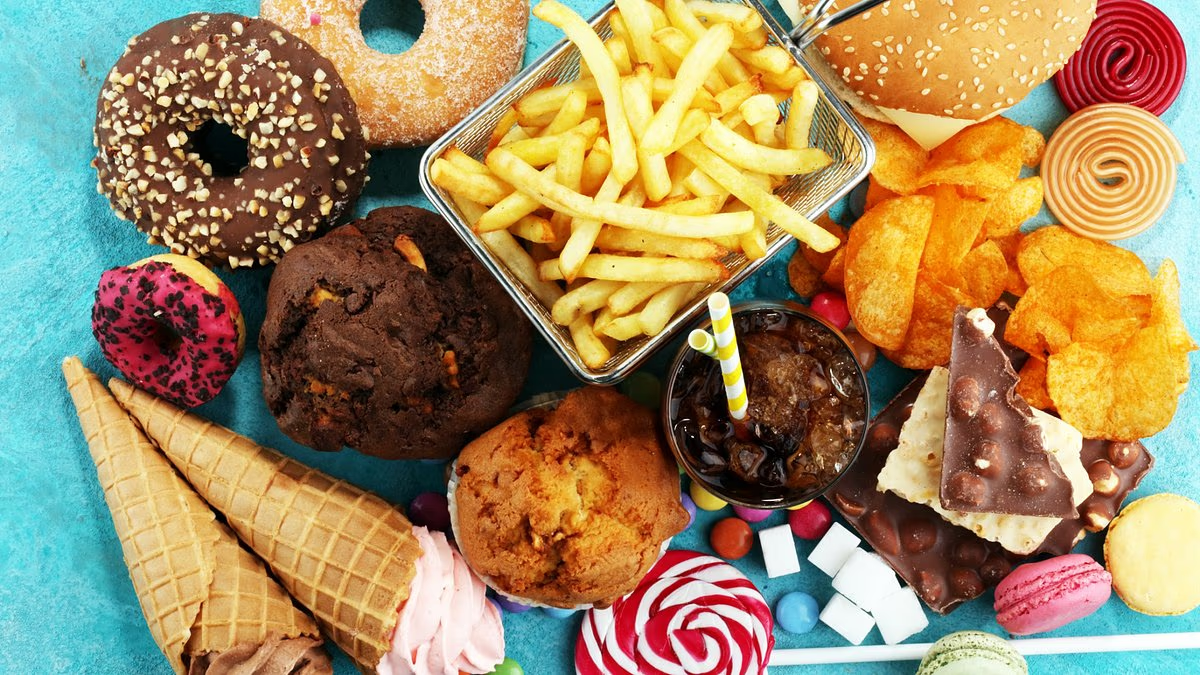
While researchers are still piecing together the causes, one explanation has gained particular traction among doctors: the growing role of ultraprocessed foods in modern diets.
A large international study published last year linked heavy consumption of products such as ready meals, crisps, processed deli meats and sugary breakfast cereals with a 45 per cent higher risk of developing growths in the colon or rectum that can become cancerous.
Scientists from the National Cancer Institute, who authored the research, suggested that the many additives used in these foods may disrupt the gut microbiome, triggering changes in healthy gut bacteria that could help drive cancer development.
The difficulty for shoppers is that many everyday favourites now come with lengthy ingredient labels packed with unfamiliar chemical names, making it hard to know which additives are genuinely concerning.
Some research has raised concerns about emulsifiers, the thickening agents commonly used in foods such as margarine and mayonnaise, as possible contributors to gut irritation and damage. Other studies have focused on artificial sweeteners as another potential risk factor.
Here, nutrition specialists break down the specific food ingredients that may deserve closer scrutiny for bowel and gut health — and which ones experts say are unlikely to be a major cause for concern.

Experts have warned of emerging links between cancer-causing microbes and additives
Thickeners in mayo and salad dressings could be a risk
Emulsifiers have become the latest food villain. Used in everything from sliced bread to ready meals, emulsifiers are particularly important in products where ingredients that would naturally separate – such as oil and water in salad dressings – need to stay mixed together.
They are also widely used to improve texture, consistency and shelf life in processed foods.
Two emulsifiers in particular have become the focus of much of the research, according to Rob Hobson, registered nutritionist and author of Unprocess Your Family Life – carboxymethylcellulose, or CMC (E466), and polysorbate 80 (E433).
The former is most often found in low-calorie desserts and salad dressings, while polysorbate 80 is used in a wider variety of foods – from bread and cakes to sports drinks and even plant-based milks.
‘These ingredients have been shown to alter the activity and composition of gut bacteria,’ says Hobson, adding that there’s also evidence that the chemicals can harm the protective lining of the bowel.
‘They’ve also been shown to promote inflammation, which has long been linked to increased cancer risk.
‘It’s these mechanisms, working together, that could theoretically create conditions for bowel disease, including cancer, over time.’
Other emulsifiers also found to have similar effects include carrageenan (E407) – found in a plethora of vegan products – and mono- and diglycerides of fatty acids (E471), in margarine and peanut butter.

Food additives and preservatives are found in ultra-processed foods found in many homes
Experts have previously explained that these emulsifiers form a gel-like clump in the gut.
According to top nutrition expert Professor Tim Spector, this leaves our healthy microbes ‘unable to communicate…and they produce abnormal chemicals in response.’
In a post on his social media page, the scientist added: ‘They disrupt the gut lining because we have a careful layer of fat and water in our gut but these emulsifiers are mixing the two.’
It’s this ‘disruption’ of the essential anti-pathogen barrier that is thought to make us vulnerable to bacterial infections, which can go on to fuel cancer.
Microbiome expert Dr Alasdair Scott told The Mail: ‘We think that this process could be linked to bowel cancer.
‘Studies done on animals that confirm this, but not yet on people — in humans it can be much more difficult to prove why exactly a tumour has formed.’
The experts caution that more evidence is needed from human studies before firm conclusions can be made.
‘The evidence is strongest in laboratory and animal studies,’ says Hobson. ‘There is some early human evidence that particular emulsifiers may influence the gut microbiome, but the trials remain relatively small.’
Compounds in bacon and sausages should be avoided
Research has long shown that nitrites and nitrates – preservatives in processed red meat that extend shelf life – can cause deadly bowel cancers.
The additives can react with proteins during processing, cooking, or digestion to form compounds called N-nitroso compounds (NOCs), which can damage DNA in the cells lining the colon and rectum.
The evidence is so strong that the World Health Organisation has classified processed red meat as a Group 1 carcinogen – placing it in the same risk category as tobacco and asbestos.
According to Cancer Research UK, 21 per cent of bowel cancers and three per cent of all cancers in the UK are caused by eating red or processed meats.
A major 2019 study published in the International Journal of Epidemiology found that bowel cancer risk rises by 20 per cent with every 25g of processed meat eaten per day – roughly equivalent to a rasher of bacon or slice of ham – people ate per day.
Dr Bernard Srour, cancer researcher from Sorbonne Paris Nord University, has previously called for ‘a reduction of nitrite additives’ use in processed meats by the food industry.
‘In the meantime, several public health authorities worldwide already recommend citizens to limit their consumption of foods containing controversial additives, including sodium nitrite,’ he added.
Chemical in your chewing gum is banned in Europe
Another chemical to come under the spotlight is titanium dioxide (E171) – a whitening agent previously used in products including chewing gum, sweets and some baked goods.
In 2022, the European Union banned its use in food after regulators concluded they could no longer rule out concerns over genotoxicity – the potential to damage DNA, which can trigger cancers.
The UK Food Standards Agency, however, has continued to permit its use while reviewing the available evidence.
One alarming study came from US experts at the University of Massachusetts who, in 2024, found that those who ate diets high in the chemical had signs of raised inflammation in their gut, as well damage to the barrier that wards off harmful pathogens known to raise the risk of cancer.
This follows a major 2017 safety review by European officials that found the suspected cancer-causing chemical can cross the intestinal wall of animals into their lungs and liver following ‘oral exposure’.
However, experts have warned that the insight from animal studies is limited.
Rodents have very different digestive systems from humans and often receive doses that are far higher than people would normally consume, says Professor Gunter Kuhnle, a nutritional scientist at the University of Reading and former member of the UK’s Committee on Toxicity.
Sweeteners in Diet Coke could be harmful too
Artificial sweeteners commonly found in diet versions of cult classics like Coca-Cola, Sprite and even chewing gum have been shown to promote inflammation in the gut, increasing the likelihood of bowel cancer.
One of the most widely used sweeteners is aspartame, a substance that is 200 times sweeter than sugar.
A 2022 study involving more than 102,000 adults found higher consumption of aspartame and another sweetener called acesulfame-K increased the risk of several cancers.
However, when it comes specifically to bowel cancer, researchers are more concerned about sweeteners such as saccharin and sucralose – found in ketchup and low-calorie squash – which can reach the large bowel.
‘One of the biggest worries when it comes to bowel cancer and artificial sweeteners are high doses of saccharin and sucralose, though the link has only been explored in animal studies,’ Dr Federica Amati, one of the UK’s leading nutritionists says.
‘These sweeteners shift the bacteria there, reducing butyrate – a fatty acid that feeds cells in the lining of the gut – and thinning the protective mucus layer in a way that can trigger low-grade inflammation,’ she added.
However, experts stress that it remains difficult to prove artificial sweeteners cause cancer because people who consume large amounts of them often differ in health from those who do not.
‘Because people often turn to sweeteners after already developing weight or blood sugar problems, cause and effect are hard to untangle,’ Dr Amati concluded.


