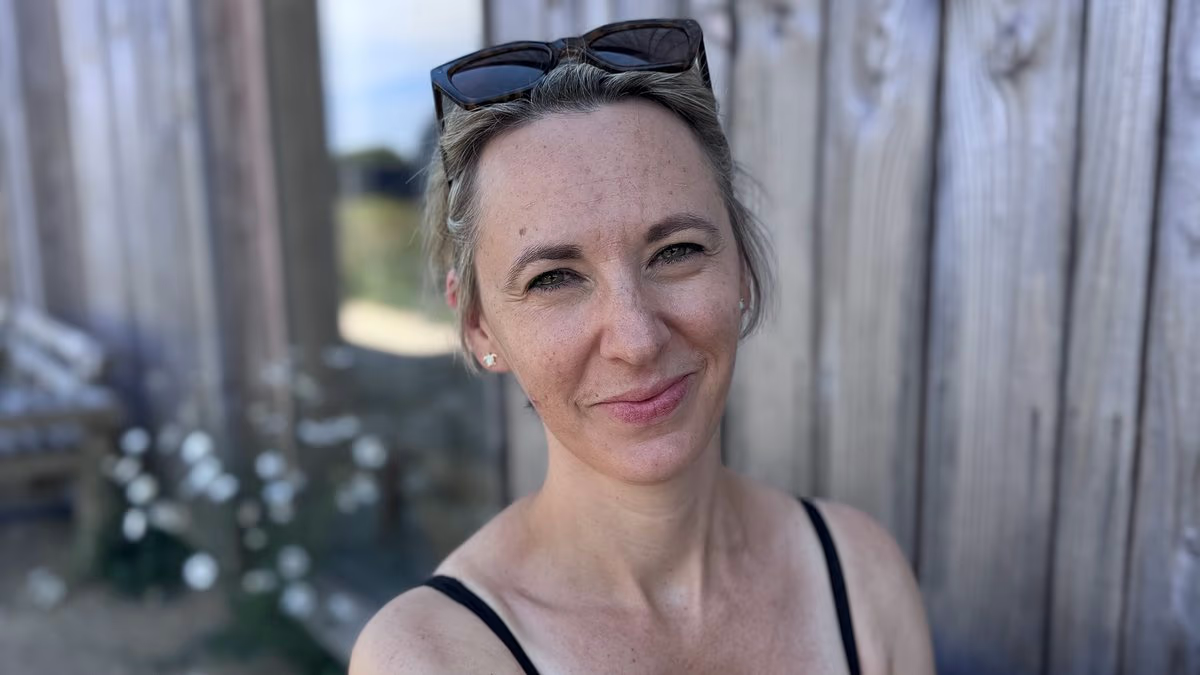
The arrival of Tessa Gooding’s first baby was meant to be a joyful milestone. Instead, the 36-year-old found herself struggling with severe and unexplained pain.
She experienced a sharp, stabbing pain at the base of her spine, alongside intense aching through the centre of her back. The discomfort became so severe that she had to breastfeed her daughter, Maeve, while lying down.
Doctors on the postnatal ward attributed her symptoms to the physical strain of childbirth. Several appointments with her GP and a physiotherapist also failed to identify a problem.
But when Maeve was ten weeks old, Tessa felt a distinct ‘pop’ in her back while placing her daughter in her cot. By the following morning, she says, the pain was ‘excruciating’.
Desperate for answers, she arranged a private scan, which showed that she had fractured her spine.
A subsequent bone density scan delivered an even more startling diagnosis: Tessa had osteoporosis affecting her spine and hips.
Osteoporosis causes bones to become fragile, thin and more likely to break, and is generally linked with middle age and later life. Tessa was told the condition had left her bones resembling those of an 80-year-old.
She had developed a rare and little-known form of the disease known as pregnancy and lactation-associated osteoporosis, or PLO.

Tessa’s back pain became so severe that she had to breastfeed her daughter Maeve while lying down

Tessa developed the rare condition pregnancy and lactation-associated osteoporosis, also known as PLO
Around 50 women in the UK receive a PLO diagnosis each year, although specialists believe the true number may be considerably higher because the condition often goes unnoticed.
Bone is constantly being renewed. The body removes older tissue and replaces it with new bone, but this process becomes less effective as people age. Eventually, bone may be lost faster than it can be rebuilt.
That imbalance can result in osteoporosis, leaving bones weaker and more vulnerable to fractures, particularly among people over 50.
PLO follows a different pattern. During pregnancy and breastfeeding, a mother supplies significant amounts of calcium for her baby’s developing bones. Some of that calcium is drawn from the mother’s own skeleton, temporarily reducing bone density.
Although every woman loses some bone mass during pregnancy, a small proportion experience a much greater loss for reasons that are still not fully understood.
Some women may also enter pregnancy with reduced bone density because of genetic factors, eating disorders, steroid medication or illnesses such as coeliac disease and Crohn’s disease, which can interfere with the absorption of nutrients.
Research by British scientists, published in Osteoporosis International, examined the impact of PLO and found that it can lead to multiple debilitating fractures, severe short- and long-term pain, disability and lasting psychological distress. The women studied had suffered an average of seven spinal fractures each. Many said they felt ‘robbed’ of the experience of motherhood because they could not safely lift their babies, while some were discouraged from having more children.
Every participant said the condition had not been recognised at first, and many endured months of pain before being referred to a specialist.

About 50 women are diagnosed with PLO in the UK each year, but experts believe many cases are missed because awareness remains limited
Researchers from Imperial College London, Imperial College Healthcare NHS Trust and the Royal National Orthopaedic Hospital NHS Trust say greater awareness is essential. Earlier recognition could help identify women at risk and prevent additional fractures.
The Mail’s War On Osteoporosis campaign, run with the Royal Osteoporosis Society, is also calling for faster diagnosis and expanded NHS fracture prevention services throughout the UK.
Tessa, now 41 and living in Surbiton, Surrey, was diagnosed more quickly because she had private medical insurance.
She says: ‘I understand how painful and difficult even one fracture can be. Unexplained pain can make looking after your child incredibly hard. When medical professionals or family members also doubt what you are experiencing, the isolation and anger can be overwhelming. You begin to question yourself. So while receiving a diagnosis is difficult, it can also bring relief because it confirms that your symptoms are real.’
Tessa is now a trustee of Pregnancy Associated Osteoporosis UK and has made a strong recovery. She trained as a yoga teacher to help strengthen her bones and takes supplements recommended for osteoporosis.
Professor Alexander Comninos of Imperial College London believes PLO may be ‘much more common than we know’. He has urged healthcare professionals to be alert to warning signs, including a loss of height caused by collapsed vertebrae and severe back pain.
Women who may be at risk should discuss bone health with their GP and consider ways to improve their intake of calcium, vitamin D and protein before or during pregnancy, he says.
‘Most women will regain bone density within 12 to 24 months and may not require treatment beyond mental health support, pain relief and steps to improve bone health and reduce the risk of further fractures,’ he says.