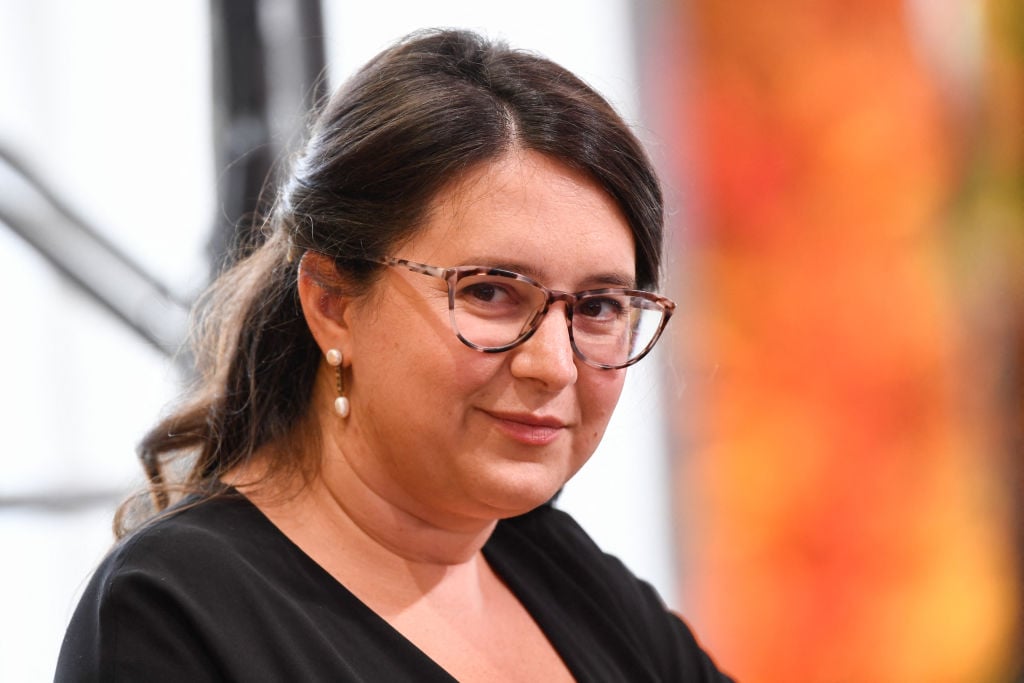

What is Bari Weiss’ net worth and salary?
Bari Weiss, an accomplished American journalist and entrepreneur, has amassed a net worth of $50 million through her multifaceted career as an editor, author, and podcaster.
Weiss first gained recognition for her influential roles at prominent publications such as The Wall Street Journal, The New York Times, The Free Press, and CBS News. Known for her incisive commentary on politics, culture, free speech, antisemitism, and more, Weiss emerged as a prominent and sometimes controversial figure in the media landscape. Her much-publicized resignation from The New York Times in 2020 marked a turning point, propelling her into a successful independent media career.
In 2021, Weiss launched the newsletter Common Sense, which quickly transformed into The Free Press, a subscription-based platform for news and opinion. It soon became a leading independent media brand in the U.S. By 2025, The Free Press caught the eye of Paramount Skydance, which acquired it for $150 million. This acquisition also paved the way for Weiss to assume the role of editor-in-chief at CBS News, transitioning her from a media outsider critiquing legacy outlets to a key player within them.
Early Life and Education
Born on March 25, 1984, in Pittsburgh, Pennsylvania, Weiss was raised in the Squirrel Hill neighborhood, a historically Jewish area that gained national attention following the tragic 2018 Tree of Life synagogue shooting. Her Jewish heritage and Pittsburgh roots deeply influenced her work, particularly her writings on antisemitism, liberalism, and civic issues in America.
Weiss’s educational journey took her from the Community Day School and Shady Side Academy to Columbia University, where she actively engaged in debates surrounding Israel, Zionism, and academic politics. She co-founded the Columbia Coalition for Sudan and challenged perceived anti-Israel sentiments among some faculty. These formative experiences shaped her professional focus on free expression, institutional culture, identity politics, and the dynamics of elite academic environments.
Early Journalism Career
Upon graduating, Weiss embarked on her journalism career, beginning with The Forward, a Jewish news outlet. She later joined Tablet as a senior editor, where she delved into topics related to Jewish culture, religion, politics, and the Middle East, solidifying her reputation as a thought-provoking and influential voice in contemporary media.
In 2013, Weiss joined Wall Street Journal, where she worked as an op-ed and book review editor. Her time at the paper helped establish her as a rising voice in conservative and centrist opinion journalism, although Weiss has generally resisted simple ideological labels. She has often described herself as a liberal, a centrist, or politically homeless, depending on the issue and the moment.

(Photo by PATRICK T. FALLON/AFP via Getty Images)
New York Times
In 2017, Weiss joined New York Times as an op-ed staff editor and writer. Her arrival came during a period when the paper was trying to expand the ideological range of its opinion section after the election of Donald Trump. Weiss wrote frequently about campus politics, antisemitism, feminism, cultural polarization, cancel culture, technology, and free speech.
Her work attracted a large audience but also intense criticism. Supporters saw her as a brave critic of groupthink and a defender of liberal values against ideological extremism. Critics argued that she exaggerated the power of campus activists and online culture-war controversies while positioning herself as a victim of institutions where she held influential roles.
In July 2020, Weiss resigned from New York Times and published a widely read resignation letter accusing the paper of allowing Twitter-driven politics, internal hostility, and ideological conformity to shape its culture. The letter became a major media story and turned Weiss into one of the best-known critics of legacy newsroom culture.
Books
Weiss’s first book, “How to Fight Anti-Semitism,” was published in 2019. The book examined antisemitism from the political right, the political left, and radical Islamist movements, while also making a broader argument about Jewish pride, liberal democracy, and moral clarity. It won a National Jewish Book Award and became one of her defining works.
She also edited “The New Seven Dirty Words,” a 2021 collection of essays about censorship, speech, and cultural taboos. Across her books and essays, Weiss has returned repeatedly to the argument that open debate, pluralism, and institutional courage are necessary for democratic life.
The Free Press
After leaving New York Times, Weiss launched Common Sense on Substack in 2021. The newsletter later became The Free Press, a full media company co-founded with her wife, journalist Nellie Bowles. The publication mixed reporting, essays, podcasts, debates, live events, and cultural commentary, often positioning itself as an alternative to mainstream media institutions.
The Free Press attracted a devoted paying audience and a roster of contributors who wrote about politics, culture, foreign affairs, education, gender, technology, and Israel. Its tone was often skeptical of progressive orthodoxy, institutional groupthink, and what Weiss and her colleagues saw as elite media blind spots. Critics described the publication as anti-woke or right-leaning, while supporters viewed it as independent, heterodox, and willing to publish arguments that other outlets avoided.
The business success was significant. The Free Press grew from a newsletter into a media company with staff, investors, audio programming, events, and a national profile. In 2025, Paramount Skydance acquired The Free Press for a reported $150 million and brought Weiss into CBS News as editor-in-chief.
CBS News
Weiss’s move to CBS News marked one of the most unusual media transitions of the decade. After years of criticizing legacy media from the outside, she was given a top editorial role inside one of America’s oldest broadcast news institutions. Paramount described the acquisition as a way to combine CBS News’s scale with The Free Press’s voice and digital-first energy.
Her appointment also generated immediate debate. Supporters argued that CBS needed fresh leadership, sharper editorial judgment, and a stronger connection to audiences skeptical of traditional news. Critics questioned whether Weiss, whose background was primarily in opinion journalism and digital media, had the broadcast experience needed to oversee a major television news division. Her leadership at CBS has been closely watched by media reporters, employees, rivals, and political observers.
Personal Life
Weiss is married to journalist Nellie Bowles, a former New York Times reporter and co-founder of The Free Press. The couple has children together. Bowles has also written about media, technology, politics, and San Francisco culture, and the two have collaborated closely on building The Free Press.
All net worths are calculated using data drawn from public sources. When provided, we also incorporate private tips and feedback received from the celebrities or their representatives. While we work diligently to ensure that our numbers are as accurate as possible, unless otherwise indicated they are only estimates. We welcome all corrections and feedback using the button below.
(function() {
var _fbq = window._fbq || (window._fbq = []);
if (!_fbq.loaded) {
var fbds = document.createElement(‘script’);
fbds.async = true;
fbds.src=”
var s = document.getElementsByTagName(‘script’)[0];
s.parentNode.insertBefore(fbds, s);
_fbq.loaded = true;
}
_fbq.push([‘addPixelId’, ‘1471602713096627’]);
})();
window._fbq = window._fbq || [];
window._fbq.push([‘track’, ‘PixelInitialized’, {}]);


