
Dan Hoffman analyzes US-Iran-Russia-China dynamics amid Mideast conflict
Dan Hoffman, a former CIA chief of station, shares his insights on the intricate relationships among the United States, Iran, Russia, and China. Hoffman delves into Iran’s strategic ambitions, which include using its alliances to diminish U.S. influence in the Middle East. He highlights how China and Russia contribute intelligence and military support to Iran, thereby affecting the region’s stability. This analysis comes in the wake of reports regarding missile interceptions and drone assaults.
In a significant geopolitical and economic achievement for President Vladimir Putin, Russia finalized a groundbreaking nuclear deal with Kazakhstan on Thursday. This agreement aims to construct Kazakhstan’s first commercial power plant, marking a notable development in Central Asia, as noted in various reports.
The $16.5 billion venture was solidified during high-level discussions in Astana between Putin and Kazakhstan’s President Kassym-Jomart Tokayev. The project will be largely financed by a Russian export loan, which is set to cover approximately 85% of the overall expenses, according to Reuters.
Russia’s state-owned nuclear agency, Rosatom, has been tasked with leading the construction efforts near the village of Ulken, located in southeastern Kazakhstan along Lake Balkhash’s shores.
Rosatom secured this major construction contract after surpassing competition from China’s National Nuclear Corporation, France’s EDF, and Korea Hydro & Nuclear Power, as reported by the outlet.
NO LIMITS, NO INSPECTIONS: US AND RUSSIA FACE POST–NEW START ERA AS TRUMP PUSHES NEW NUCLEAR DEAL
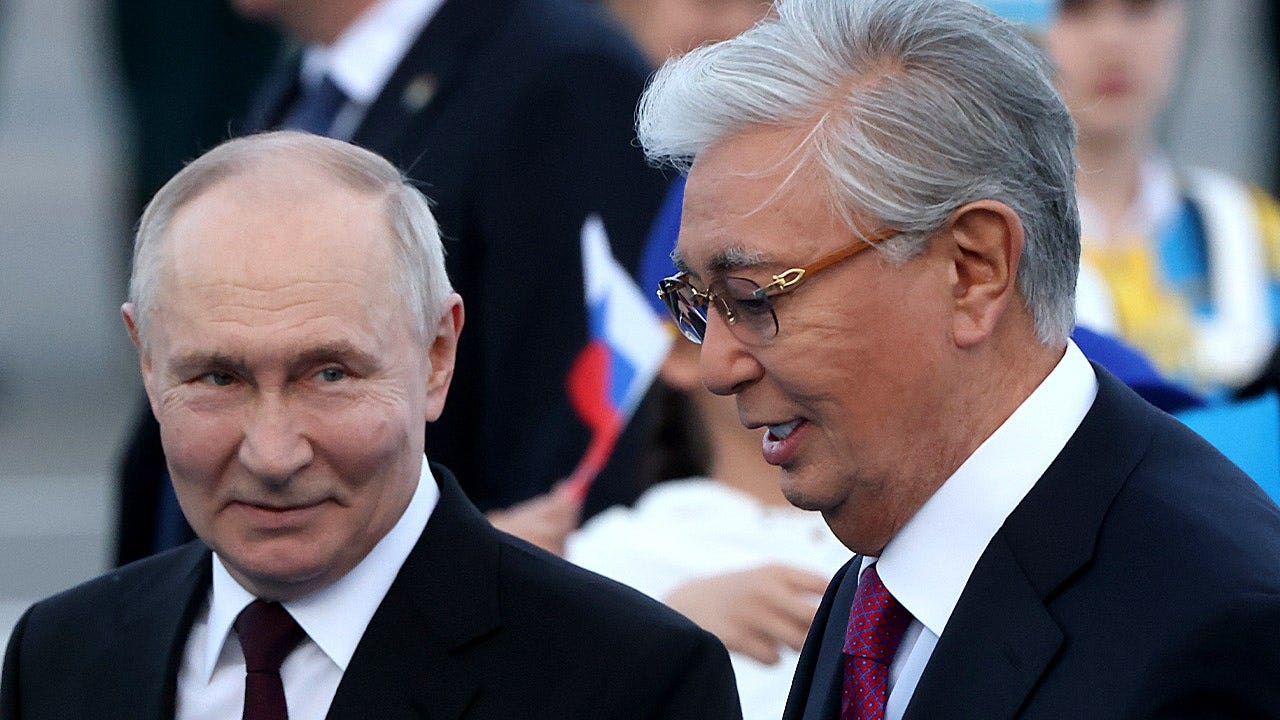
Russian President Vladimir Putin, left, stands alongside Kazakh President Kassym-Jomart Tokayev after his arrival at the airport, Wednesday, in Astana, Kazakhstan. (Getty Images)
The pact directly advances the Kremlin’s efforts to anchor its economic and geopolitical influence within former Soviet states amid Western sanctions.
According to the World Nuclear Association, Kazakhstan is the world’s largest producer of uranium.
For Kazakhstan, the facility is intended to stabilize a long-term domestic energy supply, since it has struggled with old coal-reliant power infrastructure and electricity deficits for more than two decades.
“The agreement signed today on the construction of the Balkhash NPP has an important role,” Tokayev said at the signing ceremony.
CAN A NEW NUCLEAR PLANT FIX NEW YORK’S POWER PROBLEM?
The $16.5 billion nuclear plant project was signed during high-level bilateral talks in Astana between Putin and Kazakh President Kassym-Jomart Tokayev. (Getty Images)
Putin called the deal “a flagship project in the field of peaceful nuclear energy” and said “the commissioning of the plant will make a significant contribution to the energy supply of the Kazakh economy, helping to provide businesses and households with affordable and clean energy.”
“I would like to point out that, as we agreed with the president of Kazakhstan, we are not simply talking about the creation of a nuclear power plant or construction; we are talking about the creation of an entire industry, including education, personnel training, and so on,” he added.
According to Kazakhstan’s atomic energy agency, the massive facility will feature two advanced VVER-1200 Generation III+ reactors.
Total development costs are estimated at $16.5 billion, with officials noting that approximately $2 billion of the sum will be allocated toward security systems and foundational infrastructure.
MYSTERIOUS 2020 EXPLOSION IN CHINA HAD HALLMARKS OF NUCLEAR TEST, US OFFICIAL ALLEGES
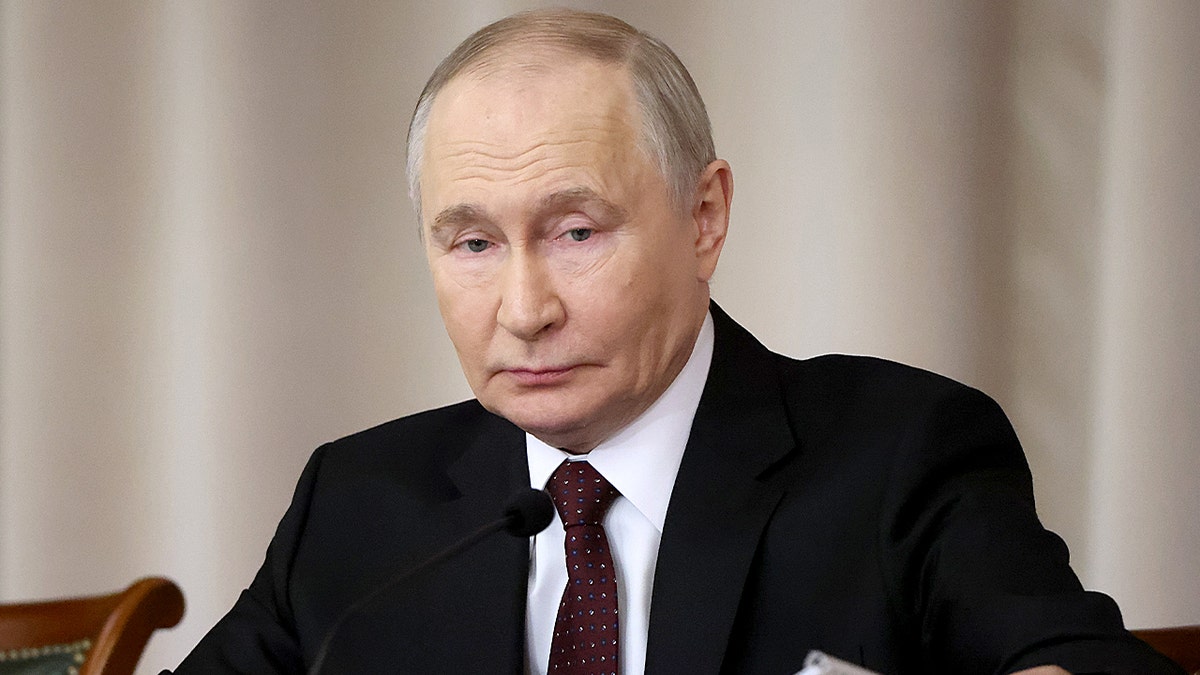
Putin called the deal “a flagship project in the field of peaceful nuclear energy.” (Getty Images, File)
Construction is scheduled to begin in 2027, with the first reactor slated to become operational by early 2034.
The project follows a 2024 national referendum in which Kazakh voters formally approved development at the Balkhash site.
However, the pivot to atomic energy is sensitive for local citizens. The nation hosted hundreds of Soviet nuclear weapons tests at the Semipalatinsk site between 1949 and 1989, leaving behind severe public health crises and environmental pollution.
Distrust increased over the 1986 Chernobyl disaster in Ukraine, after which tens of thousands of Kazakh workers fell ill assisting in cleanup operations.
According to Bloomberg, the two countries also signed a currency swap arrangement Thursday.
Bank of Russia Gov. Elvira Nabiullina and National Bank of Kazakhstan Gov. Timur Suleimenov signed the ruble-tenge swap agreement.
<!–>
–>