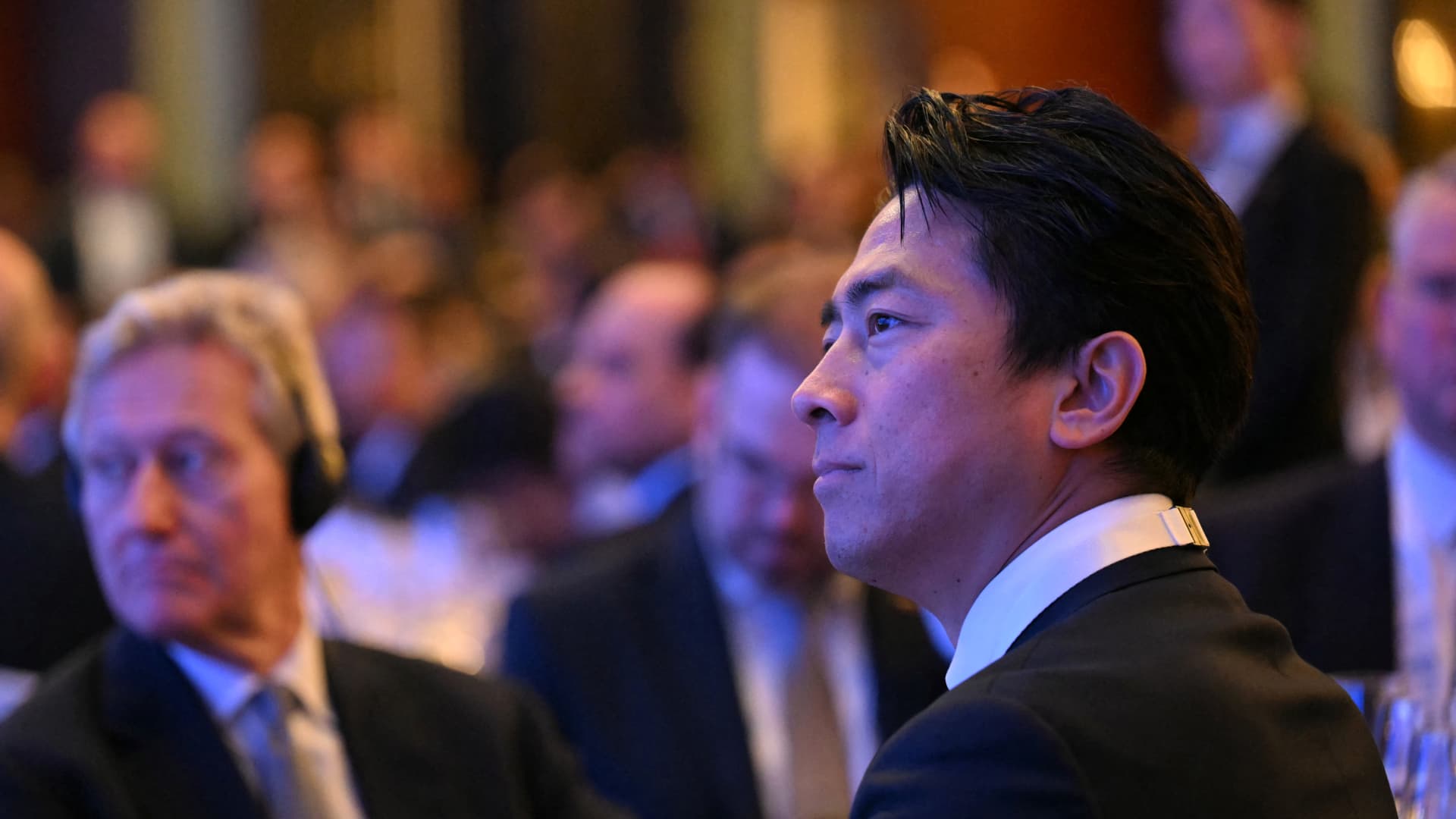

On May 29, 2026, Japan’s Defense Minister, Shinjiro Koizumi, was present at the 23rd Shangri-La Dialogue summit held in Singapore. (Photo by JAM STA ROSA / AFP via Getty Images)
Jam Sta Rosa | Afp | Getty Images
Defense Minister Shinjiro Koizumi emphasized Japan’s readiness for dialogue with the global community, even as it ramps up its defense budget and adjusts its arms export policies. He assured that Japan’s doors remain open for discussions.
Addressing the audience at the IISS Shangri-La Dialogue, Koizumi reinforced Japan’s commitment to international law, stating, “Japan’s identity as a peace-loving nation is recognized both regionally and globally. This reality remains steadfast, despite any contrary allegations.”
Responding to criticisms labeling Japan’s actions as “neo-militarism,” Koizumi dismissed these claims as baseless.
On May 28, China’s defense ministry urged the international community to curb what it termed Japan’s “neo-militarism,” as reported by the state-run media, Xinhua.
Japan has recently taken steps to expand its defense posture, including lifting its ban on lethal arms exports and mulling changes to Article 9 of its constitution, which renounces war and the maintenance of armed forces.
Koizumi said, “Think about it. There is a country that has a huge arsenal of nuclear weapons and strategic bombers. Japan has neither of such weapons, and yet Japan is labeled neo-militarist. Isn’t it strange?”
The Japanese defense minister highlighted Beijing’s lack of a ministerial-level official at the Dialogue, saying that he was “feeling sad” that he was unable to meet with Chinese counterpart Dong Jun at the forum.
Koizumi said that differences in perception and frictions do arise between nations, but that a repetition of “unfounded claims in the other side’s absence” was not what was needed.
Beijing had sent a lower-level delegation led by Major General Meng Xiangqing from the People’s Liberation Army National Defence University, after Dong skipped the Dialogue for a second year running.
Earlier at the Dialogue, Meng had taken a swipe at Tokyo, noting that 2026 was the 80th anniversary of the opening of the International Military Tribunal for the Far East, where Japanese leaders were tried for their crimes in World War II in 1946.
Transparency
In his remarks, Koizumi also called for “trust, transparency and talks” in the Asia-Pacific, so as to maintain peace and security in the region.
The Japanese defense minister said transparency is “the baseline for reducing tensions and preventing crises.”
He said that Tokyo will build up its defense capabilities with a “high level” of transparency,” and added that Japan is reinforcing these capabilities because of new ways of warfare that are emerging around the world, including AI, cyber warfare and the usage of unmanned systems.
“We will make the necessary preparations with a sense of responsibility,” Koizumi added.
Koizumi, also said that China continues to increase its defense spending at a high level and is “rapidly expanding its military capabilities across a wide range of areas without sufficient transparency.”
The North Atlantic Treaty Organisation had noted back November 2022 that its members were concerned about China’s rapid and opaque military buildup, according to Reuters.
This has caused serious concern to Tokyo and in the international community, with Koizumi also saying that Japan believes it is essential to have “persistent, candid dialog and communication” without shying away from difficult issues.
He acknowledged that nations will have different positions and views, “but that is precisely because we need to have talks.”