
Imagine stepping into a hypothetical situation.
The calendar reads 2017. You’re an 18-year-old baseball prodigy playing for the Fort Wayne TinCaps in the Class A Midwest League. Your skills suggest immense potential, yet the path to Major League Baseball is a long shot, requiring a unique blend of talent, fortune, timing, health, effective coaching, available roster spots, and the unpredictable nature of the sport itself.
Based on my findings, in 2017, a player in Class A could expect to earn between $1,100 and $1,500 per month during the playing season, which lasts about five months. This translates to an annual income of about $5,500 to $7,500 from your baseball salary, before accounting for taxes, and personal expenses such as clubhouse dues, food, and housing.
Suddenly, a new opportunity arises.
Someone approaches you with an enticing proposition.
They are ready to hand you $2 million immediately.
In exchange, if you make it to the major leagues, they will receive 10% of your future professional baseball earnings for the next 25 years. If you never make it, you owe them nothing.
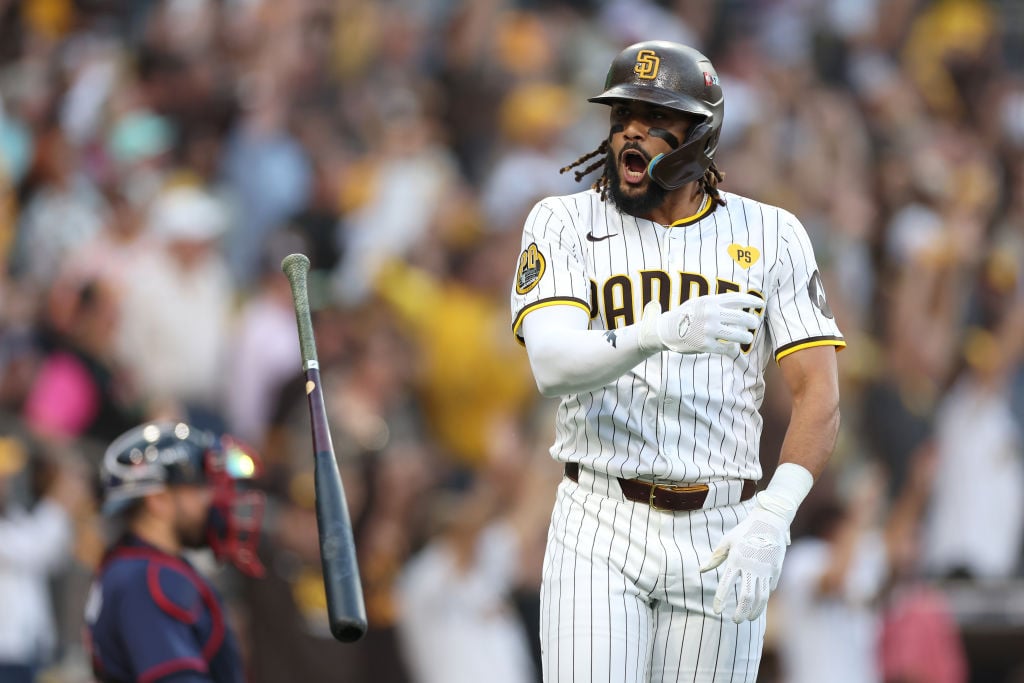
Would you take that deal? Fernando Tatis did. And now, after a brutal legal loss, it’s time to pay the piper…

Sean M. Haffey/Getty Images
In 2017, that was the decision facing Fernando Tatis Jr., then an 18-year-old prospect in the San Diego Padres system. Tatis signed an agreement with Big League Advance, an investment fund that provides upfront money to baseball players in exchange for a percentage of future earnings.
Under Tatis Jr.’s deal, Big League Advance paid him $2 million. In return, the company received a 10% interest in his future professional baseball earnings for 25 years, but only if he reached the major leagues. If he never made it, he owed nothing.
That final detail is important, because it is the heart of Big League Advance’s business model. The company is not making traditional loans, at least according to the language of its contracts. It is making bets. Some players never reach the majors, which means BLA’s investment goes to zero. Some players have modest careers, which means BLA makes back some money. And once in a while, a player becomes Fernando Tatis Jr.
In 2021, Fernando signed a 14-year, $340 million contract with the San Diego Padres. At the time, it was the third-largest contract in Major League Baseball history, and it remains one of the largest deals in the sport. It was generational money, the kind of contract every minor leaguer dreams about. But thanks to that 2017 agreement, Tatis may not get to keep all of it.
Critics of Big League Advance argue that the company takes advantage of young, cash-strapped prospects, many of whom are teenagers from Latin America trying to navigate the minor league system with limited resources, limited leverage, and uncertain futures. BLA has defended its model by arguing that it gives players guaranteed money at a stage when most have no certainty of ever reaching the majors. If a player gets hurt, stalls out, or never receives a big-league call-up, BLA absorbs the loss.
But when a player becomes a superstar, the return can be massive.
Tatis Jr. has since become one of the company’s most prominent critics. He sued BLA, accusing the company of fraudulently inducing him into signing the deal without properly explaining the long-term financial consequences.
So far, however, the legal battle has gone BLA’s way. A California court recently denied Tatis Jr.’s petition to vacate an arbitration award in favor of BLA. That award ordered Tatis Jr. to pay the company roughly $3.2 million, plus interest, attorneys’ fees, and costs. Tatis Jr.’s team plans to appeal the decision.
The larger issue is what happens from here. The ruling does not mean Tatis Jr. has to immediately write BLA a $34 million check. But if the underlying agreement continues to be enforced, BLA’s 10% interest in his Padres contract alone could ultimately be worth $34 million.
And there may be more money at stake beyond that.
Tatis Jr. is under contract with San Diego through the 2034 season. By then, he will be 35 years old. That is past a baseball player’s typical prime, but not necessarily the end of his earning power. Depending on his health and production, Tatis could still sign another meaningful deal after his current contract expires. If the BLA agreement remains enforceable, future baseball income could also be part of the equation.
That is what makes the case so fascinating. From BLA’s perspective, this is exactly how the model is supposed to work. The company takes big risks on young players, many of whom will never generate a return. When one of those players turns into a $340 million superstar, BLA expects to collect.
From Tatis Jr.’s perspective, the same deal looks very different in hindsight. He took $2 million as a teenager grinding through Class A baseball. Years later, that decision could cost him tens of millions.
For now, the case is not over. Tatis Jr. is expected to keep fighting. But unless he succeeds on appeal, one of the biggest contracts in baseball history will continue to come with a very expensive footnote: a $2 million teenage payday that may ultimately cost Fernando Tatis Jr. $34 million or more.
(function() {
var _fbq = window._fbq || (window._fbq = []);
if (!_fbq.loaded) {
var fbds = document.createElement(‘script’);
fbds.async = true;
fbds.src=”
var s = document.getElementsByTagName(‘script’)[0];
s.parentNode.insertBefore(fbds, s);
_fbq.loaded = true;
}
_fbq.push([‘addPixelId’, ‘1471602713096627’]);
})();
window._fbq = window._fbq || [];
window._fbq.push([‘track’, ‘PixelInitialized’, {}]);