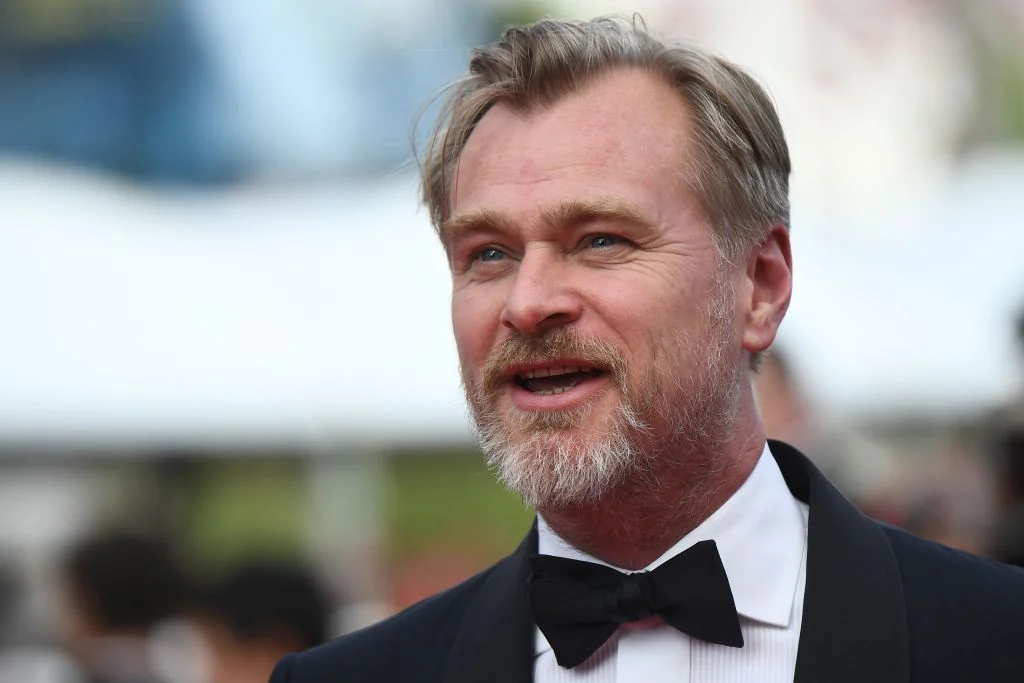

Christopher Nolan’s “The Odyssey” hit theaters on Friday, and early box office numbers suggest the filmmaker may have another blockbuster phenomenon on his hands.
The $250 million retelling of Homer’s legendary epic features Matt Damon as Odysseus, with a star-heavy ensemble that includes Anne Hathaway, Tom Holland, Zendaya, Robert Pattinson, Lupita Nyong’o and Charlize Theron. After taking in an estimated $51 million domestically on Friday, the film is now pacing for a massive global launch of about $257 million, with North America potentially contributing up to $137 million.
If those projections hold, “The Odyssey” would mark the biggest worldwide opening of Nolan’s career, ahead of both “The Dark Knight Rises” and “Oppenheimer.” The film also carries a major technical distinction: it is the first feature ever shot entirely using IMAX film cameras.
The numbers could also translate into a spectacular windfall for Nolan and his wife and producing partner, Emma Thomas, thanks to an unusually favorable agreement he secured with Universal Pictures after his high-profile split from Warner Bros.
The Warner Bros. Breakup
For almost 20 years, Nolan and Warner Bros. were one of the most dependable director-studio pairings in modern Hollywood.
That relationship began with “Insomnia” in 2002 and went on to produce a run of commercially powerful films, including:
Combined, those nine Warner Bros. releases generated approximately $5.2 billion at the global box office. That level of consistent success gave Nolan enormous negotiating power, and by the time he made “Dunkirk,” he had secured a deal reportedly worth $20 million upfront against 20% of the film’s gross participation.
The relationship unraveled during the COVID-19 pandemic. Nolan remained committed to releasing “Tenet” theatrically, even as cinemas operated at reduced capacity. The film earned approximately $366 million against a production budget of more than $200 million, severely limiting the value of his reported first-dollar gross deal.
The final rupture came when Warner Bros. announced that its entire 2021 slate would debut simultaneously in theaters and on HBO Max. Nolan blasted the decision:
“Some of our industry’s biggest filmmakers and most important movie stars went to bed the night before thinking they were working for the greatest movie studio and woke up to find out they were working for the worst streaming service.”
After nearly 20 years, Nolan walked away.
Universal Gave Nolan Everything He Wanted
Nolan’s next project was a three-hour, R-rated drama about theoretical physicist J. Robert Oppenheimer. It was hardly a conventional blockbuster pitch.
But Nolan was in a position to dictate terms.
His reported demands included:
- A production budget of approximately $100 million
- An additional $100 million marketing commitment
- Final cut and extensive creative control
- An exclusive theatrical window lasting roughly 100 days
- A blackout period during which Universal would not release another movie immediately before or after his film
- A significant percentage of first-dollar gross
The most important provision involved compensation.
Nolan sought 20% of first-dollar gross and ultimately accepted approximately 15%. His wife and producing partner, Emma Thomas, received a separate 5% stake.
Together, the couple controlled 20% of the revenue covered by their contracts.
First-dollar gross is much more valuable than traditional profit participation. Instead of waiting for the studio to recover production costs, marketing expenses and other charges, Nolan and Thomas begin receiving their percentage from revenue as it comes in.
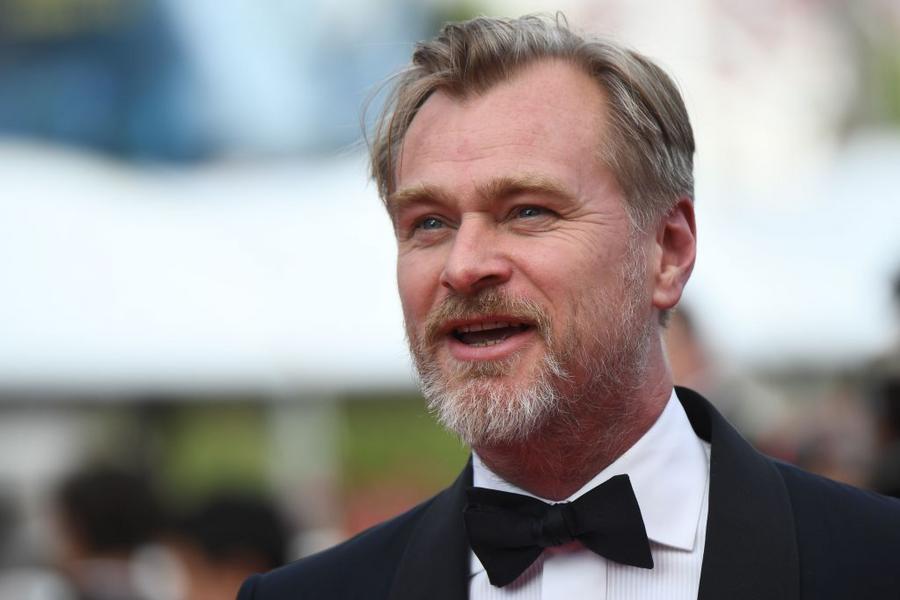
(ANNE-CHRISTINE POUJOULAT/AFP via Getty Images)
“Oppenheimer” Creates An Atomic Payday
Universal’s gamble paid off spectacularly.
“Oppenheimer” earned approximately $976 million worldwide and won seven Academy Awards, including Best Picture and Best Director.
Assuming Universal and the film’s financial participants received roughly $500 million after theaters took their share, Nolan’s 15% stake would have generated approximately $75 million from theatrical revenue. Under our assumed arrangement, Thomas’s 5% share would have been worth approximately $25 million.
Additional income from digital rentals, home entertainment, streaming, box-office escalators and bonuses pushed Nolan’s individual “Oppenheimer” payday to just under $100 million.
Add Thomas’s estimated $25 million, and the Nolan family’s combined payday may have approached $125 million. Thanks largely to this single blockbuster payday, we currently estimate Christopher Nolan’s net worth at $250 million.
What They Could Make off The Odyssey
Nolan’s contract for “The Odyssey” has not been publicly disclosed. But after the enormous financial and critical success of “Oppenheimer,” it is reasonable to imagine that Nolan and Thomas retained similarly favorable terms—quite possibly the exact same terms.
Universal did not merely finance another Nolan movie. It handed him $250 million to make a nearly three-hour adaptation of ancient Greek poetry—the largest production budget of his career and more than double the reported cost of “Oppenheimer.”
If “The Odyssey” earns $1 billion worldwide, the Nolan family could make around $100 million from theatrical revenue alone. After adding streaming, home entertainment and licensing revenue, their total payday could reach $125 million.
At $1.25 billion worldwide, their combined 20% share of an estimated $625 million in theatrical revenue would equal approximately $125 million before counting streaming or home entertainment.
At $1.5 billion, their combined theatrical participation could reach approximately $150 million—and potentially much more once the film’s other revenue streams are included.
Nolan Gets Paid Before Universal Gets Whole
“The Odyssey” cost $250 million to produce, with marketing expenses estimated at another $125 million. Once theater owners’ cuts are included, the film may need to earn approximately $625 million worldwide to break even.
But Nolan and Thomas would not necessarily have to wait for Universal to become profitable before receiving their money.
At $625 million in worldwide ticket sales, a rough 50% theatrical split would leave approximately $312.5 million flowing back to Universal and the film’s financial participants. Under the hypothetical 15% and 5% arrangement, Nolan would already be entitled to nearly $47 million, while Thomas would receive approximately $15.6 million.
Together, they could collect more than $62 million in theatrical participation before Universal had fully recovered the movie’s reported $250 million production budget and $125 million marketing expenditure.
That is the beauty of first-dollar gross.
Warner Bros.’ streaming strategy drove Nolan away after nearly two decades. Universal responded by giving him creative freedom, theatrical protection and one of the most lucrative compensation structures in Hollywood.
“Oppenheimer” turned that deal into an estimated $125 million family payday.
Now, with “The Odyssey” tracking toward the largest opening of Nolan’s career, Christopher and Emma may be preparing to sail away with another epic fortune.
(function() {
var _fbq = window._fbq || (window._fbq = []);
if (!_fbq.loaded) {
var fbds = document.createElement(‘script’);
fbds.async = true;
fbds.src = ”
var s = document.getElementsByTagName(‘script’)[0];
s.parentNode.insertBefore(fbds, s);
_fbq.loaded = true;
}
_fbq.push([‘addPixelId’, ‘1471602713096627’]);
})();
window._fbq = window._fbq || [];
window._fbq.push([‘track’, ‘PixelInitialized’, {}]);


