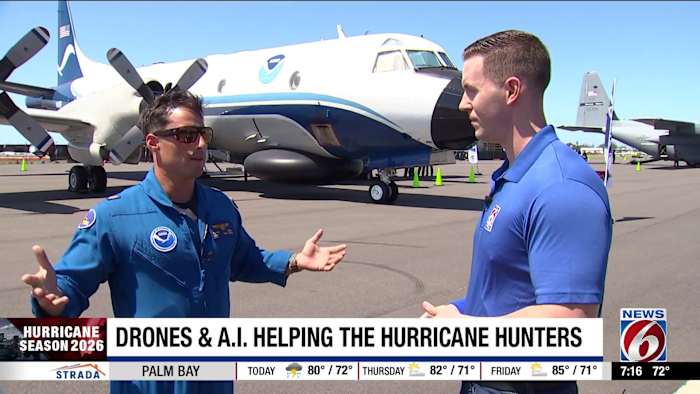

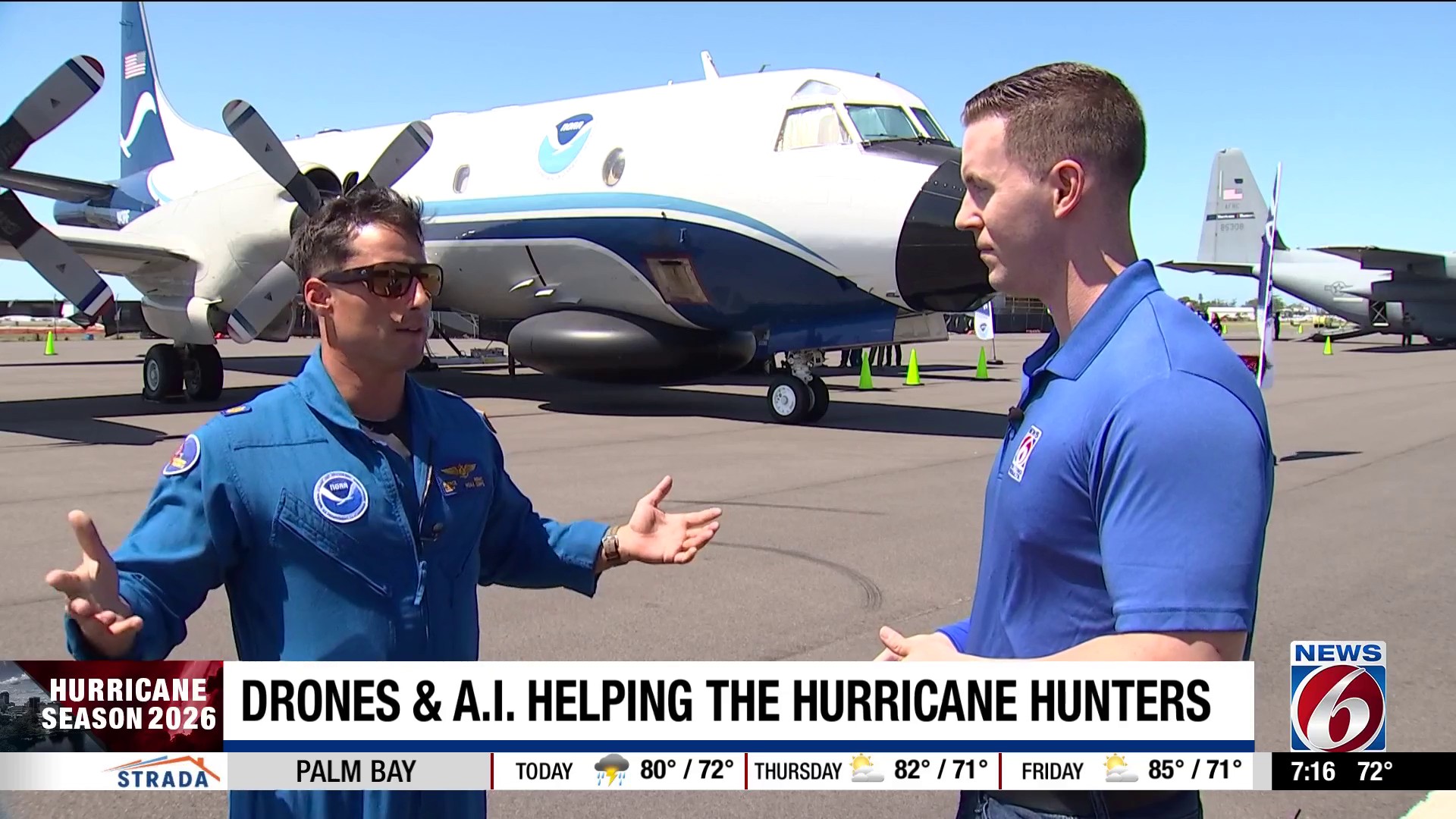
LAKELAND, Fla. – Self-proclaimed “mad scientists,” the Hurricane Hunters are seen by many as audacious risk-takers. Regardless of the label, these experts are renowned for flying directly into the heart of the world’s most severe storms.
Their daring missions are essential for gathering critical data on tropical cyclones, which is used to improve public forecasting accuracy.
For decades, Hurricane Hunter aircraft have been pivotal in storm tracking, serving admirably for over 50 years. Now, the National Oceanic and Atmospheric Administration (NOAA) is pushing boundaries with cutting-edge technology, such as advanced drones, to elevate hurricane research.
The innovative Black Swift drones are launched from the Hurricane Hunter aircraft, navigating the turbulent eyewall and boundary layer. They gather vital information on temperature, wind dynamics, and humidity across various storm levels, even venturing into previously unreachable zones. Meanwhile, ocean gliders assess surface conditions before, during, and after storms.
Flying too low over tumultuous ocean surfaces is perilous for manned aircraft. These unmanned systems bridge this gap, providing enhanced data that enables forecasters to deliver more precise predictions.
This real-time data is promptly sent back to the onboard team and subsequently to the National Hurricane Center. There, it bolsters their predictive models, including a cutting-edge experimental AI model.
While this new technology is advancing our hurricane forecasting capabilities, the Hurricane Hunters have no plans to switch to a fully automated system. The passion to protect their communities remains the core pillar of the Hurricane Hunter mission.
As another hurricane season approaches, the hunters are ready. Armed with smarter tech, advanced tools, and a passion that has spanned half a century.