
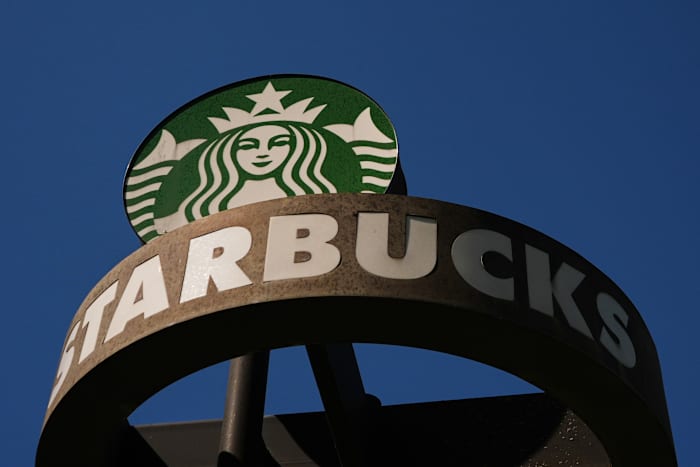
SEOUL – South Korean police have searched the Seoul headquarters of Starbucks Korea as authorities examine a marketing campaign that sparked accusations of insulting the country’s 1980s pro-democracy struggle.
Police said Wednesday that investigators carried out the raid Tuesday at the coffee chain’s local corporate offices in southern Seoul.
Officials did not disclose additional details about the operation. However, South Korean news outlets reported that investigators were also dispatched to the homes of several Starbucks executives.
The backlash began after Starbucks Korea promoted a line of stainless-steel tumblers branded as “SS Tank” and referred to May 18 as “Tank Day.” For many South Koreans, the date carries deep historical trauma: it is the anniversary of the 1980 Gwangju pro-democracy uprising, when citizens in the southern city were violently suppressed by the country’s military-backed government.
The campaign drew further criticism over the phrase “Thwack it on the table!” which many interpreted as an echo of an infamous 1987 police explanation used to conceal the torture death of student activist Park Jong-chol. At the time, authorities falsely claimed Park had died after investigators “hit the desk with a thwack.”
Amid mounting public anger, Shinsegae Group, which holds a 67.5% stake in Starbucks Korea, pulled the promotion within hours and dismissed the head of Starbucks Korea. Shinsegae Chairman Chung Yong-jin later delivered a televised apology. On June 22, Starbucks Korea shut all of its stores across the country early so employees could attend mandatory training on history and social sensitivity.
The investigation followed complaints filed by relatives of those killed in the Gwangju crackdown, which official records say left roughly 200 people dead.
South Korea’s transition to genuine democracy came in 1987, when authoritarian President Chun Doo-hwan, the former military leader associated with the Gwangju crackdown, was compelled by nationwide pro-democracy protests to accept constitutional changes allowing direct presidential elections.


