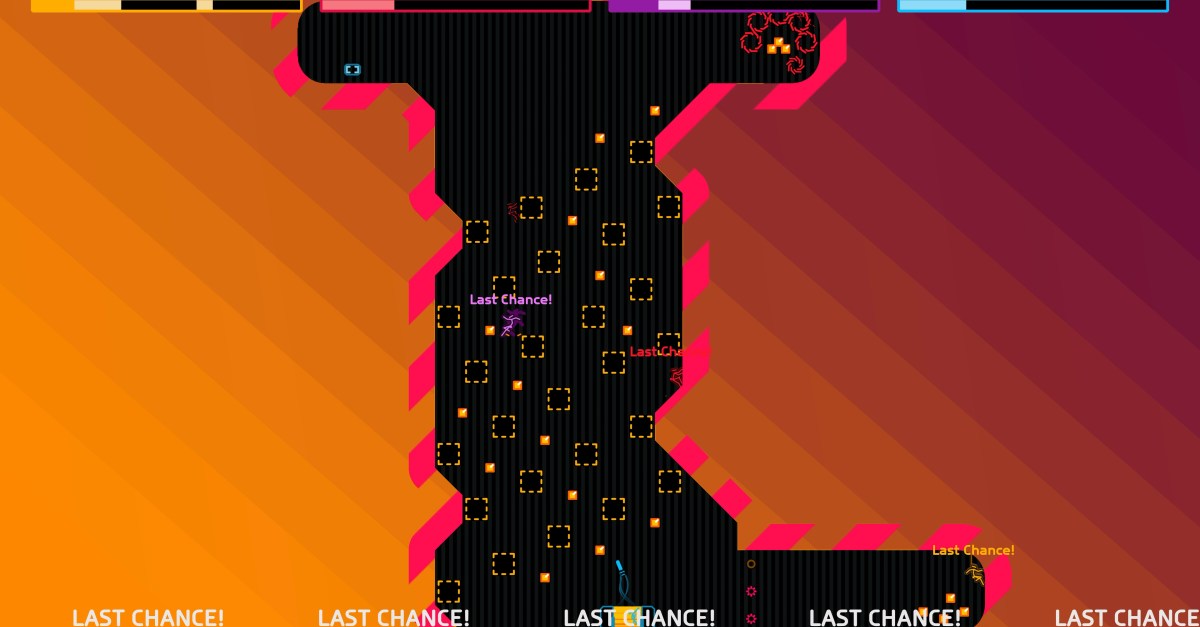

In 2015, Metanet, a small but dedicated game development studio, unveiled N++, a challenging 2D platformer that had been a decade in the making. This release was a continuation of their earlier work, building on the success of the original freeware Flash title, N. At the time, co-founder Raigan Burns optimistically stated, “We hope it’s not another 10 years before we come up with a game.” Fast forward to today, and Metanet is once again making headlines with the announcement of another sequel to N, this time emphasizing multiplayer gameplay.
The upcoming title, whimsically named N Plus Infinity Times Two, shifts the focus from the single-player experience that defined N++ to a more social, multiplayer environment. Described as “the ultimate virtual couch party game with a low skill floor and no skill ceiling,” the game promises the same sleek platforming mechanics and visually stunning graphics, now designed for competitive or cooperative play with friends. Gamers can look forward to its release on the PS5, Xbox, Switch 2, and PC in 2027.
Over the past 11 years, Metanet has been exploring various creative avenues. After relocating from Toronto to Montreal, the team experimented with several potential projects and, last year, celebrated the 10th anniversary of N++ with a special update. However, as Burns shared with The Verge, the team felt the itch to revisit the N series in 2022, reigniting their passion for game development.
Metanet’s approach to game creation is notably unconventional compared to industry norms. Despite their successes with N+ and N++, the studio has intentionally remained small. Burns explains that their process requires significant time to identify a concept worthy of pursuing commercially. “We’ve resisted doing something that would compromise our ability to keep iterating and prototyping until something good shows up,” he says.
Co-founder Mare Sheppard emphasizes the importance of maintaining the creative spark that drives their work. “It’s important to feel that magic,” she notes. “That’s what’s compelling about making games. That’s when we know that we’re doing it in a way that’s right for us.” Burns likens their working style to being part of a band, enjoying the creative process without the burden of excessive management and meetings. This philosophy resonates strongly, particularly in an industry where even major successes often come with unsustainable practices.
“We like being in a band. That’s fun. Being in a lot of meetings and doing a lot of managing: not fun.”
In the case of N Plus Infinity Times Two — unfortunately I can’t think of a good way to shorten that title — the spark came in part from watching how younger players interact with games. Even when they’re playing solo, kids are typically still chatting with friends on their phones, essentially turning everything into a multiplayer experience. Burns and Sheppard wanted to find a way to marry that idea with the couch co-op experiences they grew up on, which led to revisiting the N concept but with a multiplayer spin.
The two describe making N++ as a grueling experience. If you think the game’s levels are hard, just imagine having to playtest them over and over. Part of the excitement about N Plus Infinity Times Two wasn’t just finding a spin on the formula that would be fun to play, but also to develop. “This one really feels like we’re having fun,” says Burns. “We’re really fluent in this one instrument. So now the fun challenge becomes playing new styles of music we’ve never played before, but with this thing we’re really comfortable with.”
Image: Metanet Software
As creative industries from games to Hollywood become increasingly homogenous, Burns also believes that there’s something important about doing work that’s distinct, even if it means revisiting a previous idea, like through the multiple versions of N. It’s similar to titles like Hades II and Silksong: indie-developed sequels that iterated a core concept, but with a fresh angle that made them more than a by-the-numbers follow-up. “Being yourself is more fun and exciting anyways,” Burns explains. “But I honestly think it’s more commercially viable to do something only you can do, because then you have no competition.”
As for what’s next after N Plus Infinity Times Two, the pair obviously aren’t revealing anything just yet. There are a few bigger 3D game ideas kicking around, but those would necessitate some of that scaling up that the studio has so far avoided. What they won’t close the door on, however, is coming back to the idea of N again at some point in the future.
“If we can do something that expresses something new, or lets us see things in a different way, or we get a different perspective on what this game is or how to play it, that’s exciting,” says Sheppard. “I think we no longer think this is definitively going to be the last one. We’ve abandoned that idea. It doesn’t have to be.”


