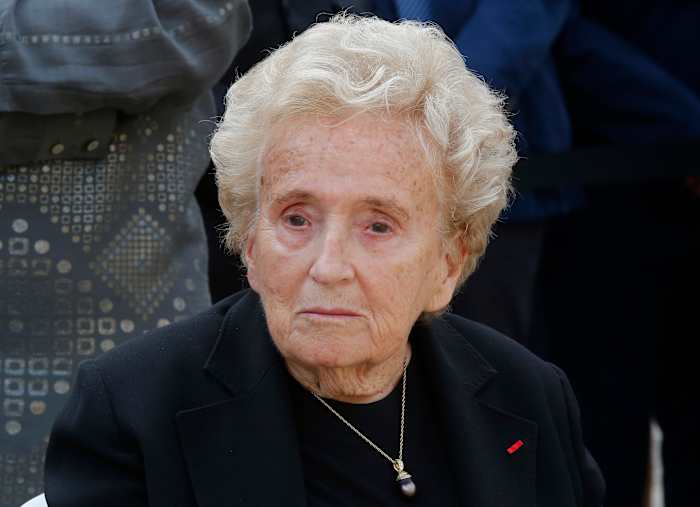


PARIS – Bernadette Chirac, the formidable former first lady of France, has passed away at the age of 93. Known for her unwavering presence beside President Jacques Chirac during his 12-year tenure at the Élysée Palace from 1995 to 2007, Bernadette also carved out her own political influence in the rural region of Corrèze and elevated a children’s hospital charity to national prominence.
Her passing was confirmed on Saturday by President Emmanuel Macron, who expressed his and his wife Brigitte’s deep sorrow. He acknowledged Bernadette Chirac as a figure who left an indelible mark on French history and positively impacted the lives of countless patients through her dedicated charitable efforts.
“A great lady of the heart has departed,” Macron remarked, honoring her legacy.
Throughout more than five decades, Bernadette stood as a steadfast pillar in her husband’s ambitious political journey. From his roles in Parliament and as prime minister, to his 18-year leadership as mayor of Paris, and ultimately as president in 1995, her support was unwavering.
In official photos, Bernadette Chirac was often seen with her chin held high, her blond hair meticulously styled, and a small handbag on her arm, exuding an air of institutional authority rather than merely that of a political spouse.
Yet, she was always more than the caricature of a first lady; her influence and legacy extended far beyond the confines of her public image.
The Chanel suits, dark glasses, nasal voice and withering judgments became part of the national image.
Beneath them was a relentless worker and a cold-eyed political operator who, almost alone among the wives of French presidents, built a base of power that was her own.
She was born Bernadette Thérèse Marie Chodron de Courcel on May 18, 1933, in Paris, into money, lineage and Catholic duty.
Her father’s family included soldiers, industrialists and diplomats; an uncle had served as an aide to Charles de Gaulle in wartime London.
But her life would be most marked by her time at the prestigious Sciences Po university in Paris, where she met Jacques Chirac, a handsome and much-courted young man whose appetite for politics would come to define them both.
They married in March 1956. The union lasted 63 years and was, by her own account, a long lesson in endurance.
Jacques Chirac was famous for his warmth, appetite and instinctive connection with crowds. Bernadette’s gifts were different, observers said.
She was controlled, socially formidable, devout, exacting and sometimes devastatingly funny.
The Catholic philosopher Jean Guitton called her the “last queen of France,” and she did little to discourage the idea.
Her husband’s reputation as a womanizer was an open secret she chose, after much pain, to meet with dry humor.
Swarmed by photographers in Corrèze in 1998 — after rumors that Jacques Chirac had been unreachable the night Princess Diana died because he was with an actress — she stepped from her car and deadpanned: “Calm down. I’m not Claudia Cardinale. Or Lollobrigida.”
“At first, it was hard. I was very heartbroken, and then I got used to it,” she said years later in a television documentary.
“I told myself that was how things were and that I had to accept it with as much dignity as possible.”
Sent to tend her husband’s rural stronghold in Corrèze while he pursued power in Paris, she did far more than tend it. In 1971, she was elected municipal councilor in Sarran. In 1979, she became a general councilor in Corrèze and held the seat until 2015.
Her influence grew after Jacques Chirac became president in 1995. The role of first lady in France has no constitutional power, but she made the Élysée a place where her approval mattered.
She could be loyal, cutting and unforgiving, and understood that campaigns are made not only of speeches and polls but of debts, slights and resentments.
Yet she also carved out a space for female authority inside a male political culture that had little interest in sharing power — making it quietly clear that she would not be reduced to “the wife of.”
Her deepest grief stayed mostly private.
The Chiracs’ elder daughter, Laurence, developed severe anorexia after meningitis in adolescence and attempted suicide more than once. She never fully recovered and died in 2016 at 58.
That ordeal pushed Chirac toward the charitable work that reshaped her public image.
In 1994, she took over a medical charity that collected coins for children in hospitals. To millions of French viewers, the woman once mocked for hauteur became the face of hospitalized children and families living around hospital beds.
She continued running it until 2019, when she handed it to Brigitte Macron, the wife of France’s current president, and became honorary president.
By then, she had long since become a political force in her own name.
“My husband no longer does politics, but I do,” she said to journalists, after Jacques Chirac left office in 2007.
She famously nicknamed Dominique de Villepin, the Élysée official she distrusted, “Nero,” yet also reportedly helped engineer her husband’s reconciliation with Nicolas Sarkozy, the former protégé who had betrayed him politically.
Her 2001 memoir, “Conversation,” written with journalist Patrick de Carolis, sold hundreds of thousands of copies and introduced the French to a franker, funnier and more independent woman than many had assumed.
After Jacques Chirac left the Élysée, his health declined and his public voice faded. Hers remained sharper for longer. Asked how he was, according to French media, she answered in her flat, unmistakable voice: “He keeps the dog.”
Age and grief eventually drew her out of public view.
By the time Jacques Chirac died in 2019, she was too fragile to take part in the public farewell where France and foreign leaders honored him.


