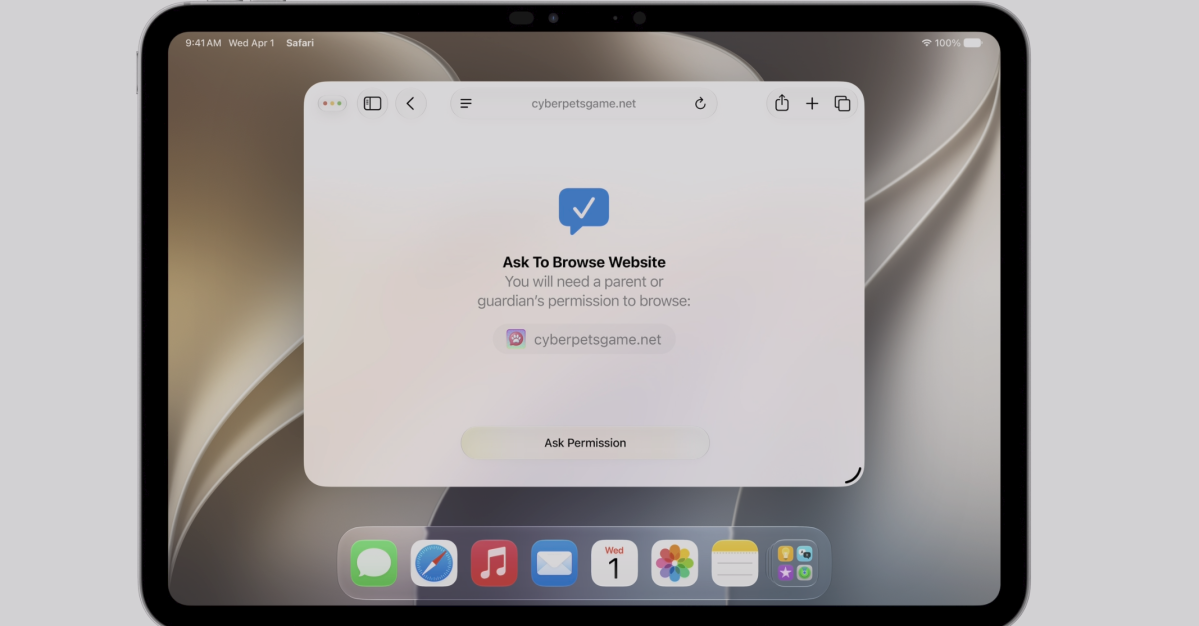

Apple’s decision to devote a significant portion of its WWDC keynote to parental controls was unexpected for a variety of reasons. Chief among them is that, despite the extensive focus, the company didn’t reveal much beyond a revamped interface. Most of the features highlighted were already in existence or were simply enhancements of existing options. The reasoning behind Apple’s move isn’t hard to decipher. With ongoing high-profile social media trials involving giants like Meta and Google, along with demonstrators at Apple’s Cupertino headquarters, the tech giant is keen to project an image of responsibility when it comes to children’s safety online.
However, the reality is somewhat different. As a mother of two teenagers, who have been Apple device users for years, I have firsthand experience dealing with Apple’s parental controls. Over the years, I’ve navigated through what seems like thousands of Screen Time passcodes, resulting in a noticeable increase in my gray hair count.
Screen Time, as it stands, isn’t an effective tool for regulating children’s device usage; the most effective method remains simply removing the device altogether. This is a stance Apple is unlikely to adopt, and one that becomes less practical as children grow older for numerous reasons.
I’m not here to delve into debates about the extent of responsibility that should lie with technology developers versus parents regarding parental controls—that’s a broader societal discussion for another day.
My main contention with Screen Time is that despite being a powerhouse in technology, Apple has long provided lackluster parental controls and is now attempting to mask the problem with superficial improvements.
Numerous complaints populate user forums about the inadequacies of Screen Time, including its inaccuracies, the ease with which kids circumvent it, and its limitations. Back in 2024, Joanna Stern from The Wall Street Journal highlighted a bug that had allowed children to bypass content restrictions on Screen Time for several years.
The only good thing Apple has done for Screen Time since I started using it nearly a decade ago is to add an alert that tells you when “someone” has used the Screen Time passcode — and that was last year.
Still, here we are, and there are some updates coming with iOS 27 this fall to be happy about. Ask to Browse, which requires them to request permission to visit a new website, will be good for monitoring kids’ web use. While you’ve been able to require them to Ask to Buy to download an app for a while, as I know well, kids bypass restrictions on apps like Discord and TikTok by going to the websites instead. You can block individual websites, but that’s a real fun game of whack-a-mole.
One thing Apple still needs to fix here is the ability for a child to redownload an app that was previously downloaded on theirs or a family member’s account. Per the Discord debacle, my daughter could redownload the app even after it was deleted from her device, without having to ask, because I had downloaded it.
Communication Limits, which lets you manage your child’s contacts and designate who they can call and message and when, also aren’t new. And they are also fiddly and frustrating. I ended up turning it off when neither of us could add contacts to her phone. This was an issue when she was on a school field trip and needed to add her teacher’s number, but became a bigger problem when Screen Time prevented her from calling me. Some of the issues I’ve run into seem to stem from the time it takes to sync across devices, especially when you’re not together. Hopefully the redesigned Screen Time interface also includes some behind-the-scenes improvements.
Time Allowances was the feature Apple spent the most time on in the keynote, even though it was already a feature. You’ve been able to set time limits on apps for a while. What’s new is that you’ll now get some “expert” guidance as to how much time you should let your child have per app or category. Great, more parent guilt when you set the Netflix slider to four hours so you can finish your report.
Great, more parent guilt when you set the Netflix slider to four hours so you can finish your report.
What I’d like to see are more granular Time Allowance categories. For example, Entertainment includes YouTube, Spotify, and Netflix. I’m happy for my kid to have Spotify for several hours, but not YouTube. You can set time limits for individual apps, but that gets to be a lot.
Speaking of “a lot,” managing screen time for your kids feels like a full-time job. I’m most interested in the redesigned Screen Time interface, which is hopefully a lot more usable than the current method of having to dig through several screens in Settings. I’ve lost count of the number of parents who have asked me to help them turn on parental controls on their kid’s iPad or iPhone. When you search “parental controls” in Settings, nothing shows up.
I am disappointed Apple didn’t make Screen Time a separate app; I think that would improve ease of use, but I mostly want it so I can lock it down with Face ID. Kids are wily. My daughter regularly hops onto my phone without me seeing and unchecks the Block at End of Limit toggle for each app. It’s sneaky, as you have to dive several menus too deep to find it, meaning I often don’t notice the change. The perils of raising a tech-savvy teen.
If Apple wants to take credit for protecting our kids from the dangers of screen time, then it needs to start with controls parents can rely on.
Correction, June 8th: An earlier version of this article incorrectly referenced Communication Limits in one instance. Communication Safety is the feature that blocks gore and violence in messages.