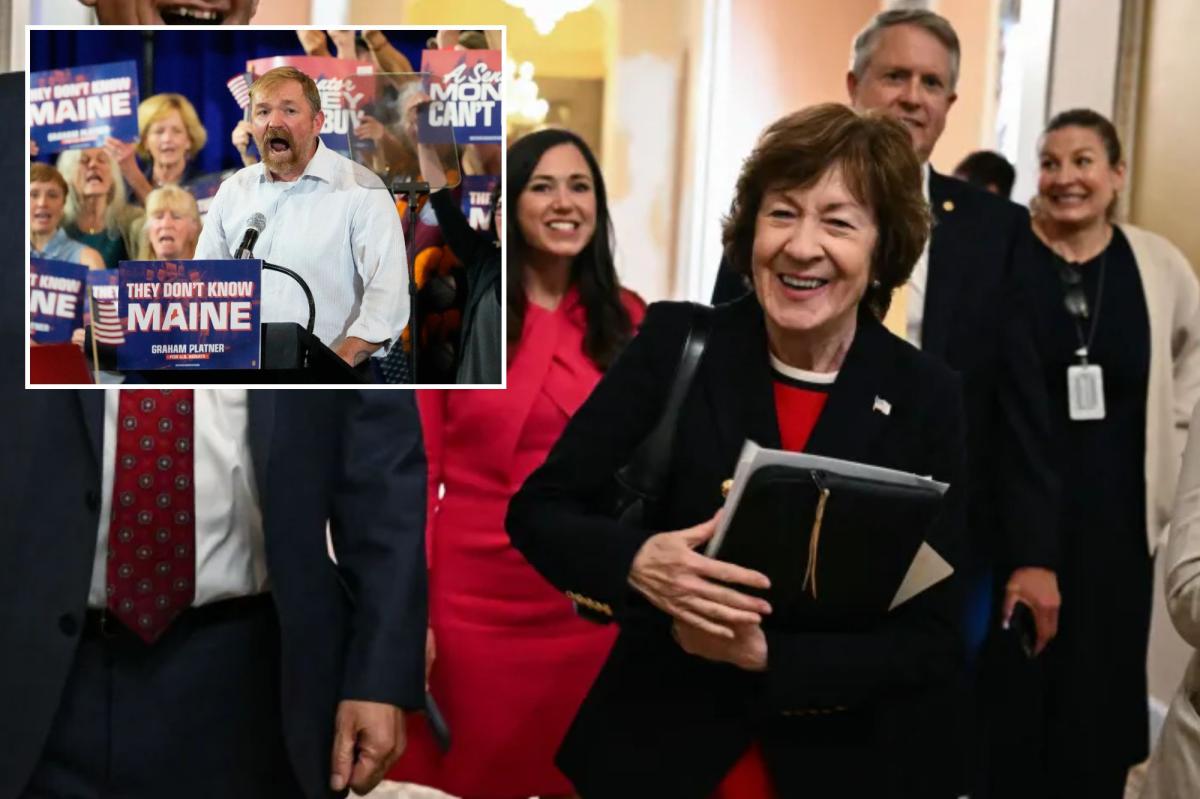


In Blue Hill, Maine, the political landscape is heating up as supporters of Senator Susan Collins swiftly prepare for what promises to be a contentious showdown with Graham Platner, the newly minted Democratic nominee for Senate. Platner, an oyster farmer with a rising profile, now finds himself at the center of a pivotal race that could sway the power dynamics in the Senate.
Determined to safeguard this crucial seat, Collins’ allies are wasting no time in launching attacks against Platner, focusing on his various controversies. Senator Tim Scott of South Carolina, who heads the National Republican Senatorial Committee, took to social media platform X to issue a stark warning. “Today marks the beginning of the end for Graham Platner. He will be exposed, his agenda destroyed, and Mainers will reject him,” Scott proclaimed.
Scott further emphasized that no amount of support from Washington Democrats or financial backing from left-wing billionaires would be enough to rescue Platner from his predicament. In an effort to draw a sharp contrast between the candidates, the NRSC quickly released a video showcasing Collins’ extensive legislative achievements alongside Platner’s alleged missteps.
The video succinctly delivers the message: “Graham Platner delivers scandals. Susan Collins delivers results. In Maine, the choice is clear.” With the race now officially underway, both sides are bracing for an intense campaign that could significantly impact the political future of both Maine and the nation.
The NRSC released a quick video juxtaposing Collins’ lengthy legislative record with Platner’s baggage.
“Graham Platner delivers scandals. Susan Collins delivers results. In Maine, the choice is clear,” the NRSC declared.
Meanwhile, the Republican National Committee slammed Platner as a “sick and deranged person.”
Collins herself refrained from flamethrowing against Platner. Though she told CNN that the accusations against him “are extremely troubling and serious, and he owes the people of Maine a detailed answer.”
The Pine Tree State Republican celebrated her nomination for a historic sixth term from Washington, DC, Tuesday night while maintaining her perfect attendance record on Capitol Hill. She had an uncontested primary.
Since taking office in 1997, Collins (R-Maine) has not missed a single vote, having taken part in her 10,000th roll call last week.
The 73-year-old is the first senator in US history to cast 10,000 votes in a row.
Despite Collins running unopposed, her campaign held a small watch party in Maine to celebrate her nomination.
Meanwhile, her general election foe, the embattled Platner, celebrated his clinching of the Democratic nomination at a YMCA in Blue Hill, roughly two and a half hours north of Portland.
Platner has barnstormed Maine since last summer, holding at least 83 town halls while needling Collins for not doing the same.
Collins, the lone Republican to represent a New England state in Congress, is considered one of the most moderate members of the Senate and frequently tops the Lugar Center’s ranking of most bipartisan senators based on legislation sponsored or co-sponsored.
“The one thing that Susan Collins can actually claim is that she has a lot of seniority and she technically has power as chair of [the Senate] Appropriations [Committee],” Platner told his supporters at a town hall in Portland over the weekend.
“Appropriations is an incredibly powerful committee, and I firmly believe that every small population state needs at least one senator who is dedicated to building power on Appropriations in order to bring money back to their state.”
If Platner were to unseat Collins, it would take years for him to get a seat on the Appropriations Committee due to the upper chamber’s seniority rules.
“Susan Collins loves to brag about it. I’m like, you don’t get a gold star for showing up at work,” Platner complained. “It’s important to remember that Susan Collins will not be the senator from Maine someday. … we’re going to lose [that power].”
Collins is lagging Platner by 7.4 percentage points in the RealClearPolitics polling aggregate, which underestimated her support by double digits during her 2020 re-election bid.