Belfast burns after Sudanese migrant arrested in brutal knife attack

A Sudanese asylum seeker faced court on Wednesday, accused of a violent stabbing incident that left a Belfast man blind in one eye, against a backdrop of growing anti-immigrant tensions across Northern Ireland.

Hadi Alodid, 30, appeared via video link at Belfast Magistrates’ Court. Prosecutors alleged he was responsible for the attack that severely injured Stephen Ogilvie’s left eye earlier in the week. Consequently, Alodid was remanded into custody.

Facing charges of attempted murder, making death threats against a radiographer, and possession of a knife, Alodid opted to forgo legal counsel, communicating through an Arabic interpreter, and did not enter a plea.

The incident took place late Monday night around 10:30 p.m. in north Belfast. The attack, captured on video and rapidly shared online, ignited public outrage and led to violent demonstrations. Authorities reported that Ogilvie, in his 40s, sustained severe injuries to his face, neck, back, and eyes. A kitchen knife, believed to be the weapon used, was found at the location.

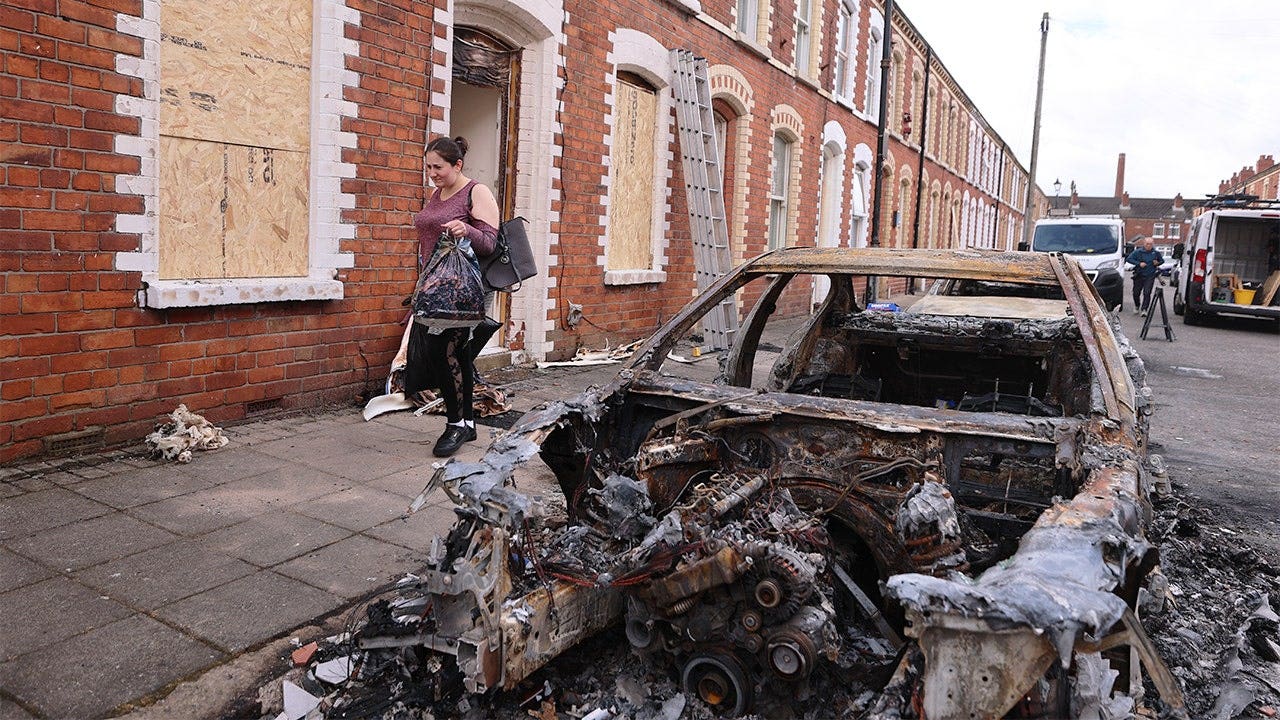
In the aftermath, McMaster Street in east Belfast bore signs of the unrest, with burned-out cars and boarded-up homes following Tuesday night’s violence. The attack in the Kinnaird Avenue area, near the bustling Antrim Road, left the victim with significant injuries.
Footage online showed civilians confronting the assailant, with one individual brandishing a hurling stick. Assistant Chief Constable Ryan Henderson of the PSNI commended these bystanders for their bravery, noting their crucial role in potentially saving the victim’s life.

Police said Alodid entered Northern Ireland from the Republic of Ireland in 2023, applied for asylum and was granted a five-year permit to remain. Authorities initially identified him as Somali before later correcting his nationality to Sudanese.

PSNI Assistant Chief Constable Ryan Henderson said investigators had “no information to suggest that this was a terrorist-related incident” and were not seeking additional suspects.

Masked men set fire to several homes they believed housed immigrants following the incident. They also burned trash bins, torched a Belfast bus and threw objects at police officers. Firefighters rescued multiple people from burning homes.

Police said they had declared a critical incident and increased their presence across Northern Ireland amid concerns about further unrest.

Police work at the scene of a stabbing on Kinnaird Avenue in north Belfast, Northern Ireland, on June 9, 2026.  (Paul Faith / AFP via Getty Images)

Anselme Shima, a Belfast resident originally from the Democratic Republic of the Congo, said he witnessed the aftermath of the unrest near his home.

“I’ve lived on my street for almost 10 years, I have a good relationship with my neighbors, but last night was a horrific one,” he told Reuters. “We don’t know what to do. I’m scared. Seeing this, I’m wondering if I’m next.”

First Minister Michelle O’Neill of Sinn Fein described the unrest as “thuggery.”

“Groups of masked men burning families out of their homes is nothing less than disgusting cowardice,” she said.

Deputy First Minister Emma Little-Pengelly of the Democratic Unionist Party said that “taking frustration at the evil actions of a person out on those who had no part in it is utterly wrong.”

British Prime Minister Keir Starmer called the stabbing attack “sickening” and condemned violence targeting people because of their background.

Police attend the scene following a stabbing attack in North Belfast on June 09, 2026 in Belfast, Northern Ireland.  (Charles McQuillan/Getty Images)

“The scenes in Belfast last night were shocking and completely unacceptable,” Starmer wrote on X. “There is no justification for the violence and disorder that we saw threatening our communities, nor for those who encouraged it, online or elsewhere. It is clear that people were targeted last night because of their background and I will not tolerate it.”

The unrest was amplified online by anti-immigration activists, including Stephen Yaxley-Lennon, better known as Tommy Robinson.

A Glider bus burns on Newtownards Road in east Belfast during an anti-immigration protest following a stabbing attack in the city. (Liam McBurney/PA Images via Getty Images)

Some politicians said the stabbing should prompt a review of the open border between Northern Ireland and the Republic of Ireland, a highly sensitive issue because free movement across the border is a central pillar of the peace process that largely ended decades of violence known as “The Troubles.” The conflict involving Irish republican and British loyalist militants, as well as U.K. security forces, left nearly 3,600 people dead before the 1998 peace accord.

Much of Tuesday’s unrest took place in working-class areas where former paramilitary groups continue to wield influence.

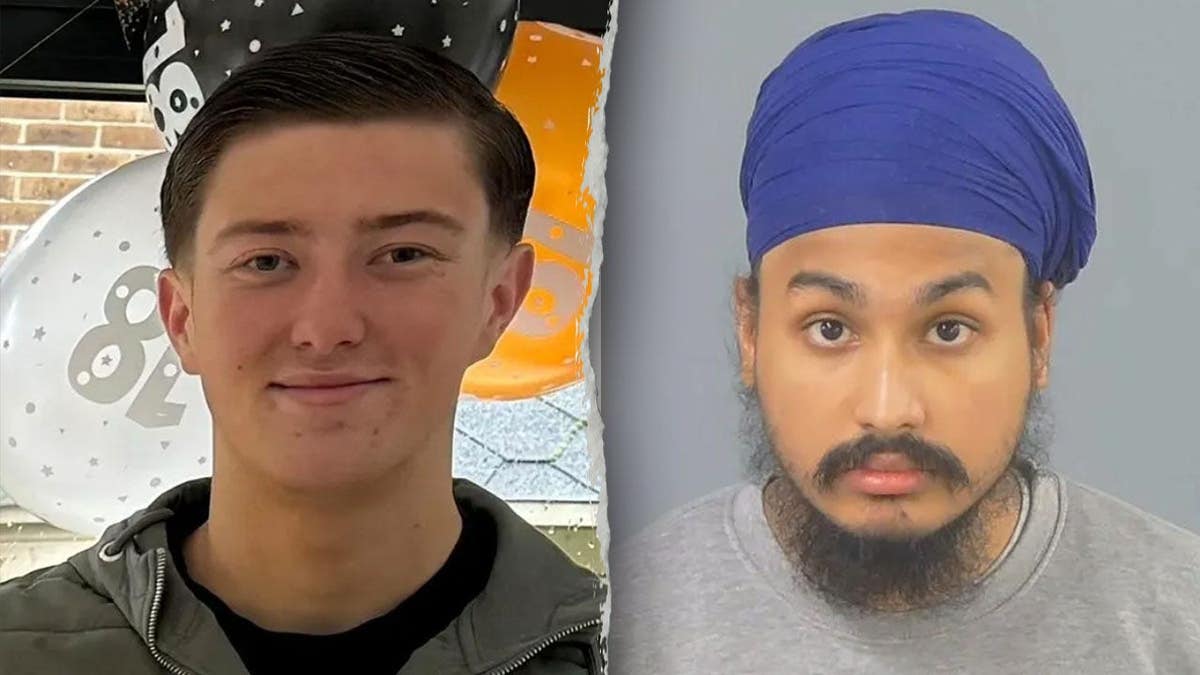
The case comes amid ongoing debate in Britain over another fatal stabbing that drew national attention in Southampton, England, last year.

henry nowak and his killer Vikram Digwa

Freshman student Henry Nowak was stabbed many times by Vikram Digwa who used an eight inch ceremonial knife in December 2025.  (Hampshire Police; Press Association via AP Images)

Henry Nowak, who was White, was killed by Vickrum Digwa, a Sikh man who falsely claimed to police that he had been the victim of a racist assault by Nowak. Officers initially treated the wounded Nowak as a suspect before recognizing his injuries and attempting to save his life.

Digwa was convicted of murder and sentenced last week to life in prison with a minimum term of 21 years. The case has fueled debate about policing and race, and a protest following the killing turned violent, with some participants attacking officers with chairs and rocks. Several people were later charged with violent disorder.

–>

Leave a Reply

Your email address will not be published. Required fields are marked *