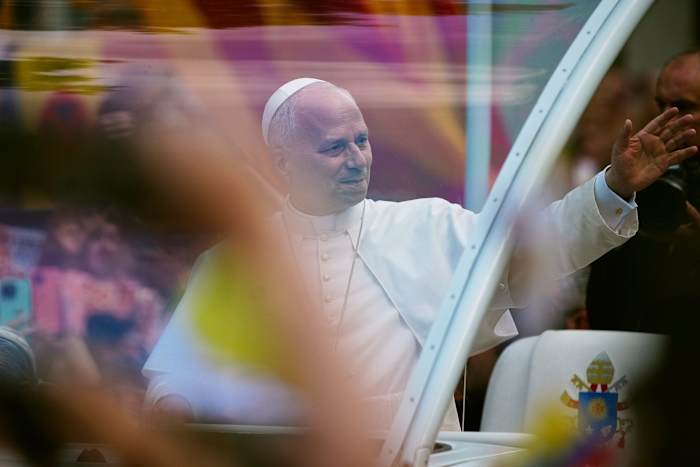

BARCELONA – On Thursday, Pope Leo XIV will pay a visit to the Canary Islands, aiming to spotlight the dire situation faced by migrants who bravely venture into perilous conditions each year in a bid to reach Europe. This visit honors the intentions of Pope Francis, focusing on a significant nexus in the ongoing European migration discourse.
Pope Leo XIV’s itinerary includes the last two days of his weeklong Spanish journey in the Canary Islands. This Spanish archipelago, positioned closer to Africa than mainland Spain, serves as a critical gateway for migrants who are transported from West Africa.
During his visit, the Pope plans to engage with newly arrived migrants, alongside representatives from the church and humanitarian groups, all of whom play essential roles in supporting and integrating these individuals into Spanish society.
In a poignant tribute, he will remember those who have perished at sea, from a port that, in 2020, earned the moniker “dock of shame” due to the appalling conditions faced by migrants during a surge in arrivals.
The Socialist-led government of Spain, having faced criticism during the 2020 crisis, has taken a different stance compared to other European and American policies by advocating for immigration on both economic and humanitarian fronts. Earlier this year, it initiated a campaign to legalize hundreds of thousands of undocumented immigrants.
Prime Minister Pedro Sánchez has underscored the economic advantages of immigration, particularly in light of an aging population and declining birth rates.
A historic speech defends dignity of migrants
Leo has already called for strengthened international efforts to prevent human smuggling of migrants, the creation of safe pathways for them to move legally and development in countries of origin so more people can choose to stay home.
In a speech to the Spanish Parliament earlier this week, the first-ever by a pope, Leo demanded welcome and integration for those who do choose to flee, insisting on their inherent human dignity.
“The moral greatness of a nation is manifested, above all, in its capacity to accompany, protect and love those lives that are most fragile,” Leo said in a speech that also upheld the inherent dignity of the unborn, the elderly and sick. He received a 7-minute standing ovation at the end.
A visit to the ‘dock of shame’
Migrant arrivals in the Canary Islands peaked in 2024 at nearly 47,000, but have fallen dramatically, with just over 2,000 people landing there in the first four months of 2026.
Upon his arrival in Las Palmas, Leo was to head to Arguineguin, where in 2020 arrivals reached such numbers that migrants were forced to sleep in makeshift camps in the open air on a dock that became known as the “dock of shame.”
Many migrants were left to sleep for weeks with just a blanket and no showers. Potential asylum seekers had no proper access to legal advice and some people were held for weeks, much longer than the three days that the law allowed. The crisis shamed the government, which was forced by its ombudsman to shutter the makeshift camp and relocate the migrants.
Learning of the crisis, Francis had planned to visit the Canary Islands to bring his solidarity, but never managed the trip. Francis had made the plight of refugees a hallmark of his papacy, following the Gospel mandate to “welcome the stranger.”
Leo has followed suit, insisting especially on the dignity of migrants in his native United States amid the Trump administration’s crackdown and mass deportation program.
Next month, on July 4, the American pope will spend U.S. Independence Day on the island of Lampedusa, Sicily, another main point of entry for migrants smuggled from North Africa trying to reach Europe.
Francis had visited Lampedusa in 2013, on his first trip outside Rome, and tossed a wreath into the Mediterranean in honor of the thousands of migrants who died in the perilous crossing. It was on that trip that he coined a phrase that became a mantra during his pontificate denouncing the “globalization of indifference” that the world showed migrants.
___
Associated Press religion coverage receives support through the AP’s collaboration with The Conversation US, with funding from Lilly Endowment Inc. The AP is solely responsible for this content.


