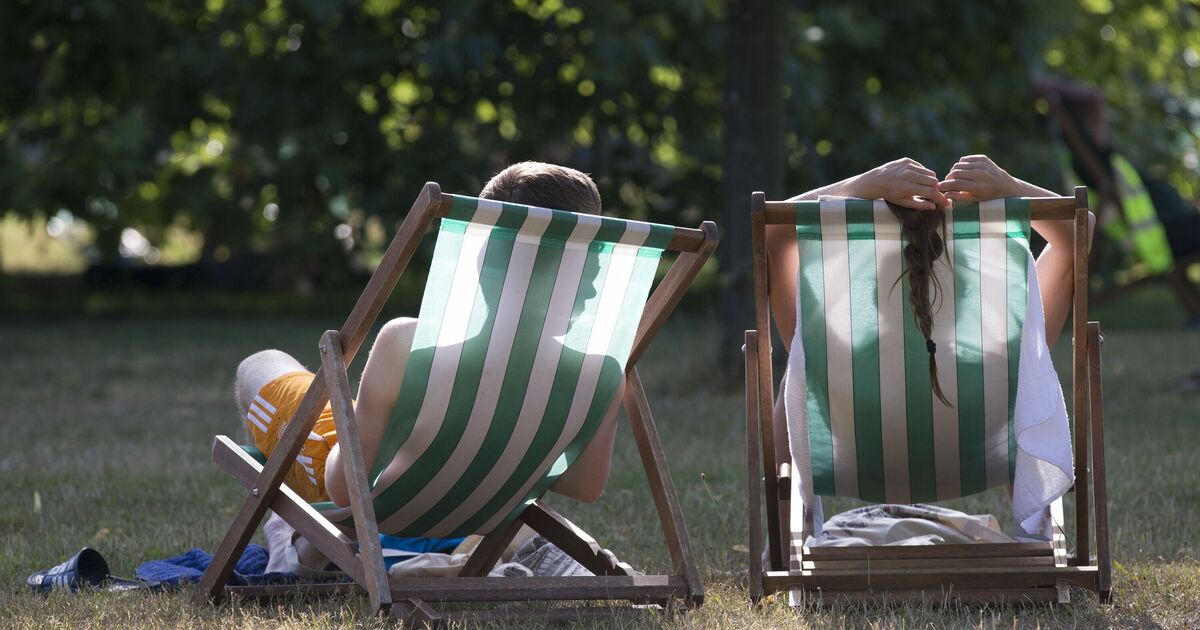
With temperatures set to climb again and the Met Office placing parts of southern UK under weather warnings next week, people are being reminded not to overlook a key summer safety step. Hot, sunny conditions may bring the chance for beach trips, sunbathing and relaxed weekends outdoors, but one expert is warning that sunburn can still catch people out — particularly on one often-forgotten area of the body.
Dr Wajid Ali Anwar, a hair transplant surgeon at UK Hair Transplants, is urging people to make scalp protection a regular part of their hot-weather routine. He said it should not be treated as an afterthought, especially for anyone with thinning hair or a parting that exposes the same area of skin day after day.
The specialist said: “The scalp is one of the easiest places to miss because people assume their hair gives enough cover. That is not always true, especially if hair is thinning, very fine, shaved short or parted in the same place every day.”
He also outlined the warning signs people may notice if their scalp has been burned by the sun.
“Sunburn on the scalp can feel sore, tight and hot, then it may peel and flake in a way that looks like dandruff,” he said. “If the skin has burned, the priority is to get out of the sun, cool the area gently and avoid scratching or picking at it.”
READ MORE: Disclosure Day Decoded: The Most Confusing Moments Explained Clearly
Although sunscreen sprays and mists can appear more convenient, Dr Anwar emphasised that sun protection still needs to be applied thoroughly and topped up regularly during the day. He advised people to apply sunscreen to any visible skin, rather than focusing only on obvious areas such as the hairline.
As the Met Office warns of hot weather on Monday and Tuesday, people across the UK are being encouraged to plan ahead and take sensible steps to protect themselves in rising temperatures.
Dr Anwar added that those most at risk include people with thinning hair, bald patches, shaved hairstyles, fine hair, braids, exposed crowns or a defined parting that leaves a strip of scalp uncovered in direct sunlight.
The specialist concluded: “A hat is often the better protection for the scalp because it gives a physical barrier. People should also keep an eye on any sore, scabbed or changing patch on the scalp that does not heal and get it checked by a GP.”


