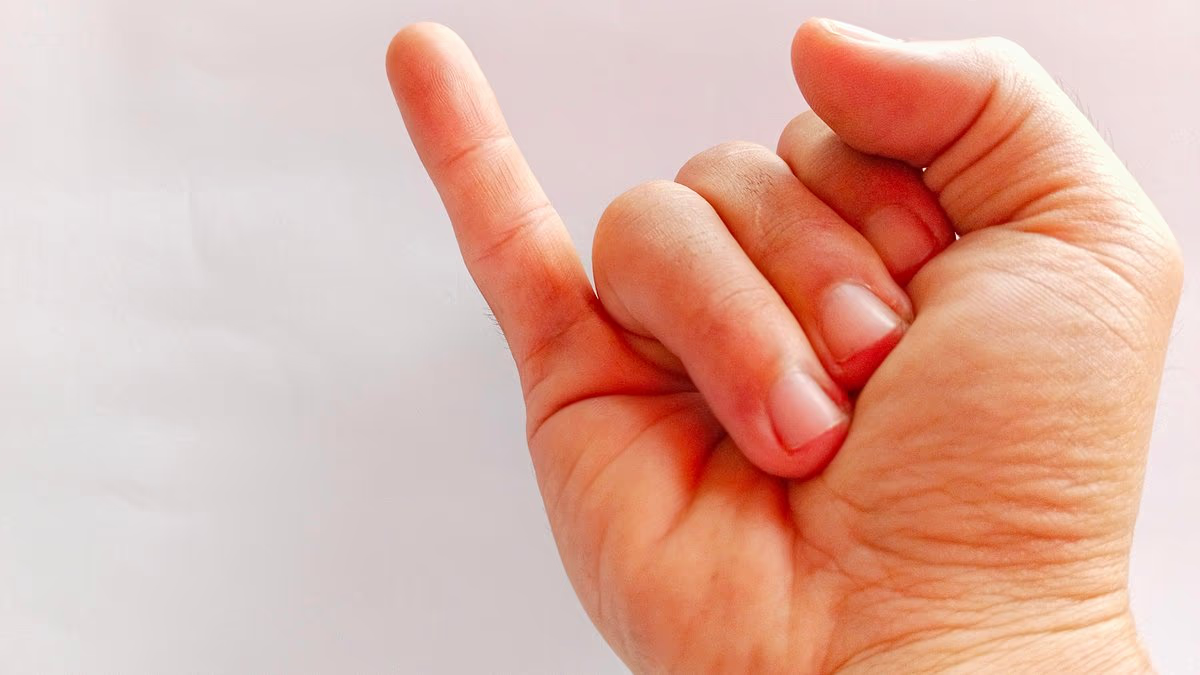

A simple 10-second “pinky test” is being promoted as a possible way to spot signs of brain health and potentially help reduce dementia risk, according to experts and wellness advocates.
Researchers have long linked regular physical activity, particularly when adopted early in life, with a lower likelihood of developing dementia. Exercise can increase blood flow to the brain, calm damaging inflammation and help protect brain cells from toxic plaque buildup.
Studies have suggested that aerobic activities such as swimming and running, as well as strength training and yoga, may all play a role in lowering dementia risk.
Now, a smaller and more unusual technique has gained traction on social media, where influencers and some health commentators say brain protection could begin with the little fingers.
The movement, often called “pinky time,” starts by holding both hands out in front of the body with the palms facing each other. Then, on each hand, the middle finger is crossed over the index finger, similar to a good-luck gesture.
While keeping the index and middle fingers crossed, the ring fingers are brought to touch the thumbs. The person then lifts and lowers the pinky fingers for several seconds.
In a TikTok video demonstrating the exercise, wellness influencer Ana Lučić claimed that doing the movement for “just seven to 10 seconds a day” may help support brain plasticity and protect against Alzheimer’s disease.
Lučić also suggested that being able to move the pinky smoothly could indicate strong brain function, arguing that declines in fine motor control can sometimes reflect broader cognitive changes.

A 10-second finger exercise may reveal your risk of dementia and even help prevent it, experts have revealed
The trend emerges as 7 million Americans are living with dementia, and that number is expected to nearly double by 2050, leaving millions anxious to catch it early.
Experts have noted that while the specific movements behind ‘pinky time’ have not been studied, there is evidence that similar movements have brain-boosting properties.
‘The hands occupy a disproportionately large amount of the brain’s motor and sensory cortex,’ Dr Shaheen Lakhan, a neurologist and pain medicine specialist in Miami, told HuffPost.
‘Activities that require dexterity, coordination, timing and learning can engage multiple brain networks simultaneously.’
The motor cortex is a part of the brain’s frontal lobe that is responsible for planning, controlling and executing voluntary muscle movements, many of which include hand movements.
The sensory cortex, meanwhile, encompasses regions of the cerebral cortex, which receives and processes sensory information from the body and environment like touch, sight and sound.
Stimulating these areas promotes neuroplasticity, which is the nervous system’s ability to adapt and learn new information, adjust to new stimuli and compensate for injuries and damage.
‘Pinky time requires that you move your fingers in complex ways on both hands at the same time,’ Dr Michelle DiBlasi, chief of inpatient psychiatry at Tufts Medical center in Boston, told Good Housekeeping.
‘When you do this, you’re helping both sides of your brain to communicate with one another, which deepens the connection between the left and right sides of your brain.’
Focusing on the task can also calm the nervous system, which reduces stress hormones like cortisol that damage brain cells responsible for memory and executive function.
There are no studies specifically on ‘pinky time,’ but recent research has suggested there may be a cognitive benefit to finger exercises.
A 2025 study from the University of Pennsylvania School of Nursing, for example, found repeating finger exercises may improve cognitive performance with hand-brain coordination.
Additionally, a 2026 study in the journal BMC Geriatrics of 47 older adults in nursing homes found that hand exercises improved motor function in those with mild cognitive impairment (MCI), a precursor to dementia.
‘We don’t have enough evidence to show that pinky time has the strength to prevent Alzheimer’s,’ DiBlasi said.
‘However, I do think that this trend is important. Pinky time reminds people that there are ways we can help to prevent Alzheimer’s and cognitive decline.’