
Trump congratulates Colombia presidential candidate
Trump offered congratulations to Abelardo de la Espriella, the conservative Colombian candidate widely known as “El Tigre,” after early results showed him narrowly ahead. Although the race has not been formally certified, the vote count points to a possible conservative turn in Colombia. (Reuters.)
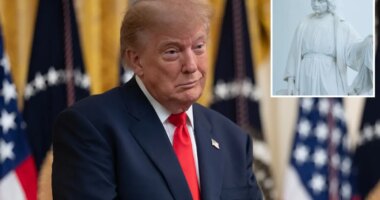
President Donald Trump publicly congratulated attorney and businessman Abelardo de la Espriella at the White House on Monday, speaking as though the Colombian presidential contest had already been decided. De la Espriella remains ahead of left-wing Senator Iván Cepeda, but Colombian authorities have not yet officially confirmed the final result.
With 99.9% of ballots counted, de la Espriella held 49.7% of the vote, compared with Cepeda’s 48.7%. The conservative candidate, whom supporters call “El Tigre,” performed strongly across Colombia’s mountainous interior and in the vote-rich department of Antioquia. Cepeda, meanwhile, carried Bogotá and drew significant support along the coasts, reflecting familiar regional patterns from recent national elections.
Cepeda has disputed the count, alleging irregularities at thousands of polling places. Even so, a reversal of the presidential result would be without precedent in Colombia’s modern electoral history.
Should de la Espriella’s lead hold, his victory would add to a broader rightward movement across parts of Latin America, following recent conservative gains in Chile, Ecuador, Bolivia and Peru, where Keiko Fujimori appears positioned to win the presidency.
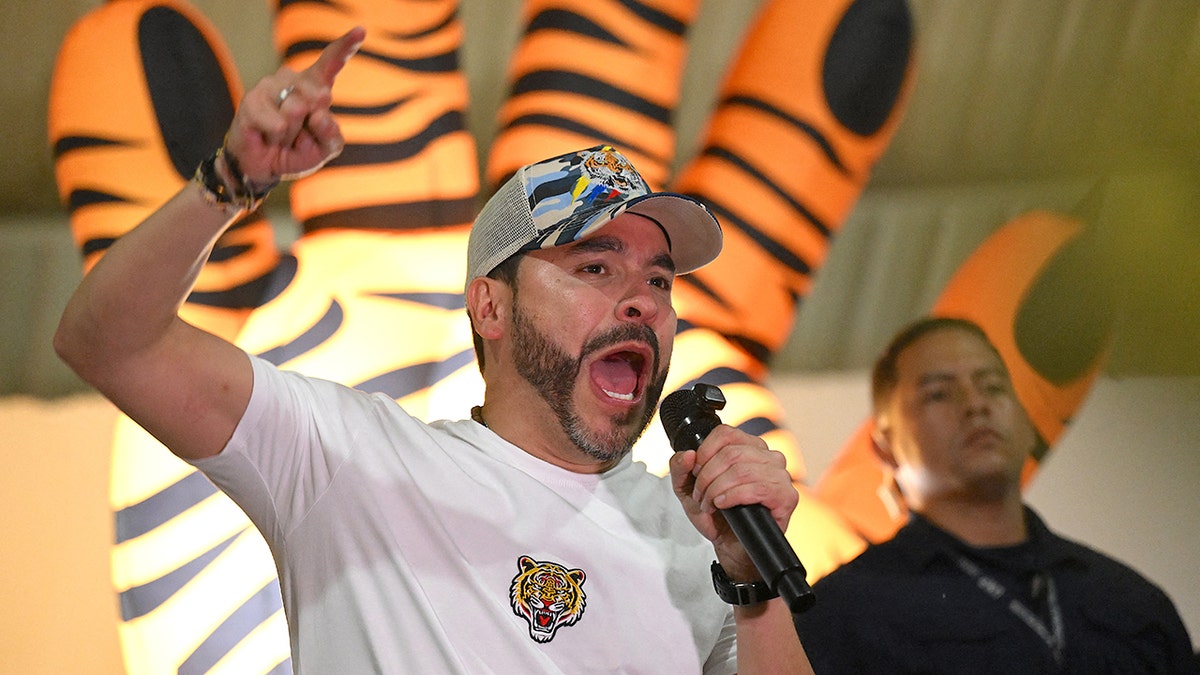
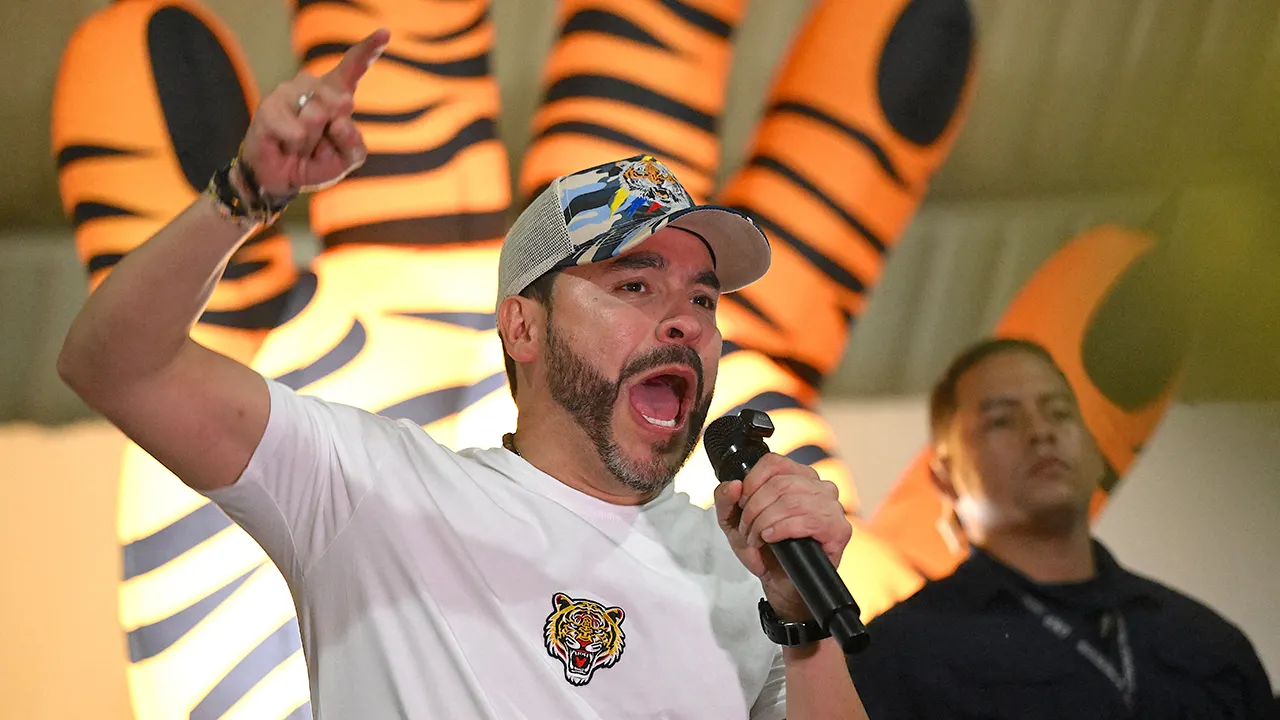
Colombia’s right-wing presidential candidate Abelardo de la Espriella, from the Defensores de la Patria movement, delivers a speech to supporters during a campaign rally in Palmira, near Cali, Colombia on May 14, 2026. Colombia will hold presidential elections on May 31. (Joaquin Sarmiento/AFP via Getty Images)
Trump made his remarks during a signing event at the White House, telling reporters that de la Espriella had contacted him the previous night. “He called me last night, and he thanked me for the endorsement. He won. He won the election,” Trump said. Asked about the future of U.S.-Colombia relations, Trump predicted they would be “much better,” adding, “It’ll be better. He’s going to be a great president.”
The runoff has presented Colombians with two sharply contrasting visions. De la Espriella, backed enthusiastically by Trump, has promised to revive the tough law-and-order policies associated with former President Álvaro Uribe and pursue a more forceful military campaign against guerrilla groups and criminal networks. Cepeda, a longtime ally of President Gustavo Petro, has argued for continuing Petro’s negotiation-centered approach.
Ivan Cepeda is a longtime figure on the Colombian left, and served as senator for 12 years, following a four-year stint in the Chamber of Representatives. His father, Manuel Cepeda, was a prominent figure in the Colombian Communist Party, and was assassinated in 1994 during a particularly bloody era in Colombia’s internal conflict.
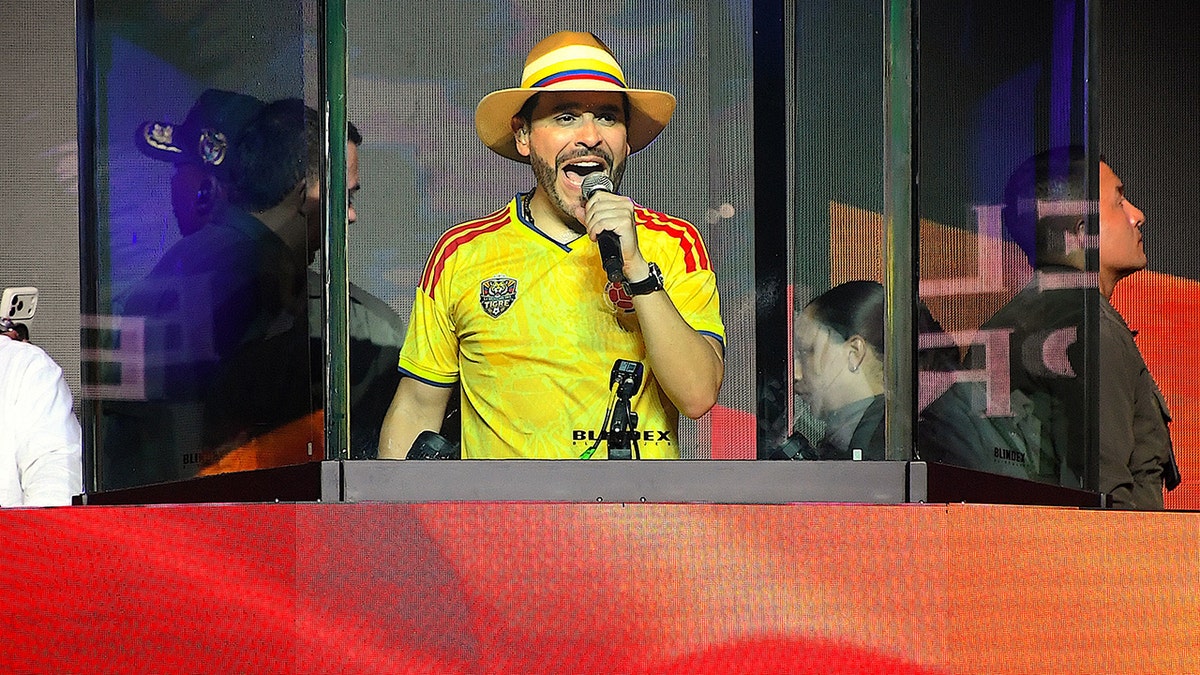
Colombia’s presidential candidate Abelardo de la Espriella, of the Defensores de la Patria party, speaks behind bulletproof glass during his closing campaign rally in Medellin, Colombia on May 24, 2026. Colombia will hold presidential elections on May 31. (Jaime Saldarriaga/AFP Via Getty Images)
ALSO READ: Several Injured After Shooting Breaks Out at Montreal Grocery Store
The first round of the election, held on May 31, saw de la Espriella win 43.7% of the vote, to Cepeda’s 40.9%, with right-wing Senator Paloma Valencia placing a distant third, at 6.9%.
On Sunday evening, Secretary of State Marco Rubio congratulated de la Espriella on the result, saying, “The Trump Administration looks forward to working closely with your incoming administration to advance regional security cooperation, end illegal immigration to the United States.”
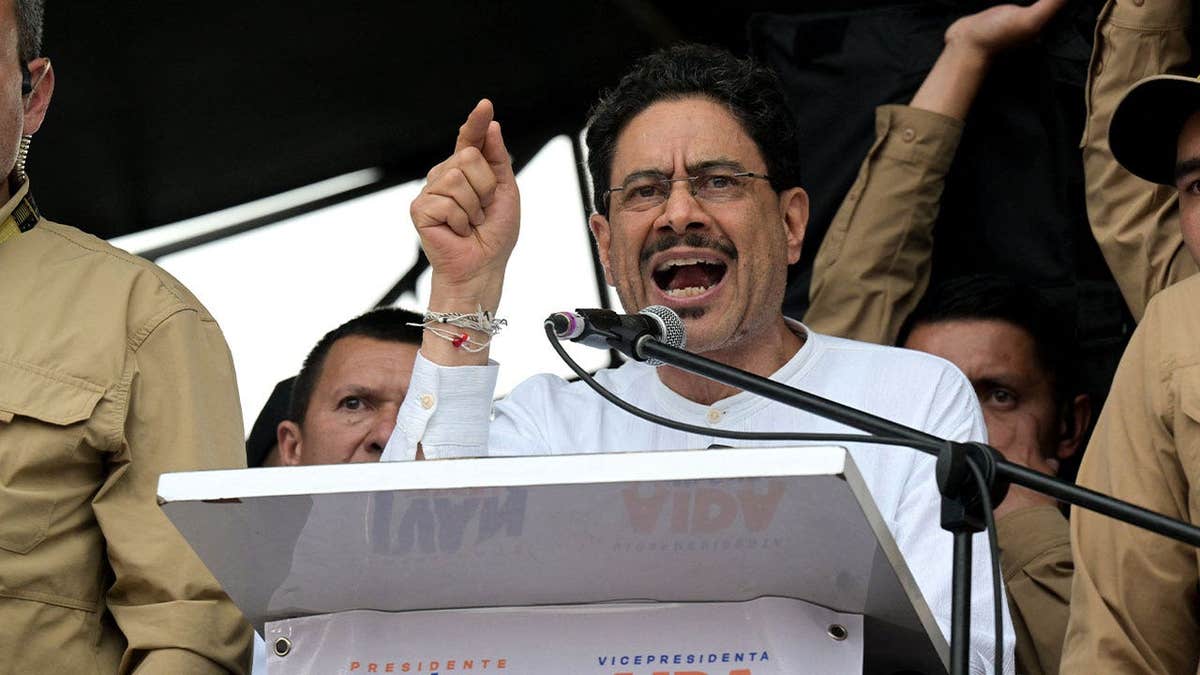
Ivan Cepeda speaks during a campaign rally in Cali, Colombia, on June 6, 2026. The leftist candidate is set to face conservative attorney Abelardo De La Espriella in Colombia’s June 21 presidential runoff election. (AFP via Getty Images)
While the issues driving American and Colombian politics remain considerably distinct, de la Espriella’s insurgent outsider campaign emulated Trump’s in many ways, particularly in the sense that neither held elected nor appointed office prior to winning the presidency, launching successful campaigns almost entirely outside the existing party structure.
The defining safety and security issue set de la Espriella on a winning course, as he honed something of a strongman image to forcefully critique the Petro administration’s policy of peace through negotiation with armed groups in opposition to the Colombian government.
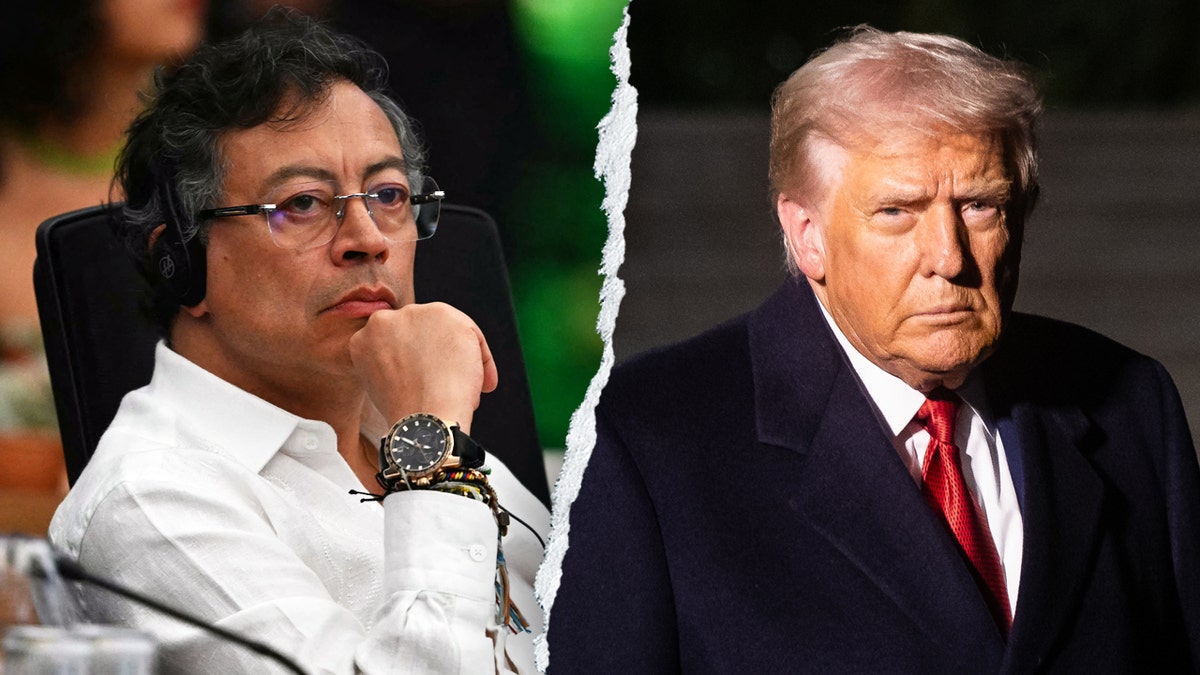
Colombia’s President Gustavo Petro, left, and President Donald Trump. On Wednesday, Trump said Petro will “be next” amid escalating tensions over U.S. military strikes in the Caribbean and drug trafficking operations. (Mauro Pimentel/AFP via Getty Images; Francis Chung/Politico/Bloomberg via Getty Images)
It is widely believed that Petro’s negotiation-based approach and restraint with respect to military action has allowed such groups as the ELN (National Liberation Army), and various dissident elements of the FARC to regroup, boost recruitment and regain control of key territory and drug trafficking routes.
De la Espriella promised a return to an aggressive military campaign to reclaim territory from terrorist groups and cartels, and pledged to build “mega-prisons”, citing the policies of El Salvador’s Nayib Bukele as a model for eradicating criminal groups.
A de la Espriella administration will also likely mark a return to free-market economics, decreased governmental intervention in the economy, and a renewed push to lower taxes.
A strengthened U.S.-Colombia relationship is also a certainty, following an era of considerable tensions between Petro and Trump, which led to a series of acrimonious social media exchanges. Historically, Colombia was the U.S.’ strongest ally in the region, but the relationship has weakened considerably under the tenure of Petro.
Political analysts will also be closely watching the dynamic between Colombia and Venezuela. De la Espriella is likely to follow the Trump administration’s lead in Bogotá’s approach to the new Delcy Rodriguez administration, demanding a timeline for free and fair elections, and calling on the Venezuelan government to aggressively pursue the ELN Marxist guerrilla group in border regions where it has long sought refuge, and had an allegedly close relationship with former dictator Nicolás Maduro.