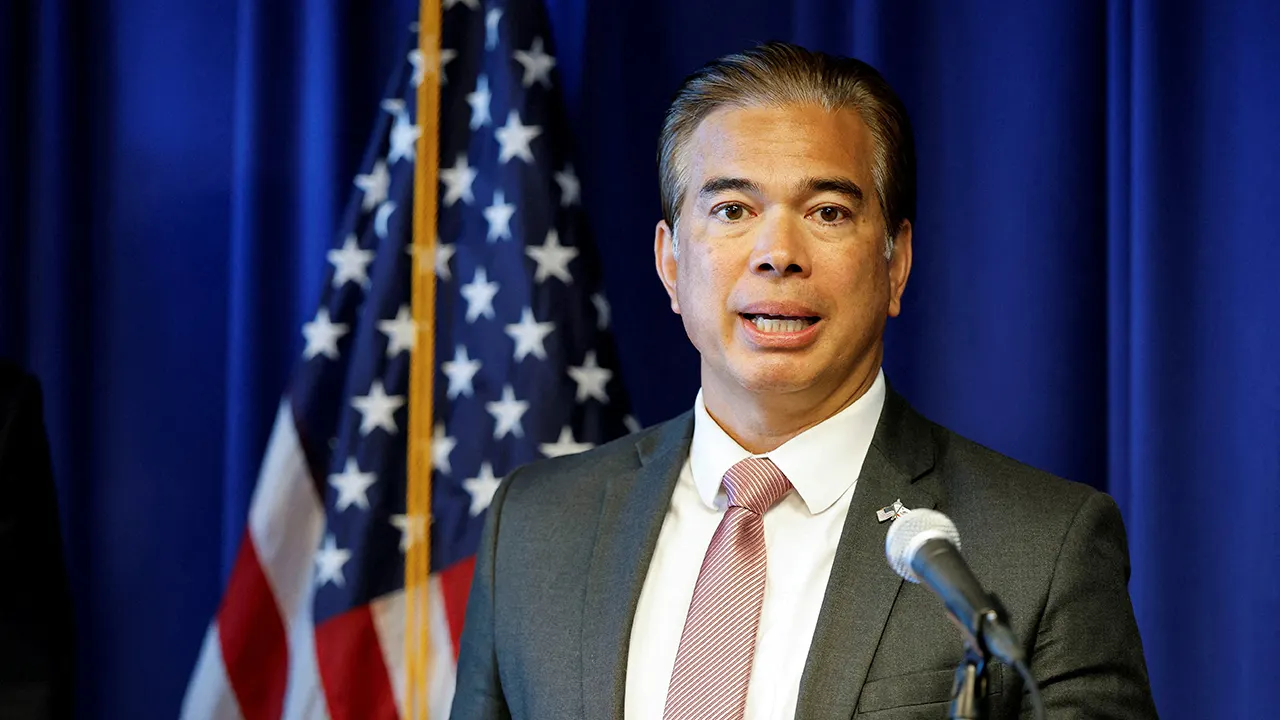

California filed a lawsuit against the Trump administration on Monday after the Environmental Protection Agency moved to send the state’s vehicle emissions waivers to Congress for review, escalating a fight that could reshape California’s powerful role in the U.S. auto industry.
The legal challenge, brought by California Attorney General Rob Bonta, targets the EPA’s decision to submit four of the state’s emissions waivers under the Congressional Review Act, a law that gives Congress the ability to revoke certain federal rules.
The EPA declined to comment on the pending lawsuit.
In a statement issued earlier this month announcing the action, the agency said it was “committed to promoting consumer choice and ensuring affordable vehicles for all Americans, while following the best reading of the law.”
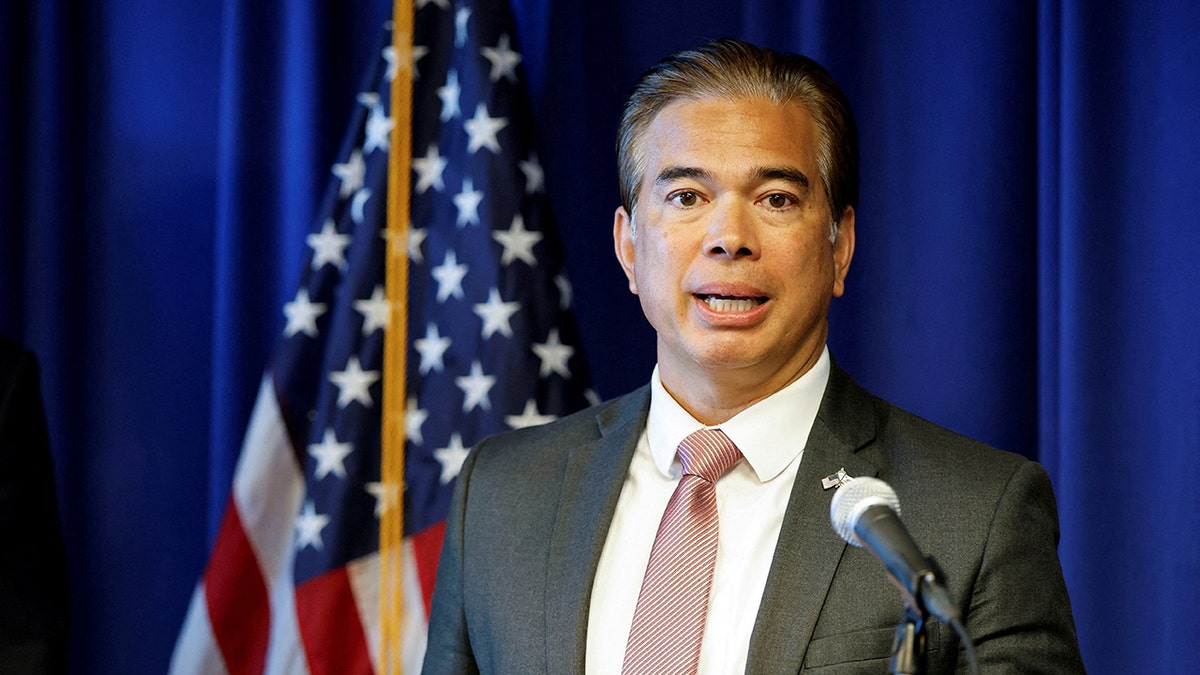
California Attorney General Rob Bonta speaks at a news conference in Sacramento. (Reuters/Fred Greaves/File Photo)
California says the EPA’s action puts at risk the state’s authority under the Clean Air Act to enforce vehicle emissions rules that are tougher than federal standards. State officials also note that several other states have adopted California’s standards, giving its policies a broader national impact.
The dispute centers on the EPA’s recent decision to send four California waivers to Congress for review under the Congressional Review Act. The waivers cover vehicle emissions as well as lawn and garden equipment.
California argues the EPA is wrongly trying to recast decisions long treated as waivers as regulations subject to repeal by Congress.
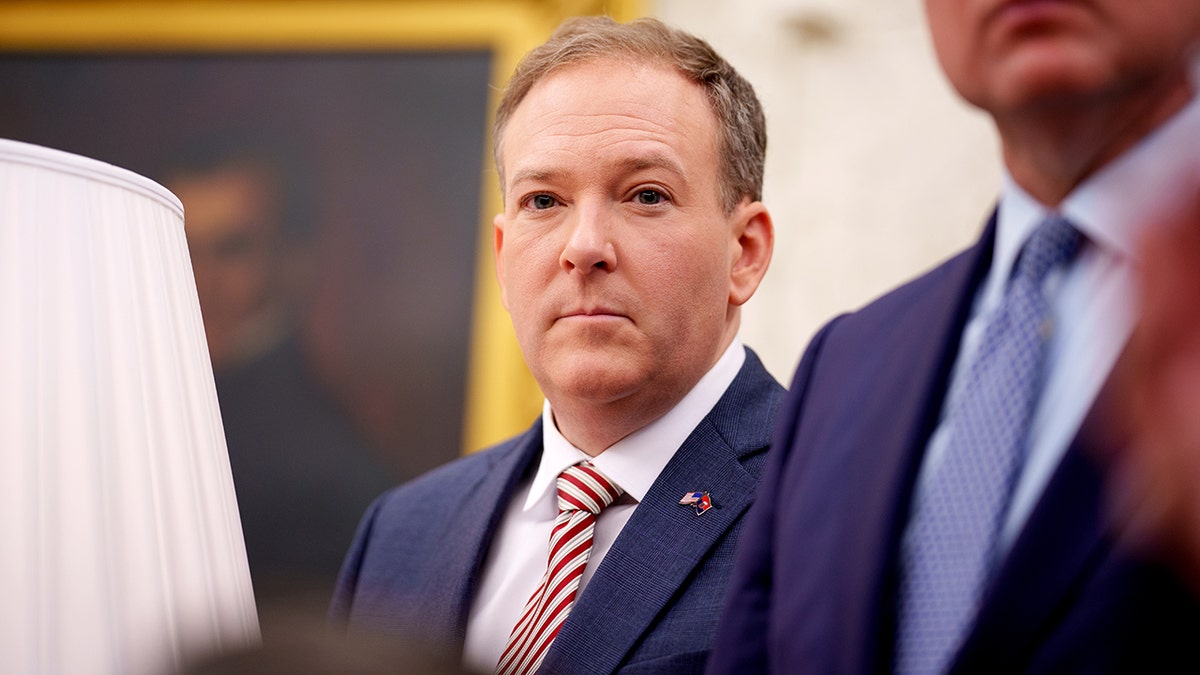
EPA Administrator Lee Zeldin attends a meeting with President Donald Trump and NATO Secretary General Mark Rutte in the Oval Office of the White House in Washington, D.C., on March 13, 2025. (Andrew Harnik/Getty Images)
“No agency has the power to wave a magic wand and transform an action that was finalized as an adjudicatory order into a rule, and certainly not without a public process in which the agency acknowledges and explains its change in position,” the state wrote in its lawsuit.
The legal fight marks the latest clash between California and the Trump administration over environmental policy and vehicle emissions regulations.
Last year, Trump and congressional Republicans used the Congressional Review Act to overturn California’s electric vehicle sales mandates and diesel engine rules. California later challenged those actions in court.
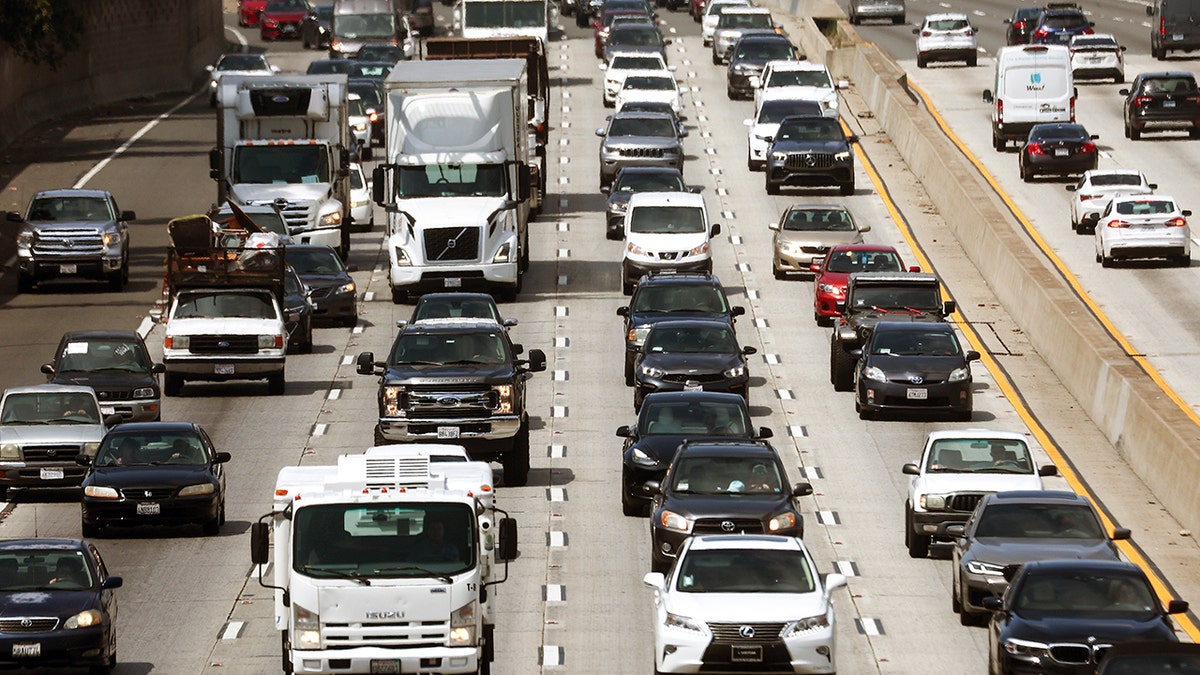
Vehicles drive on the 101 freeway in midday traffic in Los Angeles, California, on April 4, 2022. (Mario Tama/Getty Images)
The outcome of the latest lawsuit could have implications beyond California, potentially determining whether Congress can more easily unwind environmental policies through the Congressional Review Act and whether California can continue using federal waivers to shape emissions standards adopted by other states.
The Alliance for Automotive Innovation did not immediately respond to News Agency’s request for comment.