

LA GUAIRA – Rescue crews and residents gathered Sunday around a towering pile of debris that looked much like the widespread destruction left across Venezuela’s northern coast after two powerful earthquakes.
Since Wednesday’s devastating 7.2 and 7.5 magnitude quakes, search teams and local people in hard-hit La Guaira state had feared there were no survivors beneath the collapsed concrete.
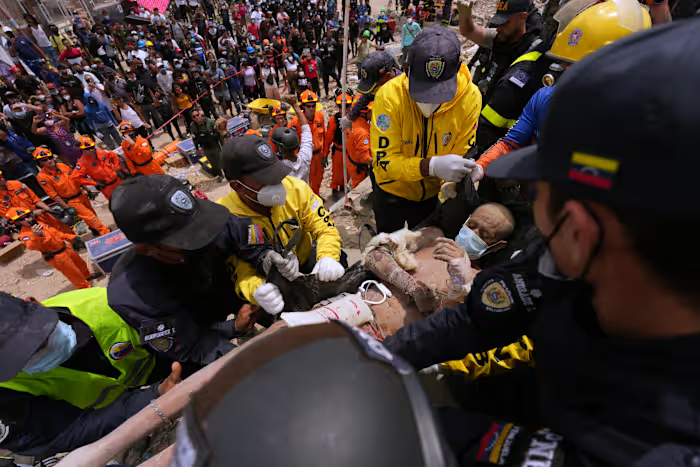
But on Sunday, the scene suddenly changed. Rescuers from Virginia, France and Venezuela spotted movement and carefully pulled a pair of dust-covered legs from an opening in the rubble.
The man, who had been trapped inside the collapsed structure for four days, was carried out carefully. His body appeared limp, but he was still clutching his phone as rescuers placed him on a black tarp and began administering an IV.
Moments later, crews brought out his young son, shirtless and nearly unresponsive, passing him over a line of helmeted rescue workers wearing jackets marked “Fairfax County Urban Search & Rescue.”
“Slow, slow, gentle, gentle,” rescuers called out in both Spanish and English as the father and son were moved through the crowd toward a waiting ambulance.
The successful rescue drew applause from exhausted teams who had been searching for days, even as hopes of finding anyone alive were beginning to fade.
Associated Press journalists Juan Pablo Arraez and Matías Delacroix were among the crowd that witnessed the dramatic rescue.
On Sunday, Arraez said they were scouring the La Guaira region “trying to see if we can see any miracles” when they found the U.S. rescue teams and local civilians calmly working to pull the father and son out of the building.
“At this stage many begin to lose hope. You see that in their faces,” Arraez said, as helicopters flew overhead. “When somebody makes it out alive, this father and son. It’s more than a glimpse, it’s real hope for people.”
The one-two punch of the earthquakes has been the greatest natural disaster the South American nation has faced in decades.
Authorities reported 1,450 people were dead on Sunday, with thousands more injured and many more missing.
The first 48 to 72 hours after a natural disaster are crucial to rescue efforts, though survival can be extended if people have access to food and water.
But small moments of optimism, solidarity and humanity like this have cut through almost overwhelming grief.
Venezuelan firefighters poured water into the mouth of a dust-covered dog peeking its head through cracks in the concrete.
After being trapped for 70 hours, one woman sat up on a stretcher, grinning and waving at cheering crowds as she was loaded on a gurney into an ambulance.
——
Associated Press photojournalist Matías Delacroix contributed to this report.