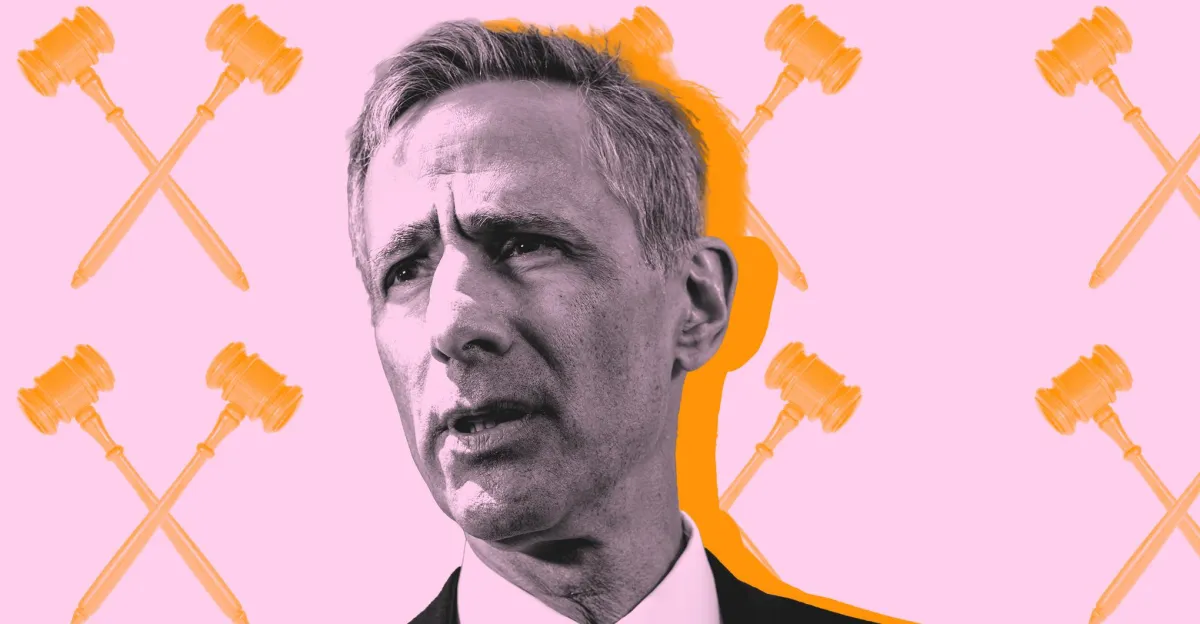

Elon Musk’s exchanges with Bill Savitt during Musk v. Altman — the lawsuit Musk brought against Sam Altman and OpenAI — offered a striking courtroom contrast. Musk repeatedly bristled at Savitt’s questioning, insisting the lawyer’s inquiries were “designed to trick me.” At another point, he complained, “You mostly do unfair questions.”
Savitt, whose calm presence can come across as almost cartoonishly unruffled, responded with a measured assurance: “I am trying to put the questions as fairly as I can. I am doing my best.”
As cross-examinations go, Savitt’s approach was notably restrained. He spoke softly, kept his questions straightforward, and often asked Musk to confirm statements he had made earlier during direct examination. Musk’s sudden inability to recall points he had just discussed with his own attorney quickly became significant, particularly because he was the first witness called to the stand.
“If you read the Wall Street Journal, you might as well be looking at Bill Savitt’s daily calendar.”
Long before his courtroom encounters with Musk drew broader attention, Savitt had built a reputation inside high-stakes corporate law. He has represented Coinbase in its battle with the Securities and Exchange Commission, KKR in Corwin v. KKR Financial, a major case for merger-and-acquisition specialists, and Sotheby’s in litigation over a poison pill defense. Legal publisher Lawdragon summed up his prominence in 2015 with the line: “If you read the Wall Street Journal, you might as well be looking at Bill Savitt’s daily calendar.”
Savitt’s firm, Wachtell, Lipton, had previously done work involving Tesla, including representing the company in its SolarCity acquisition and related litigation. But Savitt said he had not dealt directly with Musk before the Twitter dispute. That changed when Musk attempted to walk away from his agreement to buy Twitter and Savitt represented the company. Twitter prevailed. In Musk v. Altman, Savitt has now notched another win.
Since the trial ended, Savitt says he has not taken on any new matters against Musk or his companies. His practice, which he describes as having been “pretty busy for a long time,” has fielded various inquiries, though he says it is difficult to determine how much interest is tied specifically to Musk v. Altman. Still, given Musk’s frequent involvement in litigation, it is easy to see why Savitt could become viewed as a go-to opponent in cases involving the billionaire and his businesses.
In a conversation with Savitt, we discussed how he prepares for major cases — a process that, in Musk v. Altman, included playing a Fender Telecaster through a Cube amp — as well as how he weighs the broader consequences of litigation beyond the legal arguments. He also spoke about the questions emerging around the future of AI in the legal profession. Because Musk is appealing the jury’s verdict in Musk v. Altman, Savitt declined to address the case’s specifics, but his recent record suggests he has developed a formidable playbook for facing Musk in court.
This interview has been edited and condensed.
Having seen a couple of Musk appearances in the courtroom, I know he can be a particularly difficult witness to cross-examine. How do you prepare for that kind of cross-examination, and how do you think about what your goals are when you’re working with Musk or a witness like him?
If you have a witness who’s a formidable personality, who you know is going to be very smart, you know has the capacity to see around corners, and you know who has the ability to be charming, if you have a witness like that, your task is harder than it would otherwise be. And the crucial part of being ready for an examination like that is, this probably won’t surprise you, is just massive preparation. You have to know every document that’s relevant to what this witness may have to say and you’ve got to know it like that [snaps fingers]. You’ve got to have it at your fingertips. You have to because there’s not time in the moment to react.
It’s also really important to never take the bait, never get into a fighting match, never be pushed off of your objective by the force of personality that’s in the witness box. That doesn’t mean that you should just stick to a script, and I have seen lawyers stick to a script particularly in high-profile examinations, and you miss tremendous opportunities if you do that, because there’s always a surprise or two or three in an examination. And I think what is often the best moments of a cross-examination are when a little rabbit runs across the road and you know to go chase it down. But you’ve got to have the massive preparation to know when to go and chase down leads as they come up, which they will do right in the middle of the examination, and then come back to your project.
I’m curious about what you mean when you say you have these moments of a rabbit running across the road.
There’s this adage that particularly on cross-examination, a lawyer should never ask a question to which he or she doesn’t know the answer, and that’s usually good advice, but sometimes it’s good to take a shot, particularly if the answer can’t harm you.
I had a case in which a relevant question was whether someone had information that they weren’t supposed to by virtue of a nondisclosure agreement. This was a very important case that led to some really important case law. And watching the witness on direct [examination], there was something about the way she was answering questions that caused me to believe she had more information. So when I got to the podium, I asked questions that projected confidence that she had the information that she wasn’t supposed to have. And at first, she resisted, but I persisted, and eventually she thought I had it and she just gave the answer up. And it was extremely interesting and it led to a whole line of questioning about how the information was obtained, how relevant it was to the corporate activity at issue, and it ultimately fed very much into the result, which was a huge win for a client.
So a lot of times, it has to do with trying to pick up cues with the way a witness is answering your questions or your adversary’s questions, altering the tone of questioning so as to convey either curiosity or confidence in the proposition that you’re asking about. Every extensive cross-examination will yield a surprise or two.
One of the things that I’ve noticed, sitting through a handful of trials, is that the lawyer that can present a coherent timeline and just order events in the jury’s head seems to be the lawyer who really wins. How you go about ordering a timeline that sticks?
I agree with you. Nearly in every case, someone comes up with the idea of approaching the briefing or the presentation in a nonchronological way for some good, substantial reason having to do with emphasis of themes, and nearly always it’s a mistake. It is remarkable just how much easier it is to understand a succession of facts when they’re presented in chronological order. And in the Musk case we just tried, of course, the sequence of events was exceedingly important in all sorts of different ways.
Putting things in chronological order in a way that will ring true to me or you or whoever happens to be sitting in the jury boxes, it’s what distinguishes a winner from a loser, I think, in a case.
How do you think about what’s going on legally for your client versus other considerations such as reputational damage?
Every case has a lot of different things going on. And most litigation that’s filed is filed with some nonlegal but commercial objective behind it, and most lawsuits can be and most are resolved long before they get to a trial. Some situations have that in a much more exaggerated way. As a lawyer, what is most important is to remember that it’s not about you and it’s not always about the law or the courtroom. It’s about your client and it’s about your adversary’s client and what they’re trying to achieve and how they’re trying to achieve it.
A mistake is to view everything that happens in a contested lawsuit as something that is a fit subject for disposition by courts and judges and lawyers because the great majority of it isn’t. The great majority of litigation has some other objective having to do with commercial advantage, forcing a strategic negotiation, creating reputational gain or harm, and managing all of that. A case doesn’t have to be hugely high-profile to have that impact, and every one is different. Most lawsuits are about a lot more than just the lawsuit, and it’s exceedingly important to be attentive to that as… Maybe not as an advocate, but as a counselor. That’s why, when I think about supplying representation, it’s as much about being a counselor across the entire universe of problems that the case is going to pose as opposed to just being a lawyer, being an in-court lawyer, because that’s only part of the job, and a lot of times, it isn’t even most of it.
I saw a profile of you in the Financial Times that mentioned you often play guitar as you’re thinking about the ins and outs of a case. Did you bring the guitar with you to San Francisco? How did that aid your preparation?
Well, I brought a guitar to San Francisco, to Oakland, is the answer to that question. We had a little trial office a few blocks away from court, and I had a guitar with a small but really terrific amplifier that I did play, and it helped. It was a Fender Telecaster and it was a neat one. I especially outfitted it with what are called P-90 pickups. So it has this very cool sound, and I ran it through a Cube amplifier that gives a tremendous amount of distortion at very low volume, so it’s a really cool sound, and you don’t have to drive the person in the next room crazy with it.
Everyone’s got their own thing. You have to have a huge binder of documents and you’ve got to know what’s in them. In the abstract, it’s a very large undertaking because you’re talking about hundreds and hundreds of documents and you need to know the details. But by the time you get to trial, you’ve been living with the case for a long time and you do know most of it.
Is there a specific thing that you like to play or do you just noodle?
After college, my plan was to come to New York and get a record deal. And so, I had bands and we played all over the place, mostly original, some covers. I mean, what I play at this point, it really just depends. Usually, I will play a song and maybe sing along with it. Sometimes I’ll just riff. It’s very undisciplined at this point. But, I mean, I’ve been playing the guitar for a long time at this point and I used to be really quite good at it.
It’s pacifying, a little bit. It puts my mind at rest to be doing something that involves hearing and acting, and even in an indirect way, speaking, that isn’t about the law or isn’t about the case. At this point, it doesn’t take me a tremendous amount of mental energy to play because my hands know what to do. It’s calming and it’s converting. I do quite a lot of cycling and it has the same effect, it’s mind clearing.
Those are things that have that huge boost. It’s a real benefit to be able to do something else that’s a different way of apprehending the world, what you’re doing with your body, what you’re doing with your senses.
What else should I be asking about that I’m not? What am I missing? This is at least the third big time you’ve come in front of our audience — for instance, because of the Coinbase case. Are there things we should think about?
The Coinbase case, yeah. That was an extremely interesting case and a very gratifying outcome.
I suppose I would only just make this observation, which is that it’s no insight to say that we are still in the early days, but now in a very intense period where artificial intelligence and its application are going to be points of discussion, controversy, and debate. And the lawsuit that you were covering, it wasn’t just about Elon and Sam, it was about artificial intelligence and had implications for its future. And I think we are at the beginning of what’s going to be a fascinating and intellectually complex, legally complex series of debates, of contests about how artificial intelligence is going to be deployed, when, by whom, and I think that’ll be an extremely interesting thing for people to be watching. And I expect this case will feel as though it was near the beginning of what’s going to be a lot of, not necessarily litigation, but debate that happens in the public square about how this technology is deployed and how it’s monitored and by whom.
Obviously one of the questions for the legal community specifically is if you have an AI note-taker, is that the sort of thing that violates client confidentiality, right?
Oh, that’s a great question, and no one knows. I mean, if you ask an AI a legal question and it gives you legal advice, is it privileged? A fascinating question is when a chatbot or any AI says something, how can that be admissible in court? It’s always going to be hearsay and you can’t bring it in court. I mean, I was playing with some of these ideas in this trial. Can I put a computer on the stand and cross-examine it?
These questions are funny, right, because it seems so ludicrous, but Liz, it’s coming.
This question is going to be important because there are going to be discussions about what the AI did or said, and how are we going to get at that as a legal system? These are fantastically interesting futuristic questions, but they aren’t too much in the future anymore.
Well, just because they’re funny doesn’t mean they’re not important. With AI as a focus point, are there specific other litigators or judges that you keep an eye on as being ahead of the curve or as being prescient about these kinds of questions?
I spend a lot of my time in the Court of Chancery in Delaware because it’s where all corporate disputes happen, and I think that bench will be… My guess is they will be a leading-edge bench, because they will need to be, and I think a lot of controversies will find their way into that court. I expect you will see specialists arising in artificial intelligence in the legal community. But it’s also my guess that the issues that are going to really require the hardest thinking and the best advocacy are going to be for the general trial lawyer who has a real feel for how it fits with everything else, artificial intelligence, how it fits with everything else as opposed to simply this area unto itself. I’m very interested to see how it develops in the legal profession.