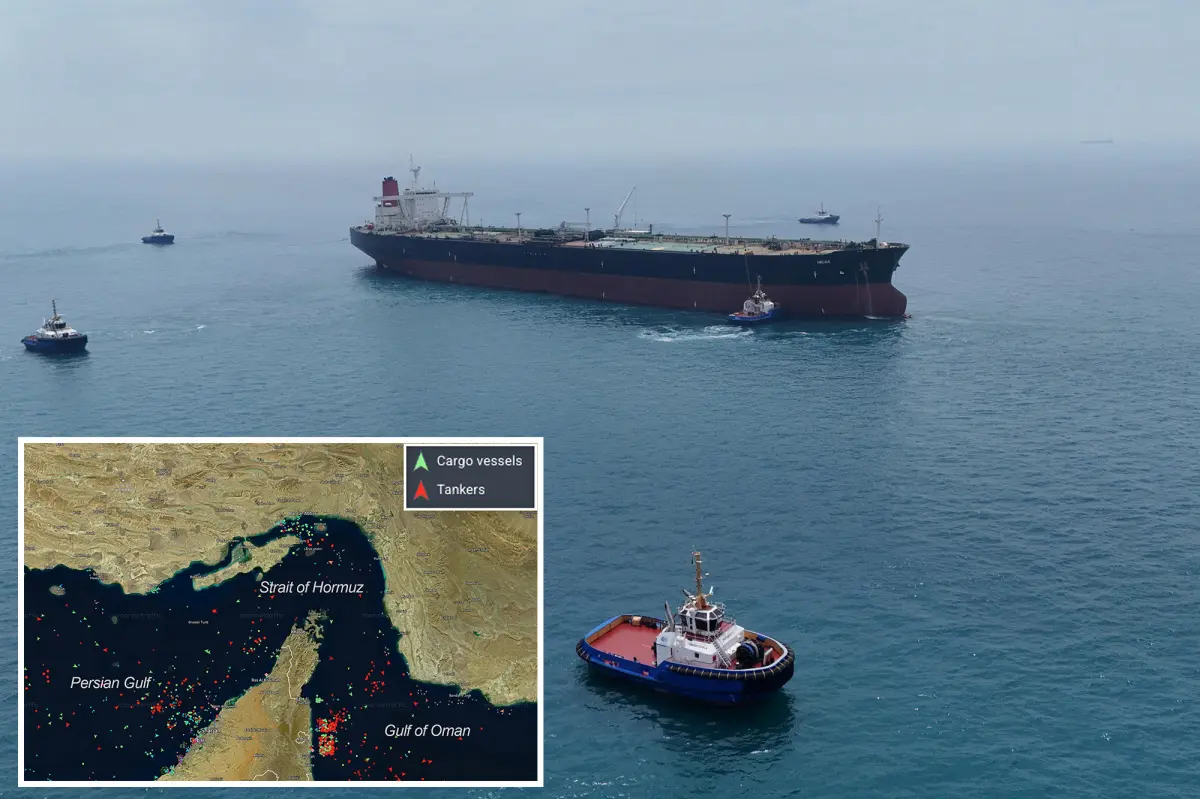

Iran and Oman have reportedly agreed to advance a proposal that would seek “voluntary” payments from vessels passing through the Strait of Hormuz, one of the world’s most strategically important shipping lanes.
Oman, a US partner that had initially signaled opposition to an Iranian toll plan for the crucial waterway, has submitted a formal proposal to Washington and other allies outlining service fees shipping firms would be expected to pay to transit the strait, the New York Times reported.
Muscat has argued that the framework is similar to the system used in the Straits of Malacca and Singapore, where voluntary contributions are gathered to support safe passage and navigation.
However, accounts of the plan differ: a regional diplomat told the Times the payments would be optional, while Iranian officials maintained that the fees would be mandatory.
The proposal also diverges sharply from the Malacca model in scale. Over 15 years, the Aids to Navigation Fund—managed by Singapore, Malaysia and Indonesia—has raised only about $23 million.
By contrast, Iran has estimated that fees on Hormuz traffic could generate as much as $40 billion annually.
The reported details emerged one day after Oman’s Foreign Minister Badr al-Busaidi voiced support for a joint arrangement with Iran to introduce “maritime service fees” in the Strait of Hormuz, according to Iran’s Press TV.
MORE STORY: Tennessee Teen Damarion Morehead Fatally Shot After Fight Involving Devin Orr
Al-Busaidi said Oman still opposes any direct Iranian toll on the vital oil transit route, but argued that some form of fee is needed to help maintain safe navigation in the area.
“Some services may include enhancing navigational safety, protecting waters from pollution, and increasing preparedness to deal with accidents or emergencies,” the minister said of the collection plan.
The position echoes a joint statement from Tehran and Muscat last week that the governments refused to rule out collecting fees in the Strait of Hormuz after the Trump administration publicly insisted that Tehran can’t charge tolls.
The developments threaten to permanently change the strait, which oversees the transport of 20% of the world’s oil supply.
Before the US and Israel launched its war with Iran, the international shipping route was free and open to the more than 130 vessels that sailed through its waters every day.
It remains unclear whether the US will accept Oman’s plan to charge voluntary service fees following President Trump’s repeated insistence that the Strait of Hormuz should remain free waters for all.
The president previously described any tolls or fees schemes along the strait as “unacceptable,” going as far as to threaten Oman if it did not “behave just like everybody else.”