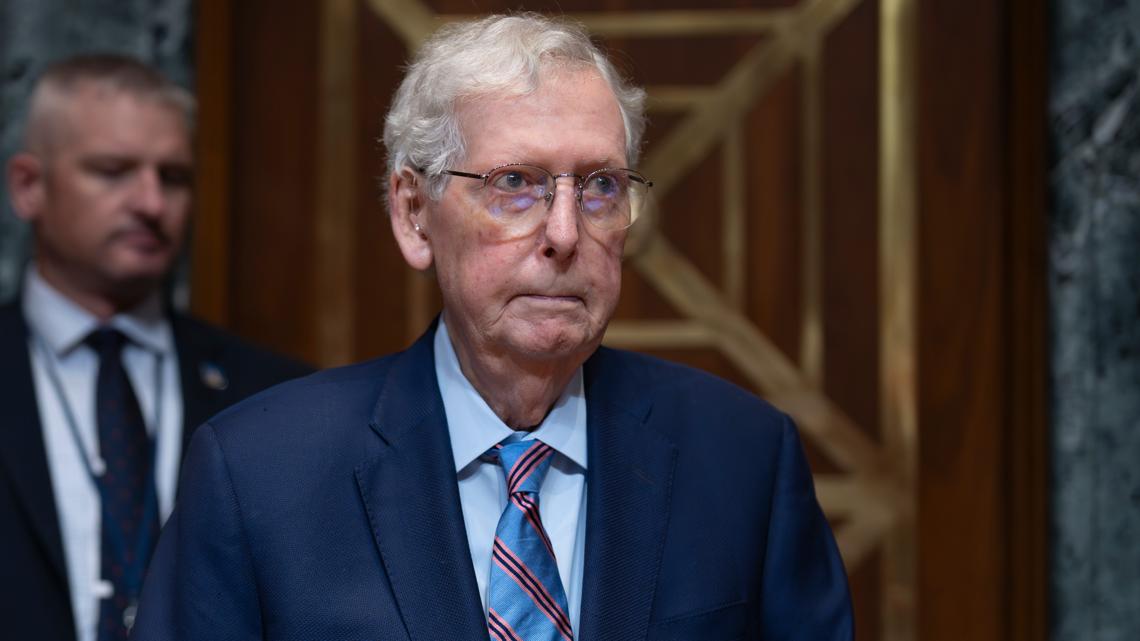

On the morning Mitch McConnell was hospitalized, emergency medical crews were dispatched to his residence for a report involving an “unconscious” patient, according to a publicly available EMS dispatch recording.
WASHINGTON — D.C. Fire and EMS responded to Sen. Mitch McConnell’s Washington address after receiving a call about an unconscious person, the same morning the Republican former Senate majority leader was taken to a hospital, dispatch audio confirms.
“CPR in progress,” a D.C. Fire and EMS paramedic said over the radio shortly before 9 a.m. on June 14, about six minutes after the initial call from McConnell’s home near the U.S. Capitol reported an “unconscious” person.

Roughly a minute later, a dispatcher referred to the situation as a “cardiac arrest.” McConnell’s name was not stated in the radio traffic, and it has not been confirmed whether the EMS communications were referring to the 84-year-old senator.
RELATED: Daveigh Chase’s Final Days: Friends Searched Skid Row Before Her Tragic Death
That same day, McConnell spokesperson David Popp told media outlets that the former Republican leader had been admitted to the hospital and was “receiving excellent care.” The following day, Popp said McConnell remained “fully engaged with staff on Senate business and Kentucky matters.” He did not disclose the reason for the hospitalization.
Questions about McConnell’s health have persisted in the Senate in recent years, after the longtime GOP lawmaker experienced multiple falls and several public episodes in which he appeared to freeze while speaking or appearing before reporters. He has also been hospitalized more than once, including reportedly for “flu-like symptoms” in February, injuries from a fall in 2024 and a concussion in 2023.
In February 2025, McConnell, who has served in the Senate since 1985, announced that he would not run for an eighth term. His current term is scheduled to conclude in January 2027, after Kentucky voters choose his successor in an ongoing election contest.
McConnell led the Senate Republican Conference for 18 years and served as Senate majority leader from 2015 to 2021. He stepped down from conference leadership in 2025, when Sen. John Thune of South Dakota succeeded him and became majority leader.