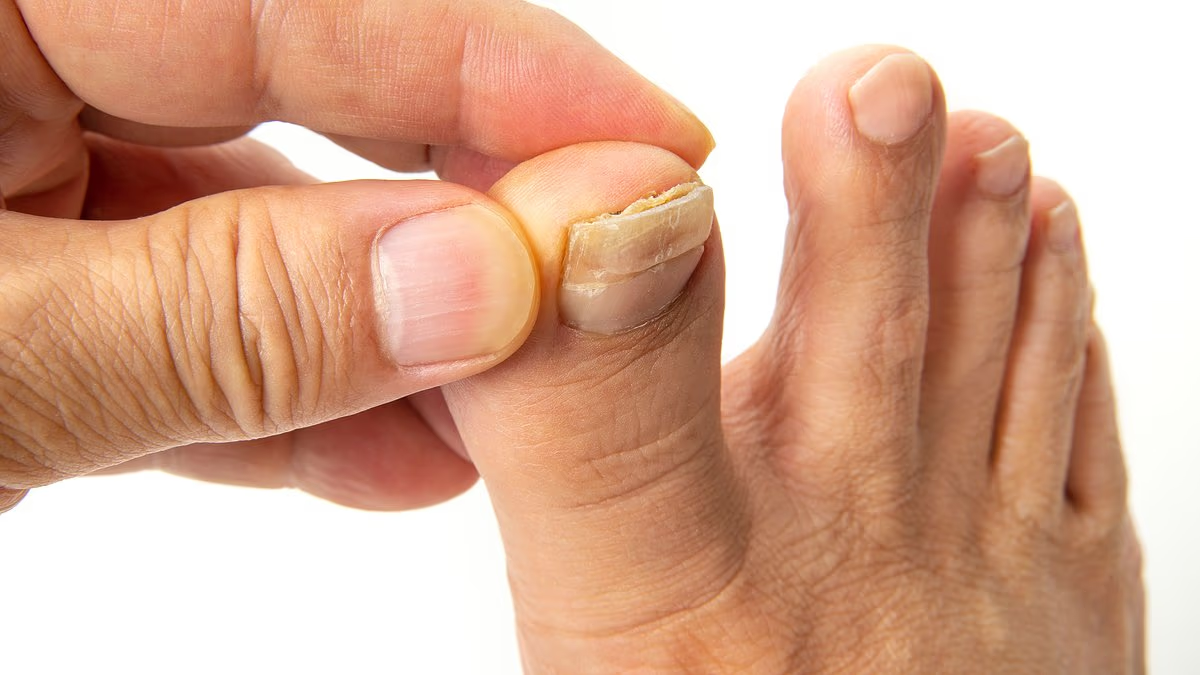

When the sun comes out, so do our feet.
After months of thick socks, heavy boots and closed-toe shoes, sandals and flip flops are back in rotation — which means toenails are suddenly on show again.
For many of my patients, that seasonal switch brings a familiar worry. They glance down, feel self-conscious, and arrive at my surgery asking what can be done about nails that have become thick, crumbly, yellowed or crusted.
If that sounds familiar, you are certainly not alone. Around one in ten people has a fungal toenail infection, and by the age of 70, the figure rises to roughly half of all adults.
The cause is most often a group of fungi known as dermatophytes — the same organisms responsible for athlete’s foot. Once they get into the nail and the skin beneath it, the nail can become thickened, brittle and discoloured, often turning yellow, white or brown. In some cases, it can also become painful.
These infections become more common as we get older, partly because nails grow more slowly with age.
Other factors can raise the risk too. A weakened immune system, poor circulation — including circulation problems linked to diabetes — or a nail that has previously been damaged can all make infection more likely. Walking barefoot in shared spaces such as gym changing rooms and swimming pools also increases exposure to the fungi.
But one of the biggest triggers may be closer to home than many people realise: your footwear.

About one in ten of us has a fungal toenail infection – and by the age of 70, it’s roughly half of all adults
Fungi thrive in warm, dark, moist environments – which makes the inside of your shoe the perfect breeding ground.
Synthetic trainers worn for hours on end, rubber-soled boots and tight shoes with no ventilation all trap the heat and sweat that fungi love. This is why Crocs – the plastic sandals – or other sandals are some of the best anti-fungi shoes, as they have holes that circulate air and evaporate sweat, so moisture doesn’t build up.
Your socks matter too. Synthetic sports fibres or merino wool pull sweat away from the skin so it can evaporate.
Cotton, on the other hand, acts like a sponge – absorbing moisture and holding on to it, leaving your feet constantly damp.
Change your socks daily (and no, that isn’t obvious advice to everyone), and try alternating your shoes so each pair gets 24 hours to dry out fully.
However, this advice only helps those who haven’t got the infection yet. So what do you do once your nails are crusty and yellow?
The good news is that antifungal nail lacquers, such as amorolfine, are available over the counter. But this is where most people go wrong – and I see the same mistakes again and again.
Take my patient Lucy. She noticed athlete’s foot – a scaly, itchy rash – between her toes a few months ago and didn’t treat it. A while later, her pharmacist diagnosed a fungal toenail infection and recommended an antifungal lacquer. She used it for a month, then came to see me complaining she’d wasted her money because it hadn’t worked.

Do you have any of these conditions?
The problem is that a month is not nearly enough time for the lacquer to take effect.
And it’s the most common reason I see for these treatments ‘failing’: people simply haven’t given them long enough.
The reason it takes so long to work is because toenails grow slowly – very slowly in fact.
Depending on the nail, it can take 12 to 18 months to grow out fully.
Amorolfine needs to be applied once or twice a week for at least nine to 12 months. The infected part of the nail may never look better – instead, crucially, treatment has worked if new, healthy nail grows in from the base.
There is a second mistake I also see. Patients not filing the nail first.
The lacquer has to penetrate the nail to reach the fungus underneath, and if the infection has made your nail thicker, the medicine simply can’t get through.
That’s why the packs come with disposable nail files. Patients are supposed to file the nail down every time before they apply the lacquer, or the treatment is far less likely to work.
The third mistake is Lucy’s original one: ignoring athlete’s foot. If you have a fungal infection on the skin of your feet, the same fungi may be causing both problems.
Treat the nail without treating the skin and you’ll simply reinfect yourself. Athlete’s foot creams are also available over-the-counter and should be used alongside the nail treatment.
If you’ve done all of this properly, for long enough, and it still hasn’t worked, see your GP.
We can send nail clippings to the lab to identify the fungus, and if appropriate prescribe potent terbinafine tablets.
These are more effective and work faster, but they can cause liver side effects, need monitoring, and aren’t suitable for everyone.
Laser therapy to burn away the fungus is also offered by some private podiatrists, but it can be expensive and have mixed results.
There are also alternative – and potentially effective – treatments that many patients might not have heard of.
There is some evidence that tea tree oil, applied undiluted to the affected nail twice daily after filing, might help – especially if the infection is caught early.
Again, it takes time, and it’s less likely to work on a longstanding or severe infection, though it can be used alongside antifungal nail lacquer.

GP, author and broadcaster Dr Philippa Kaye advises patients to act quickly if they spot a fungal toenail
Apple cider vinegar, on the other hand, is often promoted as a toenail fungus cure but has no good evidence to support it – save it for your salad.
One thing I’d urge you not to do is reach for the nail varnish. I understand the temptation to paint over the problem, but varnish traps moisture, stops antifungal treatments from penetrating the nail – and hides what’s going on underneath, which all may well be getting worse.
Instead, keep it simple. Dry your feet thoroughly after washing, including between the toes. Keep your toenails trimmed straight across. Don’t share towels, nail clippers or footwear as this can spread the infection.
And if you spot athlete’s foot, treat it promptly with an over-the-counter cream before it spreads to the nails.
And if you’ve only just spotted a fungal toenail? Start treatment now. The honest truth is that you probably won’t see the results this summer – but, if you follow these steps, you could well do by the time next year’s heatwaves roll around.