It is a landmark year for the United States. The country is marking its semiquincentennial, widely branded as America250, while also helping host the World Cup. But many fans attending these marquee events — along with the millions who live in host cities — may be unaware that they could be under heightened surveillance.
Across the country, from Kansas City to New York, World Cup host cities have been expanding surveillance tools in the run-up to the tournament. In Washington, DC — which is not hosting World Cup matches but is staging a series of major summer events — security is also being intensified. Fourth of July celebrations in the capital are expected to feature an unprecedented level of monitoring. Law enforcement officials say extraordinary events require extraordinary precautions, but civil liberties advocates caution that some of the technology deployed this summer may remain in use long after the crowds leave.
The Department of Homeland Security has classified both the Fourth of July fireworks on the National Mall and the July 19th World Cup final in New Jersey as National Special Security Events, or NSSEs — the agency’s highest-level security designation. Such classifications are common for major sporting spectacles; the Super Bowl receives one every year. But the designation is unprecedented for Independence Day festivities. The UFC fight at the White House in June was also treated as an NSSE, as was the official UFC watch party held on the Ellipse.
Visitors heading to the National Mall for the Fourth of July fireworks will be required to pass through airport-style screening checkpoints, and items such as folding chairs and coolers will be prohibited. According to The Washington Post, authorities will also deploy counter-drone systems, bomb technicians, countersnipers and medical teams from multiple federal agencies. Some of those precautions will be obvious to attendees. Others may be far less visible, including camera systems capable of collecting or analyzing biometric data.
The expanded security posture around the National Mall appears to follow criticism over perceived lapses at the White House Correspondents’ Dinner, where a gunman allegedly gained access and later shot at a Secret Service agent.
Comparable security measures are expected at the World Cup final, which Donald Trump is expected to attend. He will reportedly present the trophy to the winning team.
“This is going to be security-o-rama regardless of whether the president goes,” Jules Boykoff, author of Red Card: The 2026 World Cup, Sportswashing, and the FIFA Greed Machine, told The Verge. “If the president goes, that’s just an extra lacquering of security.”
Boykoff, a political science professor at Pacific University, said the World Cup final could also bring a larger ICE presence. He noted that ICE arrested rapper 21 Savage at the 2019 Super Bowl — also an NSSE — alleging that the artist had overstayed his visa.
Anne Toomey McKenna, an attorney who specializes in privacy and biometric surveillance, said the NSSE declaration may also make it easier to justify collecting communications data under the looser standard of Section 702 of the Foreign Intelligence Surveillance Act, instead of the more stringer requirements of the Wiretap Act.
Andrew Giuliani, executive director of the White House task force for the World Cup — and son of Rudy Giuliani — has said there will be heightened security at all the World Cup matches, even the ones Trump doesn’t attend. “You’ll have multiple perimeter checks from security. You’ll have checks while you get onto public transportation to make sure you’re a valid ticket holder,” Giuliani told the Atlantic Council’s Frederick Kempe. “Soccer fans — or futból fans — they generally like to come to stadiums late, in the 15, 20 minutes or so before the game.” But Giuliani said ticket holders should know that gates open three hours before kickoff and plan to arrive early so they don’t miss kickoff.
The surveillance isn’t limited to one-off events and in fact involves building up a massive apparatus across the country. Through FEMA, the Department of Homeland Security gave $250 million in grants to states that are hosting World Cup matches, much of which was used to buy counter-drone equipment, according to The New York Times. The FBI has also been training local law enforcement agencies on drone mitigation. According to Giuliani, the Fan Fests in all 11 host cities will be covered by counter-drone technology. It’s unclear whether these cities are using the same tech that led to an airspace closure in El Paso earlier this year.
This is going to be security-o-rama regardless of whether the president goes.
New York City — technically one of the host cities, even though the matches are taking place across the river in New Jersey — spent $6.5 million on counter-drone technology. In Kansas City, Missouri, authorities have confiscated at least 16 drones since the World Cup began.
“The general rule with the World Cup and Olympics is that local and national police forces use the sports mega event like their own private cash machine,” Boykoff said. “The World Cup creates a state of exception that allows for all manner of securitization processes.” And in many cases, once these tools are in place, they remain. Paris, for example, enabled AI video surveillance ahead of the 2024 Olympics — and is keeping it in place through the end of 2027 despite privacy concerns.
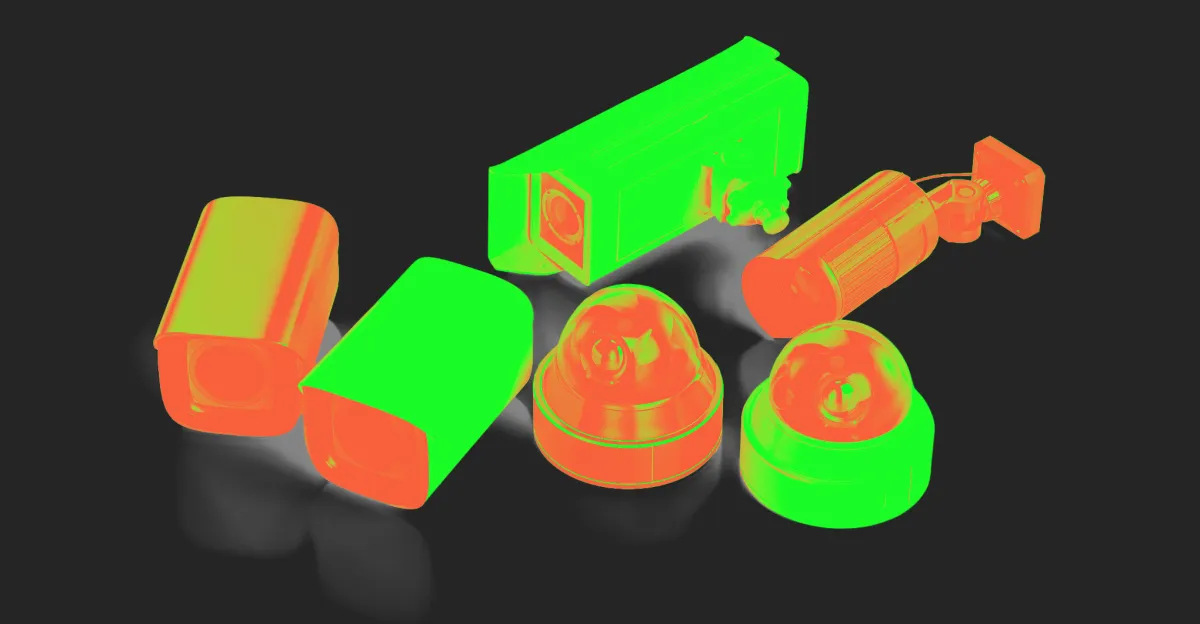
Similar camera systems have been installed throughout the US ahead of the World Cup, even in areas far beyond stadiums. Kansas City also planned on putting cameras equipped with facial recognition on some city buses, even though the state government refused to fund the project over privacy concerns. The city initially went through with the program anyway, saying it would help identify missing persons and could thwart human trafficking attempts during a major international sporting event. City officials said that the images captured are checked against active missing persons alerts and only retained if there’s a match.
“Privacy is always a tricky thing,” Tyler Means, chief mobility and strategy officer at Kansas City Area Transportation Authority, told The Washington Post. “We’ve always had cameras on our buses. It’s just new technology. I think in time it’ll smooth over and people will realize, ‘Well, it didn’t really feel any different.’”
The cameras aren’t operational yet because of backlash and technical delays, but Kansas City plans on implementing the program later this year — even though the World Cup will be over by then.
The America250 celebrations will be monitored by thousands of law enforcement officers, including National Guard troops and FBI agents, many of whom will be wearing body cameras. Several cities have expanded or reactivated CCTV systems ahead of the World Cup. Seattle reportedly reactivated dormant cameras after FBI and Seattle Police Department officials briefed the mayor on “credible threats” during the games.
McKenna said the increase in surveillance at these events isn’t unwarranted given the increased level of risk, but said there’s an issue with how biometric data is gathered and retained. McKenna noted that British Columbia, which is also hosting the World Cup, has regulations around how long surveillance footage from matches and other events can be retained — rules the US lacks.
Though CCTV has been around for decades, advances in camera technology — and AI integrations — have made these systems incredibly sophisticated. Early footage “told us a lot about what was happening, but it really wasn’t that different from what a police officer standing on the street could see themselves,” McKenna said. “That’s how the law in the US reached the conclusion that CCTV systems are okay — because it happens in a public space, so there’s no real reasonable expectation of privacy risk under the Fourth Amendment, which protects against unreasonable searches and seizures.”
But cameras reach much farther than they used to — they can tilt, pan, or zoom, and can often see several miles away. They can be equipped with thermal imaging devices and facial recognition technology, all of which may be accessible to law enforcement. Some AI software can even analyze people’s facial expressions and claim to predict a person’s behavior, McKenna said.
“We have increasingly advancing AI systems with analytical capabilities that can merge so much data and detect things from the footage that before we wouldn’t know,” McKenna said. “An officer on the street wouldn’t be able to identify every person walking by, but facial recognition technology software is very common, and it can be utilized together with the footage that is being taken and collected by CCTV systems.”
All of this information can be sent to federal fusion centers, where information is shared between local law enforcement and federal agencies like ICE and the FBI. McKenna explained that when there’s more information-sharing between local law enforcement and federal security agencies, “we lose control over how that information is used.”
“That’s part of the protection we’re supposed to have under our laws — that information that’s been collected for national security purposes not be used for domestic law enforcement purposes,” McKenna said. “We have increasingly seen a blurring of national security measures becoming part of domestic law enforcement.”
There are still a couple weeks left in the World Cup. But there’s no telling how long all the surveillance data gathered around the matches will be stored, or how it will be used.