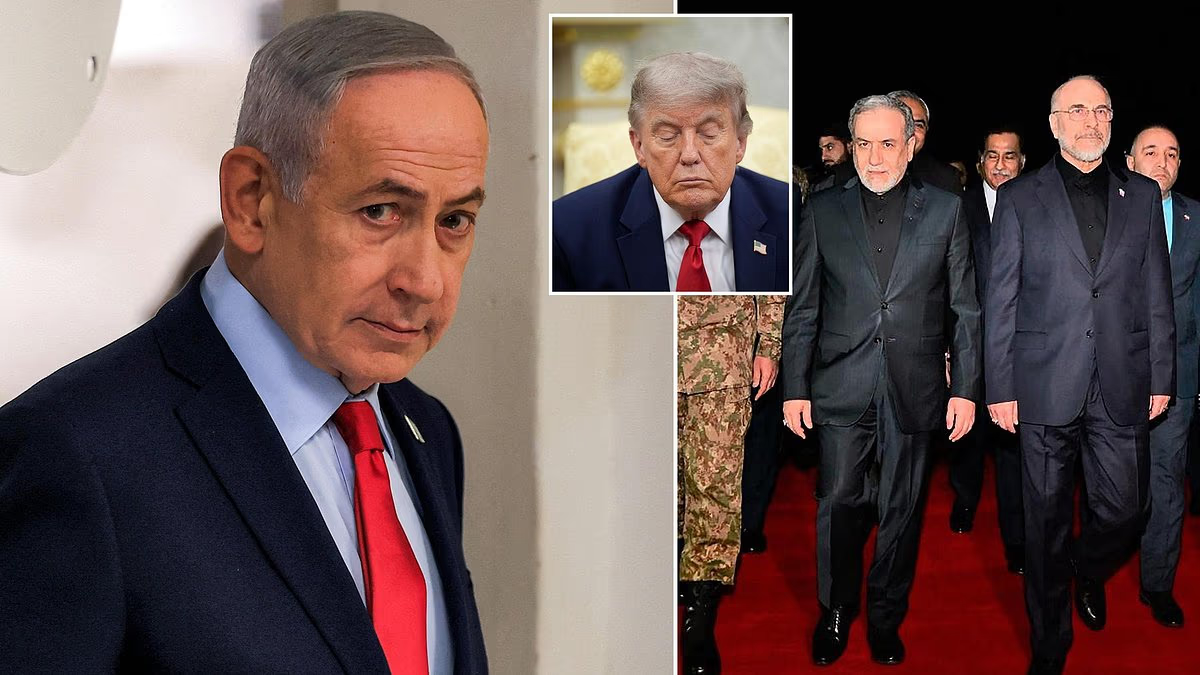


American officials were reportedly deeply concerned this spring that Israel might move to assassinate senior Iranian negotiators while secret talks with Washington were underway. According to a New York Times report, the fear centered on the possibility that Israel could target the same figures the United States viewed as essential to any diplomatic breakthrough. While Israel had made the elimination of senior Iranian commanders a central part of its wartime strategy from the outset, U.S. alarm intensified after quiet negotiations began in April. Two names drew particular attention: Abbas Araghchi, Iran’s foreign minister, and Mohammad Bagher Ghalibaf, the speaker of parliament. In response, U.S. officials asked other countries in the region to alert Tehran that Israel might be considering strikes against Iran’s leading negotiators. The concerns came against the backdrop of a conflict that erupted on February 28, after a major Israeli airstrike killed Iran’s Supreme Leader, Ayatollah Ali Khamenei, along with several of the regime’s most senior figures.
Israel targets Iran’s leadership elite

That initial decapitation strike was carried out with assistance from American intelligence, according to the report. But as the war progressed, Washington and Jerusalem appeared to diverge sharply in their approach. The U.S. military concentrated on degrading Iran’s naval forces and missile-launching capacity, while Israel pursued a more direct campaign against Tehran’s political and military leadership. In the early stages of the conflict, Israeli forces prioritized locating and killing key figures within the Iranian power structure, aiming to weaken the regime from the top down.
Peace talks yield Hormuz reopening deal

The reported concerns over Araghchi and Ghalibaf followed earlier Israeli strikes that killed other prominent Iranian figures considered comparatively moderate, including former foreign minister Kamal Kharazi and national security official Ali Larijani. Araghchi and Ghalibaf have been central to Iran’s efforts to negotiate with regional powers over a ceasefire and a broader path toward a durable peace agreement with the United States. Those efforts produced a significant breakthrough in June, when Washington and Tehran reached a framework deal intended to reopen the strategically crucial Strait of Hormuz and establish the basis for future talks on Iran’s nuclear program.
Ceasefire leaves Israel’s goals unmet

Israel, however, viewed the April two-week ceasefire with deep frustration. From Prime Minister Benjamin Netanyahu’s standpoint, the arrangement fell short of Israel’s main wartime objectives: the collapse of Iran’s theocratic government, the dismantling of its proxy networks and the destruction of its missile arsenal. Rather than falling apart, Tehran’s hardline leadership appeared to tighten its hold, with the Islamic Revolutionary Guards Corps expanding its influence across the country.
Israeli fears rise over truce deal

Although Israeli officials offered limited diplomatic backing for the truce, anxiety grew inside Israel that the United States was moving to end the war prematurely. Israeli leaders also feared that sanctions relief tied to any agreement could provide Tehran with billions of dollars for reconstruction while leaving unresolved concerns about its nuclear ambitions. Ghalibaf has survived two previous assassination attempts by Israeli forces in separate conflicts, according to three senior Iranian officials and public statements cited by the New York Times. Last month, both Ghalibaf and Araghchi traveled to Lucerne, Switzerland, for high-level talks with Vice President Vance and other American officials.
All eyes on Iran’s new leader

Meanwhile, attention in Iran has turned to whether the country’s new supreme leader, Mojtaba Khamenei, will make his first public appearance since succeeding his father. Ayatollah Ali Khamenei’s body has arrived at Tehran’s Grand Mosalla ahead of a multi-day funeral, with millions of mourners and foreign dignitaries expected at Saturday’s official ceremony. Iran’s chief negotiator has urged a large turnout to honor Khamenei and avenge his death. Khamenei was killed in the U.S.-Israeli strikes that sparked the wider Middle East war on February 28, but Mojtaba has not been seen publicly since taking power, leaving uncertainty over whether he will attend the main ceremony in Tehran.