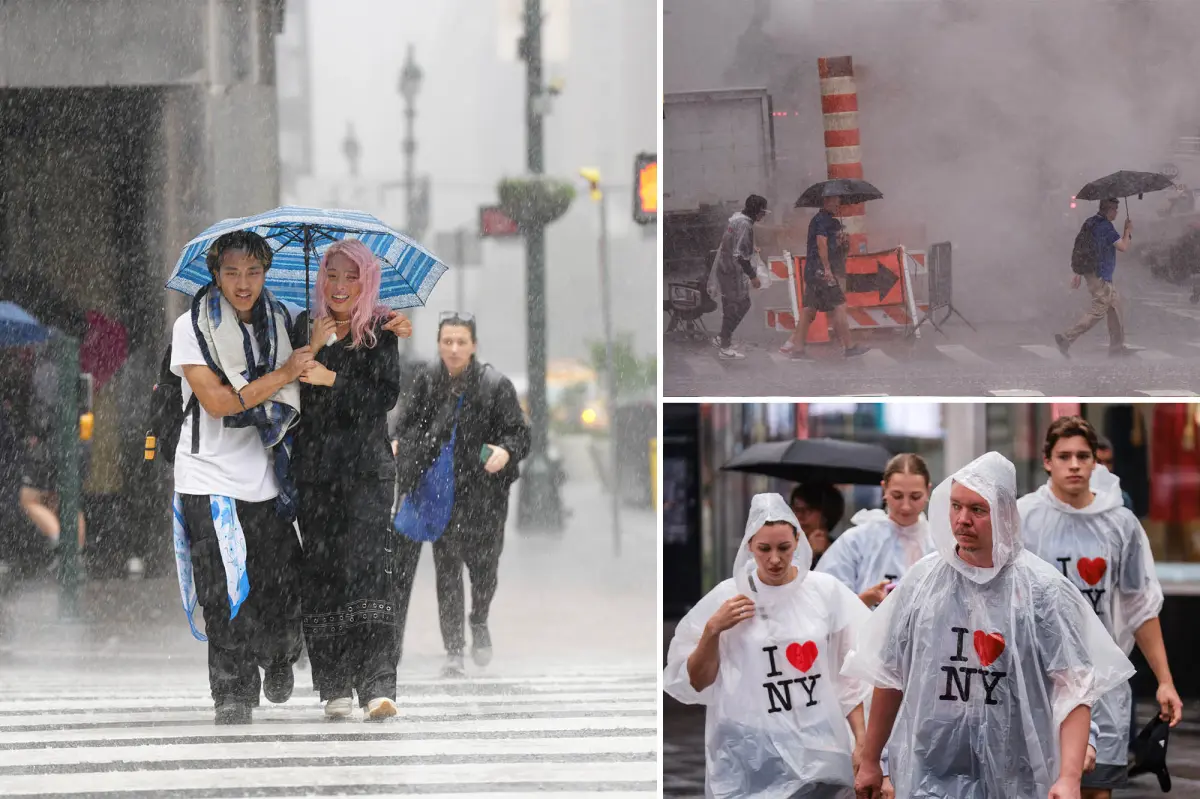

New Yorkers are getting little relief from the weather.
Dangerous downpours and significant flash flooding are forecast to disrupt both the morning and evening commutes across the Big Apple on Monday, following a weekend marked by oppressive heat and powerful thunderstorms.
The National Weather Service said several waves of thunderstorms and heavy rain could soak the five boroughs beginning Sunday evening, with rainfall rates reaching up to two inches per hour.
The most serious flooding threat is expected during Monday’s morning rush, from 4 a.m. to 10 a.m., though additional scattered storms may continue to trigger localized flash flooding through the evening.
A flood watch will remain in place until Tuesday morning, as forecasters caution that bursts of heavy rain could overwhelm low-lying areas and create major problems for transportation across the city.
Officials said some neighborhoods could see as much as six inches of rain if storms repeatedly move over the same areas.
The storms may also produce strong wind gusts capable of bringing down tree limbs and tossing unsecured outdoor items.
Mayor Zohran Mamdani has activated the city’s Flash Flood Emergency Plan, putting municipal agencies on alert ahead of the expected severe weather.
The New York City Department of Environmental Protection, the Department of Sanitation, and the Department of Transportation have been inspecting and clearing catch basins in flood-prone areas in preparation for the storm.
Specialized emergency teams and equipment are also positioned throughout the Big Apple to be deployed if conditions deteriorate quickly.
Mamdani urged New Yorkers to “take these warnings seriously” and limit travel during peak rainfall.
“Now it’s time for all of us to do our part. Limit travel if you can, plan for delays, and take these warnings seriously. If heavy rain begins, if the winds pick up, or if you hear thunder — get inside and wait out the dangerous conditions,” he said in a statement.
“Check on your neighbors, especially anyone living in a basement apartment, to make sure they have a plan and the information they need to stay safe.”
The severe weather follows a triple-digit heat wave and ferocious heat-fed thunderstorms that slammed the metro area during the Fourth of July weekend festivities.
Temperatures in New York City’s Central Park hit 100 degrees on Thursday, marking the first time the iconic park has hit triple digits since July 18, 2012.