The video game industry is facing another difficult stretch. On Monday, Microsoft detailed a new round of job cuts that Xbox CEO Asha Sharma called “the most significant restructure in Xbox history.” Yet within Sharma’s memo was a strikingly ambitious note of optimism. “I want Xbox to be one of the few companies that entertains more than a billion people each day and gives everyone the opportunity to create and connect,” she wrote.
That target arrives at a turbulent moment for Xbox. Microsoft has poured billions into its gaming business, but the division has struggled to deliver results that match the scale of that investment. Now, as the broader industry navigates one of its toughest periods in years, Xbox is attempting to reach a far larger audience with a leaner workforce. Sharma’s billion-user ambition would be bold under ideal conditions; in the current climate, it appears especially daunting.
The cuts will affect 1,600 Xbox employees this summer, with another 1,600 layoffs expected over the following year. The reductions are part of a wider reorganization at Microsoft, though its gaming arm appears to be taking a particularly heavy blow. Four internal Xbox studios — Double Fine, Compulsion Games, Undead Labs, and Ninja Theory — are also being separated into independent developers, a move that may be the lone encouraging development for those teams. Microsoft acquired those studios in previous years largely to strengthen Game Pass, its subscription-based gaming platform, but the latest changes suggest the company is now charting a different course.
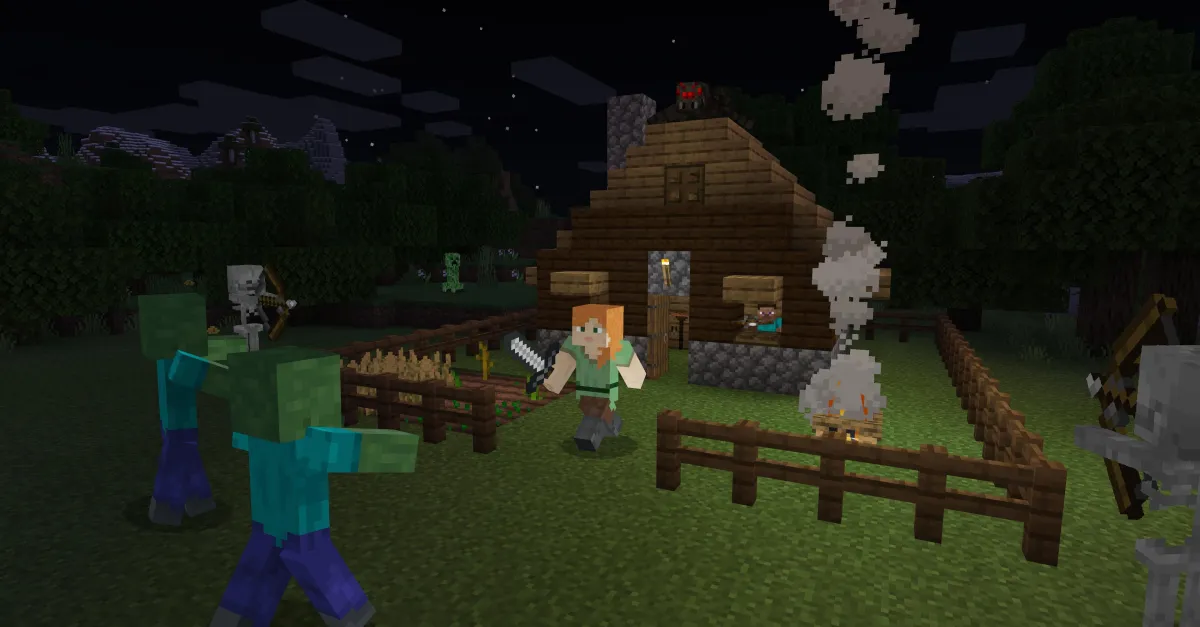
Exactly what that new course looks like remains difficult to define — something that has become increasingly familiar for Xbox in recent years. The division has been losing substantial sums, with Sharma saying that “in a typical year, we lost 64 cents for every dollar we invested.” The apparent priority now is to concentrate resources on major franchises with the strongest potential to become blockbuster successes. Sharma said the teams that remain inside Microsoft will “focus on higher priority projects.” That likely includes Xbox staples such as Halo and Gears of War, as well as hugely successful properties now under the company’s umbrella, including Minecraft and Candy Crush.
As part of the latest restructuring, Helen Chiang, who previously led the Minecraft franchise, has been elevated to Xbox chief operating officer and will report directly to Sharma. “She will bring our businesses together under one operating model, making sure we make clear investment decisions, learn from our successes and failures, and hold ourselves accountable for results,” Sharma said in describing Chiang’s expanded responsibilities.
Seen through that lens, some of Xbox’s moves are easier to understand. If the company’s goal is to engage more than a billion people every day, a smaller, unconventional project from a studio like Double Fine — even one centered on a sentient lighthouse — is unlikely to have the same impact as further expanding global hits like Minecraft or Candy Crush.

Image: Amazon
Other parts of the strategy, however, are harder to parse. If Xbox is doubling down on big games, it is unclear why it would also be “making reductions” at studios such as Bethesda, known for Fallout and Elder Scrolls; id Software, the team behind Doom; and Obsidian, one of Xbox’s most productive studios, with credits including Avowed and The Outer Worlds. Those teams would seem to need stability and continued investment — not the uncertainty of another possible wave of layoffs — if Microsoft expects them to produce the kind of major releases that can break through in an increasingly unpredictable industry.
You only need to look at the sorry state of the live-service space to see how poorly things can go when companies are simply chasing big numbers. The entire industry saw Fortnite become a money-printing cultural phenomenon and hoped to re-create it for themselves, collectively spending billions of dollars in the process. The result was a graveyard of canceled games and studio closures. In 2026, even Fortnite itself is struggling.
This all makes Sharma’s goal of eventually reaching “a billion people each day” seem all the more absurd. It’s not clear what metric she is using to measure that number. It’s extremely unlikely Xbox will reach that in terms of daily players even if you factor in mobile games and an expansion into China and emerging markets like India, which Sharma is planning to do. King says that its lineup of games attracts more than 200 million monthly players, so you’d need quite a few Candy Crush apps to even get close. And that’s assuming that follow-ups will be as successful as the original, which is rarely the case (just ask Niantic). Sharma really wants to continue to push the Xbox brand into Hollywood, so maybe Fallout viewers — Amazon says 100 million people watched the first season — will count toward that goal. But even if you add up games, TV shows, and Game Pass subscribers, 1 billion people a day is a very large number.
So instead of a clear path forward at a time of heightened uncertainty, Xbox has a vague and seemingly unattainable goal in front of it. And it’ll be doing that with a team that is smaller and will continue to shrink. “These changes are about a bigger future for Xbox,” Sharma claims, “not a smaller one.” But it’s hard to see how that’s the case. Xbox was already experiencing an identity crisis heading into these layoffs, and this lack of vision isn’t making things any clearer.


