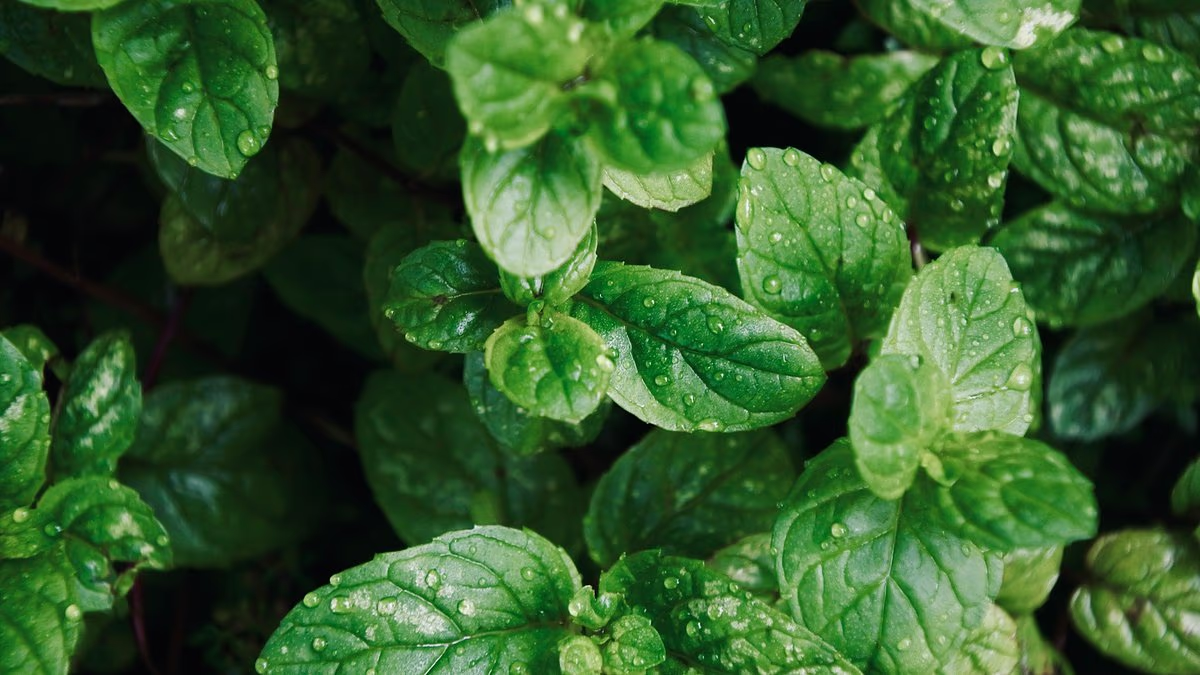

Mint is often relegated to the sidelines: a sprig bobbing in a cocktail, a scattering of leaves over buttered new potatoes, or the familiar freshness of toothpaste. But this everyday herb has far more to offer.
Traditionally used to help calm digestion, mint is rich in aromatic compounds that create its signature cooling effect and have attracted scientific interest for their potential role in gut comfort, oral health and even mental alertness.
It also provides modest amounts of useful plant chemicals, including polyphenols, which are known for their antioxidant properties.
‘Mint is one of those simple ingredients that punches well above its weight,’ registered dietitian Nichola Ludlam-Raine tells the Daily Mail:
‘It brings a lot of flavour for almost no calories, so it’s a simple way to brighten up food without leaning on extra salt or sugar.
‘Although most of us don’t eat mint in large amounts, adding it regularly to salads, grain bowls, yoghurt, fruit salads, smoothies, or serving it with meat and fish can be an easy way to boost flavour while adding a small nutritional bonus.’
And with warmer weather making mojitos hard to resist, and Wimbledon bringing jugs of Pimms back into season, mint is once again enjoying its yearly turn in the spotlight.
Still, beyond its role as a garnish, what can mint really do for your health? We asked an expert to unpack what the science says…

A mojito is a no-no without plenty of fresh mint
What’s so special about mint?
Mint is surprisingly nutrient-dense, containing high amounts of Vitamin A – vital for good eye health – and Vitamin C, an antioxidant that bolsters the immune system.
An 11.4g serving of fresh spearmint, around two tablespoons, contains 3 per cent of the daily value for Vitamin A and roughly 13mg of Vitamin C – equivalent to about 15 to 20 per cent of the daily value.
It also contains small amounts of folate (also known as B9) and vitamin B6, both of which support metabolism, brain function and wider cellular health.
Mint also contains beneficial phytonutrients, including rosmarinic acid and minerals such as iron, manganese and calcium.
But while it should not be relied on as a major source of nutrients, adding mint to meals, drinks and salads can offer a simple supplementary lift to an otherwise balanced diet, says Ms Ludlam-Raine.
What’s the difference between peppermint and spearmint?
There are hundreds of different mint varieties, with peppermint and spearmint the most commonly known.
They look similar, but peppermint has a much stronger, sharper flavour because it contains far more menthol – the cooling compound that gives mint its familiar icy kick.
Hi, I’m Emma Bardwell, a nutritionist with more than 15 years’ experience helping people improve their health and lose weight.

I’ve been there. I was overweight, unhappy with my skin and stuck in a rut. Then I changed the way I eat. You can now do the same with my tried-and-tested healthy eating plan. And for DailyMail+ subscribers, it’s completely free.
Click here to sign up and start your journey
This is why peppermint is commonly used in toothpaste, chewing gum, indigestion remedies and for after dinner tea.
Spearmint, by contrast, is gentler, sweeter and less intense, with a fresher, greener taste that makes it better suited to salads, sauces, summer drinks and Middle Eastern-style dishes.
How does mint aid digestion?
Mojitos and Pimm’s aren’t the only drinks mint gets added to – tea does, too.
Sipping on a mint tea after a heavy meal is a well known digestif, and it’s also a frequently suggested home remedy for stomach upsets and indigestion.
This is partly due to menthol, which can help relax the muscles of the gut and may also dampen inflammatory compounds in cells – helping to soothe cramps, abdominal pain and bloating.
A 2018 review carried out by researchers at the University of Western Ontario found that peppermint oil may help ease symptoms of irritable bowel syndrome and other gastrointestinal complaints.
Looking at multiple placebo-controlled trials, as well as five separate meta-analyses, researchers found that peppermint oil was consistently more effective than a placebo at relieving IBS symptoms.
The benefit was meaningful, too: for every three people who took peppermint oil, one experienced an improvement they would not have had with placebo alone.
‘Most of the digestive research has been carried out using concentrated peppermint oil rather than the fresh leaves themselves, but many people still find that enjoying mint after a meal leaves them feeling fresher and more comfortable,’ says Ms Ludlam-Raine.
What’s the link between mint and stress?
This is another area where mint may come into its own – and once again, menthol appears to be doing much of the heavy lifting.
Menthol is a type of terpene, a naturally occurring compound found in many plants and some insects. Terpenes are largely responsible for the distinctive scents and flavours we associate with everything from citrus and pine to pepper, musk and mint.
When it comes to mint, its menthol emissions have a calming effect, and can help relax muscles, ease physical tension and have a soothing effect on the nervous system.
It is not just taken internally, either – peppermint oil is commonly used in aromatherapy, brought in to spark relaxation and mental clarity.
In 2022, Iranian researchers looked at whether peppermint oil could reduce anxiety in heart patients attending a hospital emergency unit.

A mint tea has been used as a digestif for centuries
A cotton ball soaked in peppermint oil was left in front of some patients’ noses for one hour, while a control group was given a cotton ball soaked in water. Those exposed to the peppermint oil showed a significant reduction in anxiety levels.
Other studies have suggested peppermint oil may also help improve mental alertness, reduce fatigue while driving, support sleep and have a positive effect on mood.
While it is not a replacement for medical treatment, the evidence suggests mint’s benefits may go beyond digestion and have the potential to offer a noticeable boost for both body and mind.
Why is mint so commonly used for oral health?
When it comes to oral health, mint is the flavour most of us instinctively associate with a clean mouth. Prized for its freshness and cooling aroma, it remains the go-to ingredient in toothpaste, mouthwash and breath fresheners.
But mint may do more than simply mask bad breath.
A 2024 study in to the oral microbiome found that at a blend called SuperMint – containing peppermint, Japanese mint, bergamot mint and spearmint essential oils – helped reduce bacteria linked to bad breath and gum disease, while supporting the beneficial bacteria that help keep the mouth healthy.
Chewing fresh mint leaves may also help tackle bad breath by stimulating saliva production and exposing the mouth to the plant’s natural antimicrobial compounds.
This may be a better option than sugary mints or sweets, which can undo some of the benefit by feeding the very bacteria responsible for unpleasant odours and tooth decay.
Unlike chewing gum or breath sweets, raw mint contains no added sugar, while still delivering the cooling, clean sensation people want.
It is not a replacement for good oral hygiene, but it can be a useful, natural way to freshen the mouth between brushing.
Who shouldn’t eat mint?
Mint is generally safe for most people, but it is not suitable for everyone – particularly in more concentrated forms such as peppermint oil capsules.
People with gastro-oesophageal reflux disease, or GERD, may find that mint makes their symptoms worse.
This is because peppermint can relax the valve between the stomach and the oesophagus, allowing stomach acid to travel back upwards and trigger heartburn or reflux. Those with a hiatal hernia may also be more prone to this effect.
Concentrated peppermint products may also affect bile flow, so anyone with gallstones or other gallbladder problems should speak to a doctor before using them.

Sadly, mint sauce doesn’t count as a health food
‘Peppermint oil capsules can be effective for some people with irritable bowel syndrome (IBS), particularly for reducing abdominal pain, bloating and cramping, but they aren’t suitable for everyone and shouldn’t be taken without considering the wider picture,’ says Ms Ludlam-Raine.
‘They may worsen reflux symptoms in people with heartburn or gastro-oesophageal reflux disease, and they can interact with certain medications. If symptoms are persistent, severe or new, it’s always worth speaking to your GP or a registered dietitian rather than relying on supplements alone.’
Peppermint oil capsules can also interfere with some medicines, potentially affecting how they are absorbed or broken down by the body, so it is best to check with a health professional before taking them regularly. Anyone with an allergy to mint, or to plants in the mint family, should avoid it completely.
For most people, however, fresh mint used in food or drinks is perfectly safe. As with many herbs, the key is moderation: a handful of leaves in a salad or tea is unlikely to cause problems, but very large amounts or concentrated supplements may not agree with everyone.
What’s the best way to add mint to my diet?
‘Fresh mint is a lovely ingredient to include as part of a balanced diet,’ says Ms Ludlam-Raine.
‘Whether stirred through salads, blended into dips such as tzatziki, sprinkled over new potatoes, added to fruit, or infused into water and herbal teas, it’s an easy way to increase flavour without adding lots of calories.’
However, the same isn’t true of Sunday roast stalwart mint sauce.
This is made from a combination of mint leaves, vinegar, water and sugar and doesn’t contain enough mint leaves to have any serious, positive impact.
Sadly, mint choc chip ice-cream also lacks as many of the health-boosting benefits and compounds as the freshly picked herb and should only be enjoyed as a treat.


