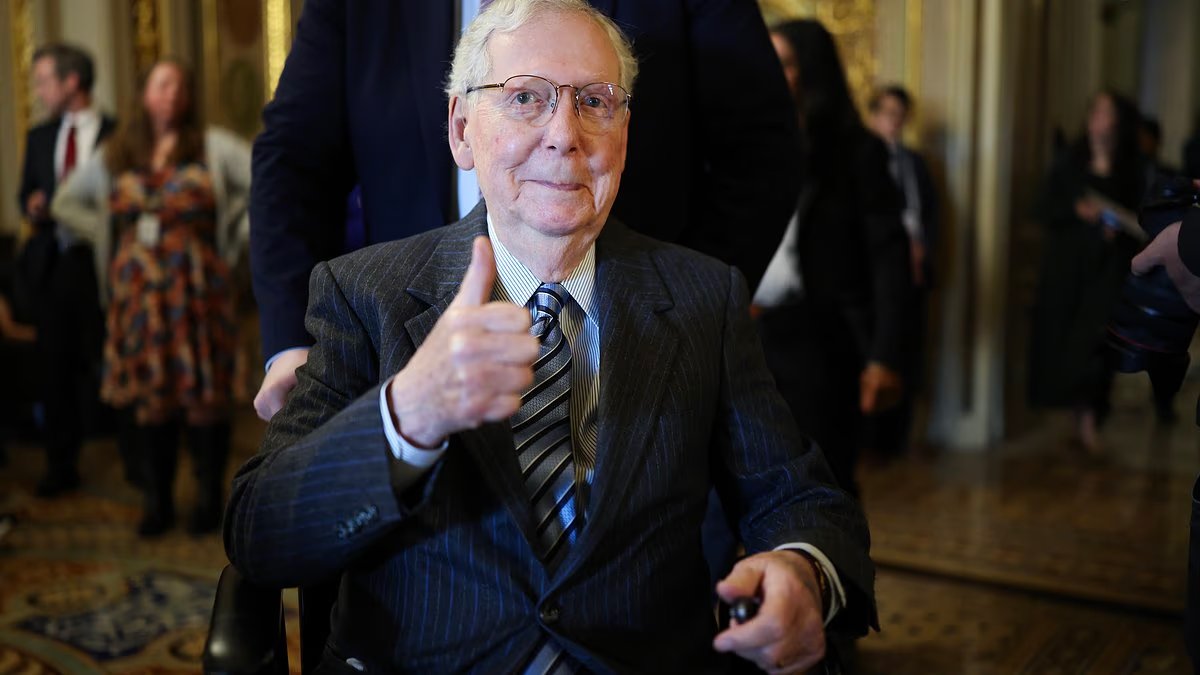

A high-stakes fight over U.S. defense spending is taking shape in the Senate, but one of the chamber’s most powerful figures — Senator Mitch McConnell — is still off the floor.
McConnell, a veteran Republican strategist and chair of the Senate Appropriations Defense Subcommittee, has been hospitalized since June 14, prompting new uncertainty over who will help guide Congress through one of the year’s most significant budget battles.
The moment is especially critical. Lawmakers are getting ready to craft the annual Pentagon spending measure, a bill that will direct $350 billion toward priorities including service member pay, shipbuilding, missile defense, and modernizing the nation’s weapons systems.
Away from public view, another dispute is brewing over the process Congress should use to approve that funding.
The Trump administration is seeking to advance a substantial portion of its defense priorities through budget reconciliation, a fast-track procedure that lets some spending bills clear the Senate with a simple majority rather than the standard 60 votes.
McConnell has emerged as one of the most prominent Republican critics of that approach.
He has instead pressed for defense dollars to be handled through the regular appropriations process, where senators can examine, debate, and revise the Pentagon’s budget with greater transparency and detail.
McConnell has cautioned that using reconciliation as the main path for defense spending could erode congressional oversight and make long-range military planning more difficult.

Republican Senator from Kentucky Mitch McConnell departs the Senate floor in the US Capitol in March 2025

Kentucky’s Democratic Governor Andy Beshear speaks to the crowd gathered during his public swearing-in ceremony in December 2019

Senator Mitch McConnell arrives for a hearing at the Capitol in Washington, on May 19
His absence has naturally led to questions about whether that position will carry the same weight as negotiations intensify.
Republican leaders have sought to calm those concerns. Senate Majority Leader John Thune and Majority Whip John Barrasso both said they recently spoke with McConnell by phone – each for nearly 20 minutes.
According to their offices, the conversations covered national security and Senate business, with Thune describing the discussion as ‘lengthy and substantive.’
While GOP leaders insist McConnell is doing well and remains fit to serve, the governor is demanding more answers — questioning whether the public should rely solely on verbal assurances about the longtime senator’s condition.
Governor Andy Beshear has called for a clearer update on McConnell’s health. He argued uncertainty is fueling speculation and said Kentuckians deserve transparency directly from the senator.
‘As Governor – and a fellow public official who understands the commitment we’ve made to the people we serve – I am requesting the Senator provide an update on his current health status.’
He also wished him a safe and speedy recovery.
On Monday, Laura Loomer claimed she had spoken with White House sources who told her McConnell was “brain dead” — claims that were strongly denied by the senator’s office.
A spokesperson told us:
‘Senator McConnell appreciates the outpouring of support he’s receiving while he continues his recovery in the hospital. The senator continues to improve and is working closely with his staff on Kentucky and Senate matters while the Senate is out of session.’
McConnell has missed Senate votes while hospitalized, and his office has released few details about his medical condition or when he might return to Capitol Hill.
The high-stakes budget showdown has already hit a major roadblock.
Senate Appropriations Chair Susan Collins was forced to push back a crucial committee vote in late June after Mitch McConnell’s absence left Republicans without the numbers needed to push their spending plans through on a party-line vote.
And this wasn’t the first setback.
Collins had already postponed an earlier June markup covering funding for the Departments of Agriculture, Veterans Affairs, Commerce and Justice after negotiations with top Democrat Patty Murray broke down in a bitter dispute over how much Congress should spend on defense versus domestic programs.
The deadlock has left key government funding bills in limbo, with Republicans and Democrats still locked in a broader fight over federal spending priorities.
But McConnell’s allies insist he isn’t the reason the defense bill remains stuck.
When asked about its status on Tuesday, one McConnell aide told POLITICO that the real obstacle is the wider budget deadlock between the parties—not the senator’s hospitalization—arguing that the appropriations process was already gridlocked before his absence.
The uncertainty comes as Republicans try to balance two competing priorities: delivering on the administration’s ambitious defense agenda while preserving Congress’s traditional control over the federal spending process.
For now, the defense budget isn’t stalled—but one of its most experienced architects is working from a hospital room instead of the Senate floor, leaving colleagues to wonder how long that arrangement can last as negotiations enter a critical phase.


