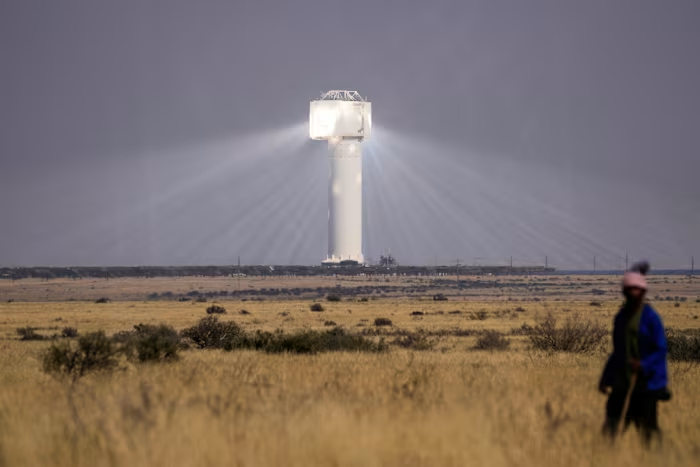


NAIROBI – Africa’s clean energy push is entering a more complex phase, with experts saying the continent’s biggest hurdle is no longer simply getting projects built, but creating the institutions, markets and regulatory frameworks capable of supporting them at scale.
The shift comes as clean power reaches a major global turning point. In 2025, renewable energy accounted for 34% of worldwide electricity generation, edging past coal, which stood at 33%. By 2030, renewables and nuclear power combined are expected to supply half of the world’s electricity.
Rising demand from industrial growth, artificial intelligence and broader electrification is putting additional pressure on energy systems. Analysts say the central challenge in the clean energy transition has moved beyond technology itself to the financing, planning and governance structures needed to deploy it effectively. In Africa, solving those issues is especially urgent, with about 600 million people still lacking access to electricity.
“Clean energy is now cheaper than fossil fuels in virtually every part of the world,” former New York City Mayor Michael R. Bloomberg, the U.N. Secretary-General’s Special Envoy on Climate Ambition and Solutions, said in late June as he announced a new $285 million Bloomberg Philanthropies program aimed at strengthening clean energy industries in emerging and developing economies.
“But fixable obstacles are still slowing down deployment, and with energy demand rising at an unprecedented speed, we can’t allow those obstacles to continue standing in the way,” he said.
Unlike traditional project funding that goes directly into solar farms or wind installations, the new initiative will focus on the foundations that help projects move from proposal to operation. That includes market design, regulatory capacity, technical skills and stronger industry institutions, all seen as critical to drawing in private capital and speeding up renewable energy deployment.
The approach underscores a widening view among energy specialists that Africa’s transition is not being held back primarily by a shortage of renewable resources or workable technology. Instead, the key constraint is often the institutional capacity needed to turn abundant clean energy potential into bankable projects and reliable electricity on the grid.
Across the continent, many clean energy projects continue to face delays tied to weak market structures, insufficient grid planning, slow permitting and fragmented regulatory systems.
“What has been missing is not the potential, but the institutional infrastructure and capabilities to unlock it,” said Saliem Fakir, executive director of the African Climate Foundation. “Philanthropy that targets those gaps directly is the kind of intervention that can shift the trajectory of a continent’s energy system.”
Across Africa, renewable energy costs have fallen sharply while investment appetite continues to grow. However, investors say policy uncertainty, slow permitting processes and limited regulatory capacity are hindering projects.
Wangari Muchiri, founder and chief executive of RE.Think Energy, said the commitment signals that “the next phase of the energy transition is not about proving clean energy works, it’s about removing the barriers preventing it from scaling fast enough.”
The Bloomberg initiative is looking beyond ambitious renewable energy targets to focus on helping projects attract long-term investments and connect to national grids.
“The next chapter of Africa’s renewable energy story will not be only by the projects it builds, but the institutions that make these projects possible,” Muchiri said.
___
The Associated Press’ climate and environmental coverage receives financial support from multiple private foundations. AP is solely responsible for all content. Find AP’s standards for working with philanthropies, a list of supporters and funded coverage areas at AP.org.


