LAS VEGAS — National Basketball Players Association executive director David Kelly took aim Friday at the NBA’s salary cap and luxury tax structure, saying the league’s new “second apron” rules either need to be eased significantly or eliminated altogether.
“We are not fans of the second apron,” Kelly said. “We did not propose the second apron. We should have done a better job of fighting back against the second apron. In the future, we will have a much more unified union, and we will do a better job of fighting back. … We’re seeing [the apron system] decimate teams and force decisions to be made that are not basketball decisions.”
Kelly, who previously worked as an executive with the Golden State Warriors and took over the union’s top role in February after former All-Star Andre Iguodala, pushed back on NBA commissioner Adam Silver’s argument that the apron system was created to promote competitive balance. Kelly instead characterized the system, introduced in 2023, as a mechanism aimed at controlling player salary costs.
The NBA’s current financial framework includes a $165 million salary cap and a $200.4 million luxury tax threshold. Teams that move beyond the $209 million “first apron” are hit with increased tax penalties and limitations on how they can improve their rosters through trades and free agency. Clubs that cross the $221.7 million second apron face the league’s most severe penalties, along with additional restrictions involving free agency, trades and draft flexibility.
Editor’s Picks
2 Related
Those penalties have already influenced team behavior across the league. NBA franchises have largely avoided crossing the second apron, with the Cleveland Cavaliers standing as the only team to exceed it during the 2025-26 season.
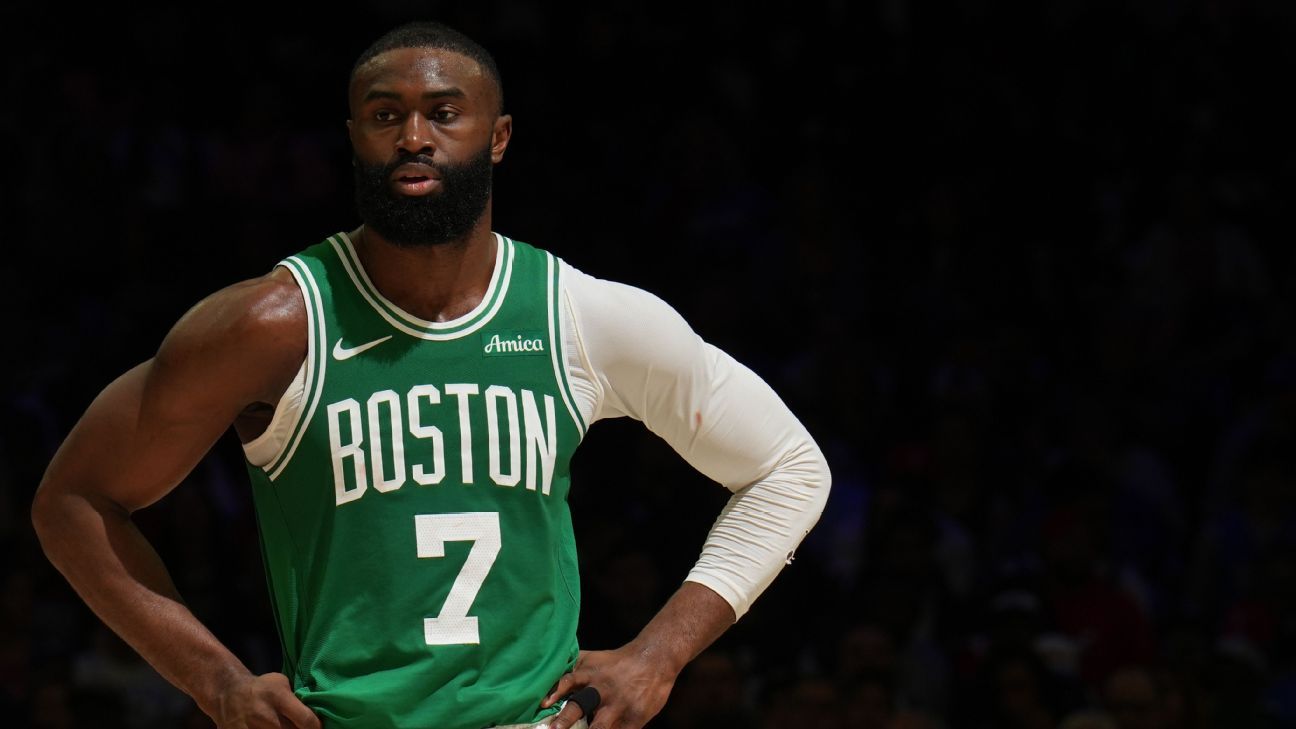
The impact has also been felt by some of the league’s highest-profile teams. The Boston Celtics pointed to the second apron as one factor behind their decision earlier this month to trade 2024 NBA Finals MVP Jaylen Brown to the Philadelphia 76ers. New York Knicks owner James Dolan, meanwhile, said the franchise intended to steer clear of second apron penalties despite winning the 2026 championship. Soon after, the Knicks lost backup center Mitchell Robinson in free agency.
“I don’t know that fans in Boston would say that everyone’s making out fine [in the current system], or that fans in New York would say that everyone is making out fine,” Kelly said at a news conference introducing the union’s new leadership team. “You have a [Celtics] team that just came off of a championship [in 2024] that will not have those guys together. We see that as a problem for our members, but also for the fans and for the game. … How do we make sure that whatever system we’re putting in place does not hurt fan interests and hurt players for the benefit of some sort of cost control for a certain number of owners?”
Houston Rockets guard Fred VanVleet, who serves as the president of the NBPA, said the players are not the only stakeholders raising questions about the impact of the aprons.
“We’ve seen more teams, GMs, front offices, owners and agents have issues and concerns with the apron as well,” VanVleet said. “That’s a little bit newer, right? We had to see it play out. It’s almost a consensus that it’s something that needs to be addressed.”
The NBPA also expressed dismay that the apron system was applying pressure on star players to accept discounted contracts to ensure their organizations could retain their teammates. San Antonio Spurs star Victor Wembanyama agreed to a five-year, $252 million rookie contract extension Friday when he could have been eligible for a five-year pact worth $302.8 million. Wembanyama appeared to reference his potential financial sacrifice in a social media post Friday: “Spurs family, I’m here to stay. Whatever it takes.”
“We think the players should make decisions for themselves and we should not be … pocket-watching,” Kelly said, when asked about Wembanyama. “The system should not require a player to carry all of that burden. We should not put a player in the position to carry the burden of keeping a team together.”
The apron system has been credited with leveling talent across the NBA’s 30 teams, and it has coincided with an unprecedented era of parity at the top of the league. For the first time in its history, the NBA has crowned eight different champions during an eight-year span. During that period, the Toronto Raptors and Denver Nuggets won their first championships, and the Knicks and the Milwaukee Bucks snapped long title droughts.
But Kelly noted that the ongoing parity era commenced before the apron system was installed.
“The apron’s been in place for three years,” he said. “For five years leading into the apron, we had parity. I don’t think the apron was necessary to create parity.”
Kelly said that it would be “fantastic” if the NBA and National Basketball Players Association could agree to “some tweaks” to the apron system during the current collective bargaining agreement. Otherwise, the issue won’t be addressed until the next round of labor negotiations, which could begin after the 2028-29 season if the owners or players exercise their ability to opt out of the current agreement.


