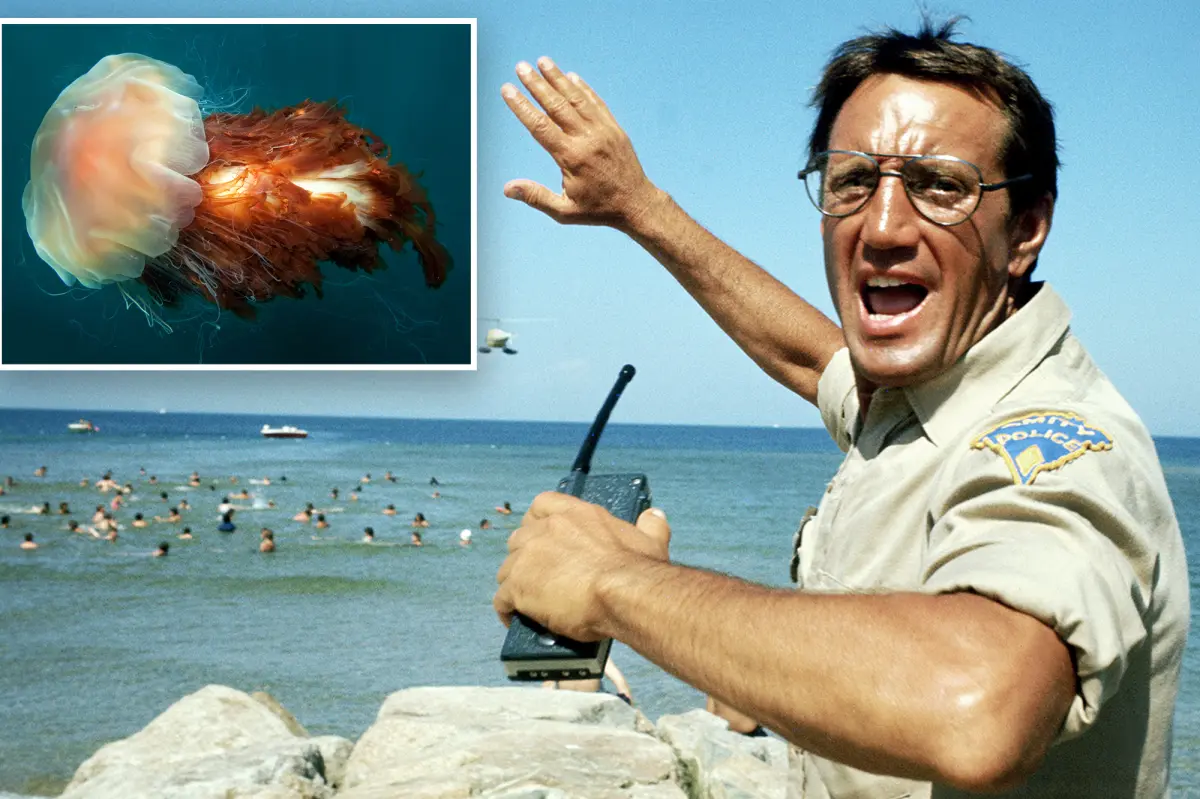

Massive blooms of lion’s mane jellyfish — giant creatures with tentacles that can reach 120 feet and remain capable of delivering painful stings weeks after death — are turning parts of New England’s usually charming shoreline into something out of a seaside thriller.
Communities and public agencies across Massachusetts have raised warnings as unusually large numbers of the intimidating jellies, some measuring about 6 feet across, drift into local waters and wash onto beaches.
“Keep children and pets away from stranded jellyfish. … Do not touch jellyfish or detached tentacles, even if they appear dead,” the coastal city of Beverly cautioned in a public-safety notice issued last week.
Experts told the Boston Globe the current influx appears to be the largest lion’s mane jellyfish event in the region since 2020.
Lion’s mane jellyfish rank among the largest jellyfish species on Earth, and the biggest specimen ever recorded was found off Massachusetts with tentacles extending 120 feet, according to Smithsonian Ocean.
The species is also known for its lingering threat: its tentacles can continue to cause painful stings for as long as 25 days after the animal has died.
On social media, beachgoers and local residents have reported sightings and strandings from the Nahant peninsula up to Salem, Massachusetts.
“Right now, Cape Cod is inundated with Lions Mane Jellyfish! Multiple thousands of them have gotten swept into the marsh with the tides,” Great Marsh Kayak Tours wrote on Facebook.
The Boston Center for Youth and Families warned in a post, “Jellyfish are visiting the beach at BCYF Curley Community Center in #SouthBoston and have stung some swimmers … swim at your own risk.”
Pete Gawne of the New England Aquarium told the Globe, “One of the questions we get a lot is how to predict this [situation], but there’s just so many inputs, from the water temperature to prevailing currents and wind that put these into contact with people.”
Contrary to myth, experts don’t advise treating a jellyfish sting with urine. Instead, pick any tentacle fragments out with tweezers, soak the affected area in hot water, and apply hydrocortisone ointment twice daily, the Mayo Clinic recommends.