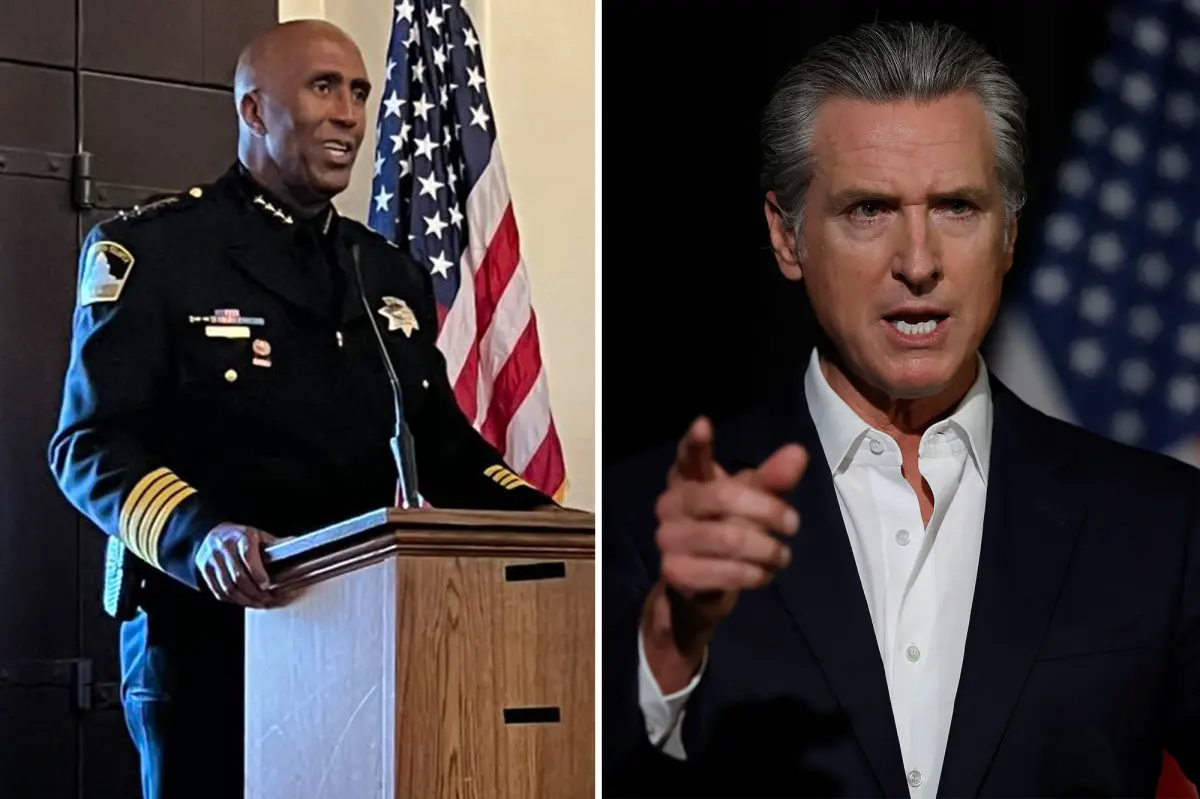

Sacramento County Sheriff Jim Cooper sharply criticized Gov. Gavin Newsom and state legislators, arguing that California’s crime policies have left victims behind and that leaders have been slow to act on reforms voters already endorsed.
In an extensive interview with KCRA 3’s California Politics 360, Cooper said he believes state officials have fallen short in addressing public safety concerns, pointing in particular to mental health diversion programs, domestic violence policies and the implementation of Proposition 36.
Asked how he would grade the response from the governor and Legislature on crime, Cooper gave an unambiguous answer.
“Not enough. Not enough,” he said. “It’s just frustrating that people are hesitant to do anything.”
His remarks come as California lawmakers enter the final stretch of the year’s legislative session, with about a month left to approve bills and send them to Newsom for consideration.
While California has recently recorded its lowest homicide rate in almost six decades, Cooper suggested the statistics may not fully reflect conditions on the ground, saying more action is needed to safeguard neighborhoods and better assist victims of crime, KCRA 3 reported.
Much of Cooper’s criticism centered on Proposition 36, the 2024 voter-approved law that increased penalties for repeat theft and drug offenses while giving certain defendants a path to dismissal of felony charges if they complete court-mandated substance abuse or mental health treatment.
The measure passed with support from roughly 70% of California voters and was approved in all 58 counties across the state.
“Not one statewide official supported it. And that’s troubling,” Cooper told the outlet.
While he argued the law has shown early signs of success, particularly with retailers reporting declines in theft, Cooper said the state has failed to provide enough money to make the initiative effective.
“The issue is no funding, no funding came with it.”
“It is working. But without funding, it doesn’t go anywhere,” he added.
State officials have said this year’s budget includes $375 million to help implement Proposition 36.
However, budget documents show only $50 million is specifically earmarked for the measure itself, with the money directed toward courts and pretrial services, KCRA reported.
Cooper also blasted California’s mental health diversion system, which allows certain defendants to receive treatment instead of traditional criminal penalties. He warned that expanding eligibility to include theft offenses would weaken Proposition 36 and reduce accountability for offenders.
“It would water it down,” he said, adding that some lawmakers “don’t want anybody held accountable.”
The Legislature and Newsom recently approved changes intended to tighten oversight of the diversion program, but Cooper argued the reforms still fall short.
“Some crimes are so shocking … you shouldn’t be eligible for mental health diversion,” he said, citing cases involving felony child abuse and sexually violent predators.
The sheriff also criticized California’s treatment of domestic violence offenses, arguing the state still refuses to classify them as violent felonies despite the severity of many cases.
During the interview, Cooper recalled investigations involving victims who suffered prolonged beatings and devastating injuries, including one woman who was allegedly assaulted for three days and another whose attacker gouged out her eyes.
“Domestic violence goes on every day. Doesn’t matter if you’re rich or poor. Happens in every neighborhood. We have to treat it seriously,” Cooper said.
Asked why some lawmakers oppose making domestic violence a violent felony, Cooper dismissed the rationale.
“They have no argument. They just vote against it.”
Cooper closed the interview by urging California leaders to shift their focus away from offenders and back toward those harmed by crime.
“We’ve got to get back to the victims,” he said.
Download The California Post App, follow us on social, and subscribe to our newsletters