
Matmos have long stood as one of experimental music’s most inventive duos, with landmark releases such as A Chance to Cut Is a Chance to Cure and acclaimed production work on classic Björk albums including Vespertine. Drew Daniel, one half of the group, has also built a remarkably prolific career outside Matmos. Beyond dreaming up viral music concepts, he continues to release music through his shape-shifting solo project, The Soft Pink Truth.
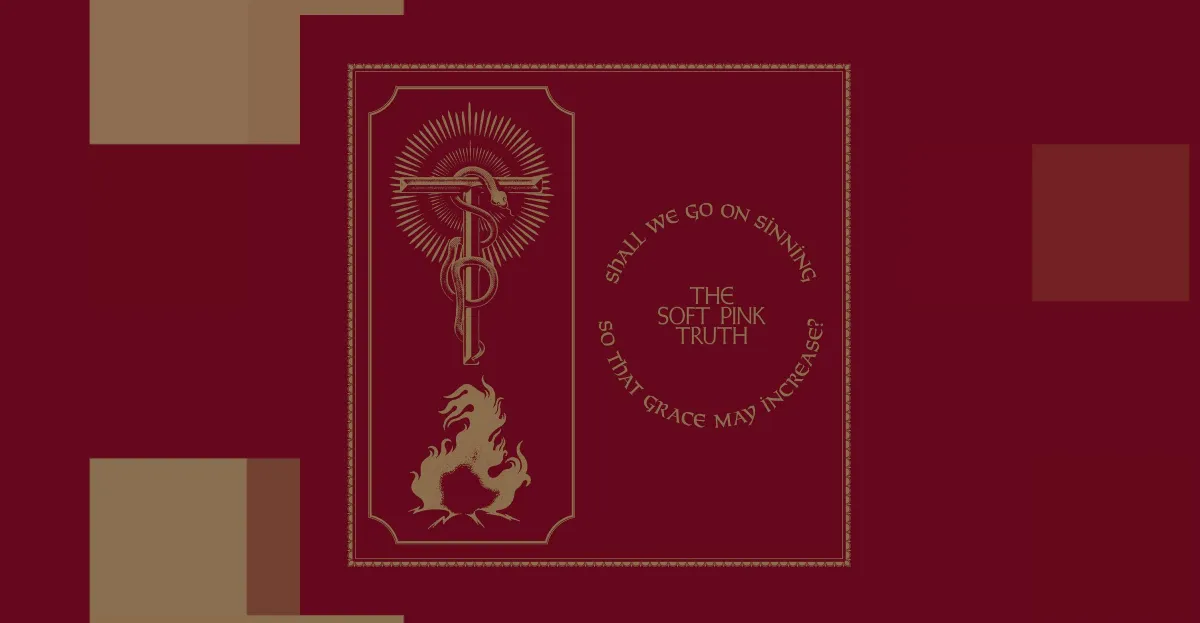
While Matmos often revolves around tightly defined experiments — crafting tracks from medical-procedure samples, for instance, or designing instruments from PVC pipes — The Soft Pink Truth is a freer outlet for Daniel’s impulses. Sometimes that means house music. Sometimes it means reimagined black metal. And on Shall We Go On Sinning So That Grace May Increase?, it results in a startlingly graceful, hopeful reflection on the spread of global fascism.
Shall We Go On is more understated than much of Daniel’s earlier solo work. Instead of leaning on distortion or overt house rhythms, the album moves toward something meditative, immersive and restorative. There are still plenty of warped field recordings and processed samples — familiar territory for anyone who knows Matmos — but here they take on a warmer, more ambient and organic character.
The opener, “Shall,” introduces the album with uneasy drones, intricate sonic details and a vocal chant that hovers just shy of the uncanny. It feels like a portrait of the world the record is trying to move beyond, before “We” arrives with a spare, new-age pulse. A softened four-on-the-floor kick supports metallic percussion, gusts of sound, soaring female vocals and flickers of piano, with the piece slowly expanding until it seems to lift upward.
“Go” continues the album’s calm dance-floor drift with a call-to-prayer-like passage, then gives way to the shoreline ambience of “On.” That track is built from spectral choral textures, fractured piano sounds and delicately plucked synth tones, creating one of the record’s most quietly absorbing moments.
All of this seems to be leading toward “Sinning,” arguably the album’s central statement. Free-form saxophone bursts mingle with bells and vibraphones, while another uncluttered four-on-the-floor beat gives the track a deep, irresistible sense of movement.
The word “jam” feels especially appropriate here. Earlier Soft Pink Truth releases, like much of the Matmos catalog, often rely on careful sample construction. Shall We Go On…, by contrast, places greater emphasis on live playing and the energy of musicians responding to one another in the moment. Where Do You Party? can feel precisely assembled, this album feels open, instinctive and alive, carried by its faith in creativity and art’s capacity to mend what is broken.
“So” acts as the release after the rapture of “Sinning,” with saxophones guiding listeners into the album’s second half, which flows as seamlessly as the first. A spare two-note drone becomes a recurring thread for other instruments to gather around, from the piano pedal grounding the ambient turbulence of “That” to the jazzy eruption of “Grace,” which appears to burst out of a sound resembling a car alarm on the verge of collapse.
“May Increase” spends its four-plus-minute runtime disassembling everything that “That” built up. All the chaos, all the noise, until it finally ends with a deep exhale.
The Soft Pink Truth’s Shall We Go On Sinning So That Grace May Increase? is available on Bandcamp and most major streaming platforms, including YouTube Music, Apple Music, Spotify, and Deezer.