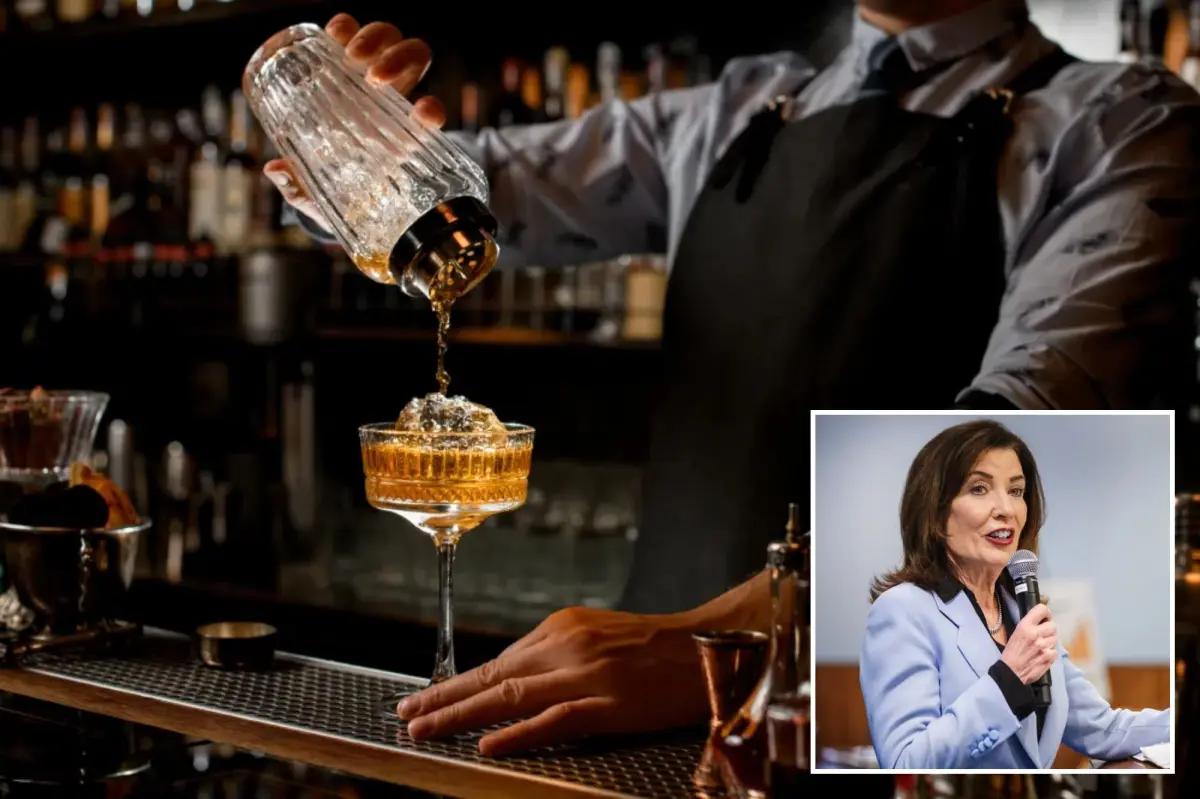

Raise a glass.
A coalition of business groups is rolling out a new effort to modernize New York’s alcohol sales rules, targeting Prohibition-era state laws that critics say still create unnecessary barriers for selling liquor nearly 100 years later.
The campaign, dubbed “Cheers for Change,” is backed by the Business Council of New York State, liquor store operators, bar and restaurant owners, and leaders across the hospitality industry.
The proposal calls for New York to:
Many of the state’s liquor rules date back to the years immediately after Prohibition ended in 1934.
Yet nearly a century later, businesses and consumers are operating in an entirely different 21st century economy, the coalition said.
Some of the old regulations have been updated, but much more needs to be done, the group said.
“New York has made real progress, and we applaud Governor Hochul, the Legislature and the State Liquor Authority for beginning the work of modernizing the state’s alcohol laws,” said Paul Zuber, executive vice president of the Business Council of New York State, in a statement.
“But there is still a long way to go,” he said. “New York’s hospitality economy, small businesses and consumers deserve a liquor law framework that reflects the realities of 2026 — not 1934.”
Andrew Rigie, executive director of the NYC Hospitality Alliance, said, “Updating the 200-Foot and 500-Foot Laws and modernizing tied-house restrictions will remove unnecessary barriers to opening and growing restaurants, bars, and other hospitality businesses, ensuring New York’s regulatory framework reflects today’s economy and consumer demand.”
Updating the state’s liquor law will help grocers and eateries, as well, the coalition said.
New York currently bars grocery stores from selling wine because of opposition from the liquor-store lobby.
During the past several years, the state has enacted a series of reforms, such as allowing more operational flexibility for restaurants and bars.
But some neighborhoods have complained about being inundated with bars and restaurants, and there will be resistance to scrapping or relaxing buffer zones between liquor establishments or near schools.
Any changes warrant scrutiny, said city Councilman Harvey Epstein, who represents the Lower East Side and East Village, where there is an abundance of establishments selling alcohol.
“We need a balance. We want to make sure there’s a dry cleaner, a dentist, a pharmacy, a card store in the neighborhood,” Epstein said.
The State Liquor Authority has recognized that New York’s alcoholic beverage laws remain burdened by outdated restrictions and that an overhaul is needed to support economic growth, job creation and consumer convenience,
A Hochul rep said the governor is on the case and already has scrapped some of the antiquated liquor laws.
“Governor Hochul remains committed to uplifting small businesses and supporting these vendors, including passing provisions in her FY27 budget that will protect retailers from unfair fees, help businesses open faster, streamline beer wholesale licensing and extend beverage services in movie theaters,” said Hochul rep Kassie White.
“Governor Hochul looks forward to working with all stakeholders during the next legislative session to build on this progress.”
The changes backed by Hochul include eliminating outdated restrictions on dancing and extending hours at bars and restaurants during events such as the FIFA World Cup.
In 2023, the Commission to Study Reform of the Alcoholic Beverage Control Law issued a report recommending additional changes to New York’s ABC Law, including changes to tied-house restrictions and consideration of easing the the 200-foot and 500-foot laws.
“Cheers for Change supports continued action on those recommendations and believes they should serve as a roadmap for the next chapter of liquor law modernization in New York,” the coalition told The Post.