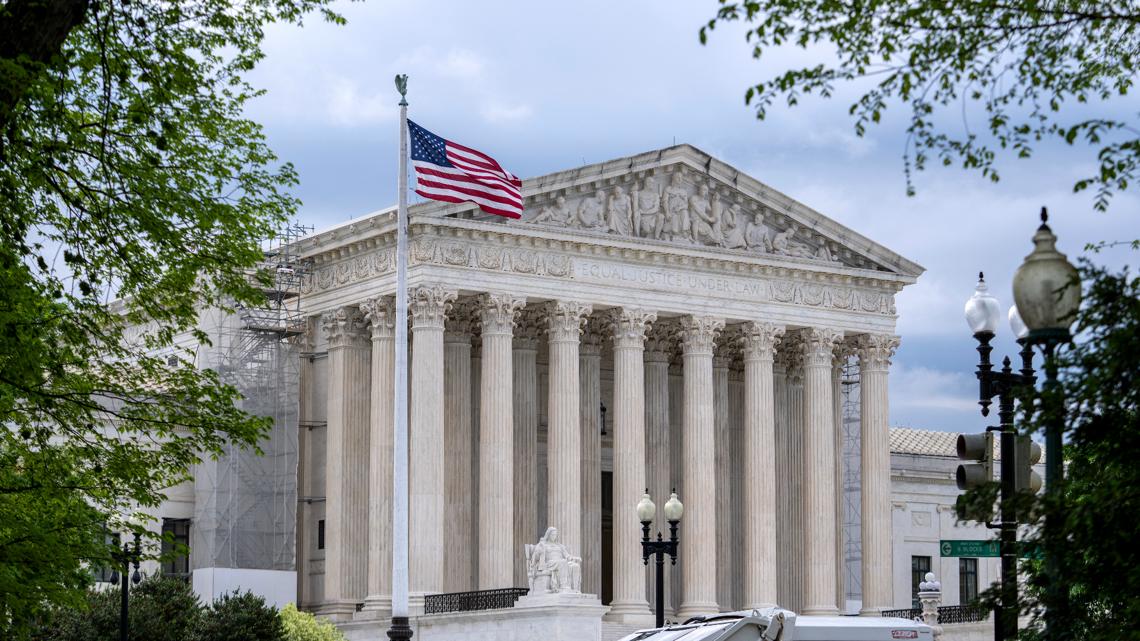

The Supreme Court is seeking $228 million for the coming year, with a sizable share of the request aimed at strengthening protection for the justices amid threats tied to their decisions.
WASHINGTON — Justices Elena Kagan and Amy Coney Barrett are set to make an unusual appearance on Capitol Hill Tuesday, arriving just weeks after the close of a consequential Supreme Court term.
The pair will testify before a House appropriations subcommittee as the court asks Congress for millions in additional funding to bolster security in response to increasing threats against members of the judiciary.
Judges nationwide have faced growing incidents of intimidation and threatened violence, including a bogus swatting call to police in May involving Barrett’s home.
The hearing follows by two weeks the end of a major term for the conservative-led court, which issued a string of high-profile rulings, including one expanding President Donald Trump’s authority over federal regulatory agencies and another rejecting his broad tariff policy, drawing sharp personal attacks.
It will be the first time Supreme Court justices have appeared before Congress to testify since 2019, and Kagan and Barrett may encounter a broad range of questions even as they try to keep the discussion centered on funding.
Security is central to the Supreme Court’s budget request
For the next fiscal year, the court has asked for $228 million in all, about 10% more than the previous year. Nearly $15 million of the proposal is designated for expanded personal security for the justices, including six additional agents assigned to each one.
The request also includes $2 million for an off-site residential security post intended to speed emergency response times, along with funding to increase the ranks of Supreme Court police officers.
The U.S. Marshals Service, responsible for protecting judges, reported 564 threats in the government fiscal year that ended in September, an increase from the year before.
That total includes threats to the hundreds of federal judges around the country, though the nine-member Supreme Court has not been immune.
In May, Barrett’s security detail worked with police to quickly deal with the call determined to be swatting, or a fake 911 call designed to provoke a police response. Last year, her sister was the victim of a bomb threat in Charleston, South Carolina, police said. No bomb was found.
In 2022, shortly after the leak of a draft opinion overturning the Roe v. Wade abortion decision, a would-be assassin was arrested near the home of Justice Brett Kavanaugh with weapons and zip ties.
Chief Justice John Roberts has condemned the threats to all U.S. judges, saying during a speech in March that criticism of judicial opinions is understandable, but personally directed hostility is “dangerous, and it’s got to stop.”
Copyright 2025 Associated Press. All rights reserved. This material may not be published, broadcast, rewritten, or redistributed.