
Universal Pictures
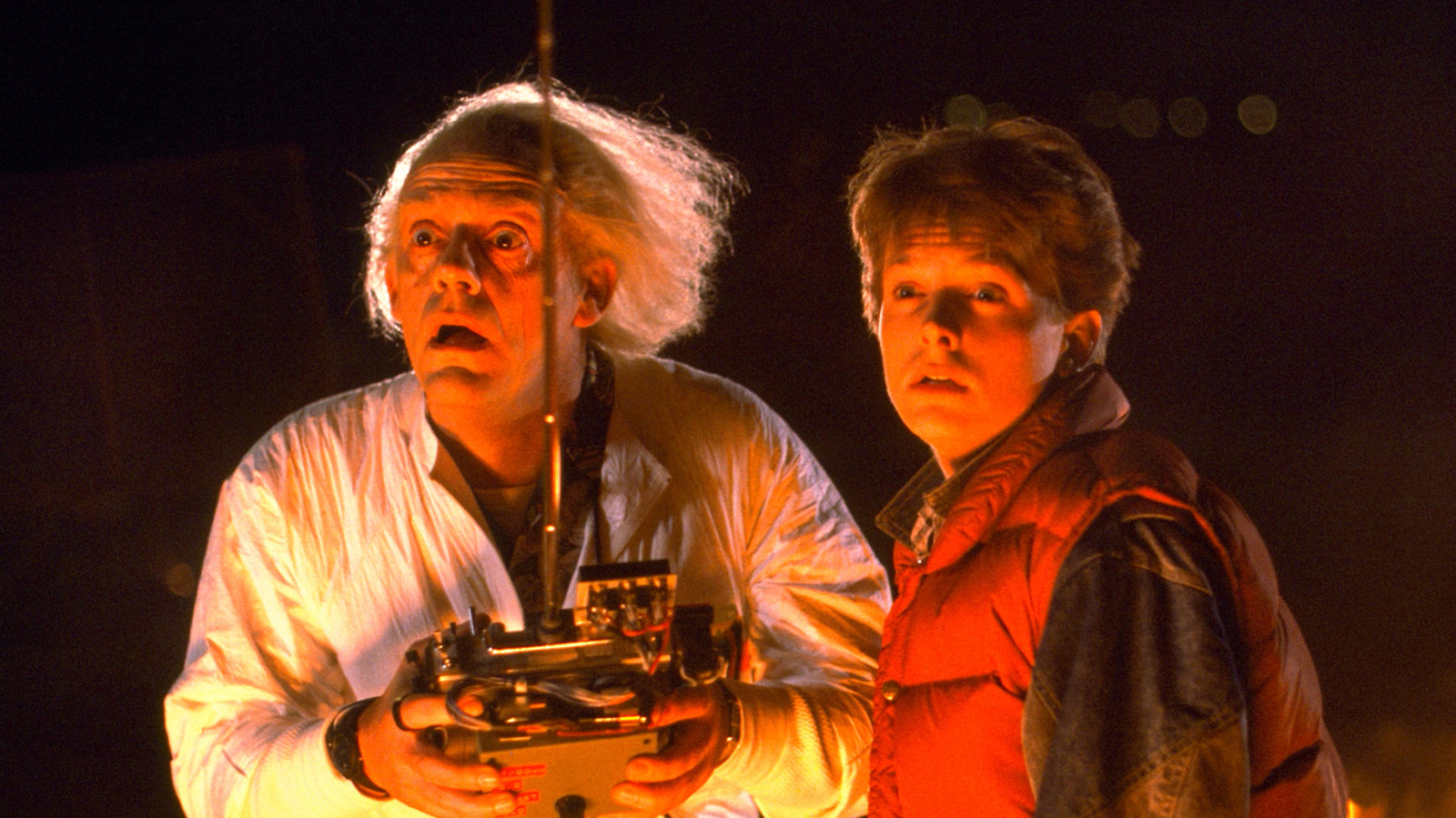
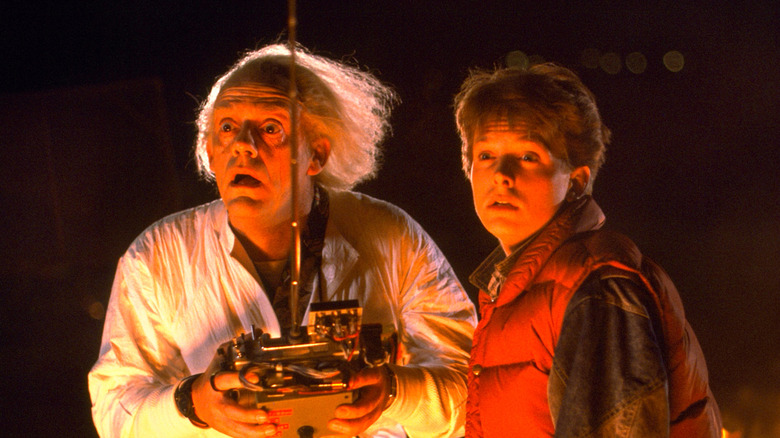
“It don’t take money/don’t take fame/don’t need no credit card to ride this train,” Huey Lewis and the News famously sing in “The Power of Love,” the song that helps launch the original “Back to the Future.” The line does more than capture the rush of being smitten; it also speaks to the film’s universal appeal. The magic of the first “Back to the Future” doesn’t depend on expensive effects literacy or film-school credentials. Viewers from virtually any background can savor the endlessly entertaining story of 1985 teen Marty McFly (Michael J. Fox), who is accidentally sent back to 1955 in a time-traveling car built by his eccentric friend Doc Brown (Christopher Lloyd).
The original “Back to the Future” became such a major hit that, in classic Hollywood fashion, it was never likely to remain a standalone success. In time, the franchise expanded into a full “Back to the Future” timeline with two additional sequels. The trilogy rests on the legacy of one of the most beloved mainstream films of the 1980s, but not every trip with Marty McFly reaches the same level. Ranking the “Back to the Future” movies from weakest to strongest shows that director Robert Zemeckis and his collaborators did not always recapture the lightning of the first installment.
Still, looking back at the trilogy this way also highlights just how high its best moments soar, especially the remarkable achievements of the original film. So hold tight to “the power of love” as we travel through this ranking of the “Back to the Future” movies.
3. Back to the Future: Part II
Universal Pictures
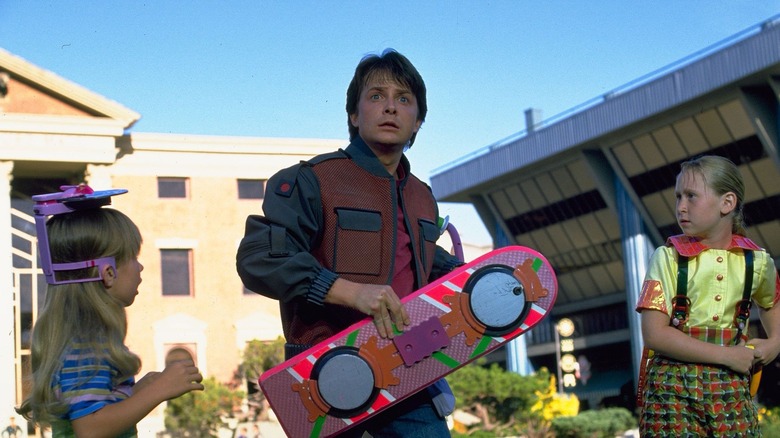
“Back to the Future: Part II” is not a franchise-destroying sequel, nor does it completely undermine the satisfying ending of the first movie. Even so, Marty McFly’s second cinematic adventure suffers from several of the same creative issues that drag down lesser follow-ups. Chief among them is the film’s fixation on replaying moments from its predecessor. The third act, in particular, becomes overly invested in placing characters around the edges of scenes from the original “Back to the Future.” The callbacks grow too familiar to feel fresh, while the new ideas from Robert Zemeckis and his team are not always strong enough to compensate.
The decision to use multiple versions of Biff (Thomas F. Wilson) as villains, for instance, quickly becomes a case of overdoing a reliable ingredient. Like many disappointing sequels, “Back to the Future: Part II” confuses more with better. Even the 2015-set future sequences, despite some playful costume and production design, often feel like a less inspired variation on the original film’s 1955 fish-out-of-water comedy. “Back to the Future: Part II” benefits from committed performances, especially from Michael J. Fox and Christopher Lloyd, but even their energy cannot fully lift the material.
In the end, “Back to the Future: Part II” is too busy, too derivative, and too enamored with its own callbacks to stand among the trilogy’s best. There are certainly worse sequels, but there are also far more rewarding follow-ups worth revisiting.
2. Back to the Future: Part III
Universal Pictures
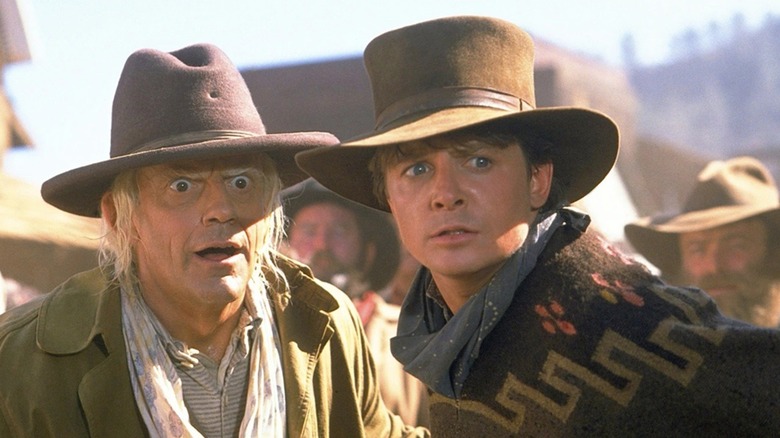
Much like “Jurassic Park,” “Back to the Future” is the kind of blockbuster that never truly needed a sequel; its story and pleasures were complete enough to thrive as a one-and-done classic. That is especially apparent given that the two sequels were filmed back-to-back and often feel like pieces of one extended continuation. Even with that caveat, “Back to the Future: Part III” manages to be charming, funny, and easy to enjoy. Is it essential? Maybe not. But by leaning into the traditions of classic Westerns, it brings noticeably more momentum and personality than the installment that came directly before it.
Sending Marty McFly and Doc Brown into a world of dusty streets, tumbleweeds, and “High Noon”-style showdowns gives the third film a flavor distinct from the first two entries. Zemeckis also stages the locomotive-centered action with real flair, delivering some of the movie’s most memorable set pieces. There is also genuine warmth in the romance between Christopher Lloyd’s Doc Brown and Mary Steenburgen’s Clara Clayton. By giving the trilogy a clear and concrete conclusion, “Back to the Future: Part III” ultimately leaves a more satisfying impression.
Sequels to “Back to the Future” were always going to feel a bit like hollow encores. Even with that reality and such shortcomings like too many key elements echoing the original, at least “Part III” rounds up more specificity and fun than “Part II.”
1. Back to the Future
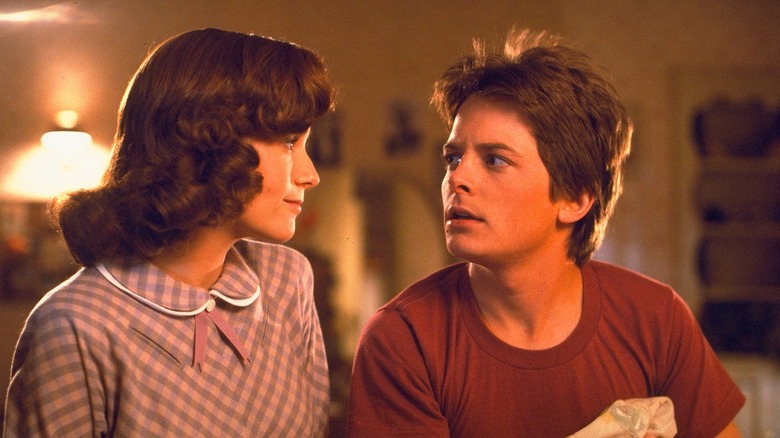
Universal Pictures
While its sequels are full of creative caveats and glaring shortcomings, the original “Back to the Future” is a spellbinding creation whose potency hasn’t been diluted in the decades since its release. This project put director Robert Zemeckis on the map and is so much darn fun, right from its very first sequence set to the jaunty tune “The Power of Love.” From there, “Back to the Future” keeps on delivering a steady stream of witty jokes, creative obstacles, and memorable images (such as the entirety of the clock tower finale). This enterprise is lively on its feet, conjuring increasingly exciting ways to execute its basic concept of a 1980s teenager ending up back in 1955.
Best of all, “Back to the Future” is a richly human production whose endearing qualities emanate from its engaging performances. Michael J. Fox is the perfect everyman to anchor this high-concept story. Fox constantly exudes a believable underdog aura to Marty McFly that makes it extra exciting to watch him navigate time travel shenanigans. Meanwhile, Christopher Lloyd is kooky fun playing both versions of Doc Brown. The conviction, sincerity, and artistry underpinning these essential performances is mirrored by Alan Silvestri’s consistently transportive score.
Decades after its release, many consider “Back to the Future” to be the best sci-fi movie of all time, and it’s not hard to see why. All the stars aligned for a movie that continues to dazzle.


