

ABC
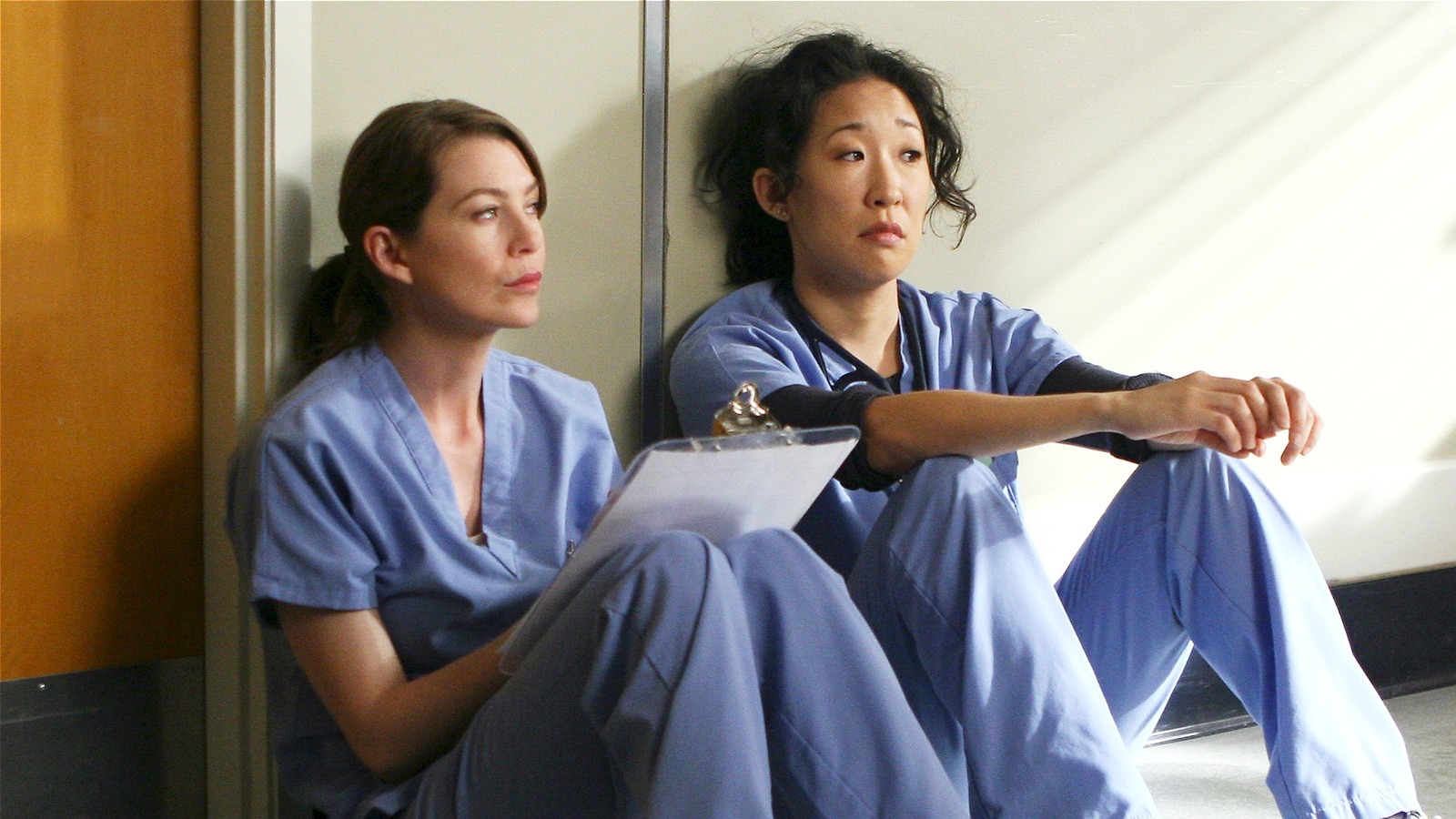
“Grey’s Anatomy” has been part of television for so long that Katherine Heigl, the youngest member of the original cast, is now nearly old enough for AARP eligibility. Clearly, the series has figured out how to keep audiences invested. Its success is not limited to loyal viewers, either: the enduring medical drama has earned close to 40 Primetime Emmy nominations, including two nods for outstanding drama series.
That does not mean the show is beyond criticism, particularly in its later era. For many viewers, there is a growing sense that “Grey’s Anatomy” has stretched its run past its natural endpoint — even one of our biggest fans on staff, Nina Starner, had reached that point by 2023. Nevertheless, the series is still going, with its future confirmed through at least 2027.
The good news is that there are stronger medical dramas available, whether you once loved “Grey’s Anatomy” and drifted away or never connected with it in the first place. The shows below stand out because their character conflicts tend to be less soap-operatic — or far more restrained — their medical cases are less dependent on gimmicks, and, frankly, the writing and performances are more consistently impressive.
The Pitt
HBO Max
The newest title here, “The Pitt,” has only completed two seasons so far, but it is already making a convincing case for a place among the great medical dramas. Led by Noah Wyle — whose earlier work in the genre will come up again later — the series is set inside the emergency department of a fictional Pittsburgh hospital. Its defining formal hook is that it unfolds in real time, with each 15-episode season covering one intense 15-hour shift.
Wyle has suggested that “The Pitt” could be around for the long haul, while also joking that if it ran as long as his previous medical series, he would be nearing 70 by the finale. However long it lasts, the early signs are extremely promising. Season 1 won the Primetime Emmy, Golden Globe, and Critics Choice Award for best drama in 2025, along with multiple acting honors for Wyle and his castmates. Season 2 has already picked up a fresh wave of nominations in the first half of 2026.
House, M.D.
Fox
It is strange how rarely “House, M.D.” comes up now, considering it was once among the biggest shows on the planet. Maybe the television landscape has become too crowded, maybe it ended before endless cable reruns became a major engine of longevity, or maybe it is simply too prickly and demanding to function as comfort viewing in the way “Grey’s Anatomy” often does. Whatever the reason, its diminished presence in the broader pop-culture conversation does nothing to lessen its brilliance.
Hugh Laurie anchors the series as Dr. Gregory House, a physician whose genius is matched only by his abrasive personality. His terrible bedside manner and ongoing struggle with painkiller addiction are offset by a near-unmatched ability to identify rare, confounding conditions that have baffled every other doctor. Over eight seasons, “House” won five Primetime Emmys — a modest total given the stiff competition from shows like “Mad Men,” “Breaking Bad,” and “Game of Thrones” — but it still amassed an impressive 25 nominations.
The Knick
Cinemax
“The Knick” traveled an unusual path, from an underseen Cinemax original to a hidden gem now available to watch on HBO Max. Across its two seasons, and in the decade since its conclusion, the series never quite received the level of attention it deserved. Had it aired on a higher-profile cable network, or arrived as a streaming original during the medium’s current era of dominance, we might be talking about its ninth or tenth season today. Instead, we have 20 excellent episodes of a period medical drama that remains easy to find, watch, and binge.
Set in a New York City hospital at the turn of the 20th century, “The Knick” centers on Dr. John Thackery (Clive Owen), who privately battles an opium addiction but publicly is well respected for his skills. He is also frequently at the forefront of new advances in surgery and medicine. It also sees Dr. Algernon C. Edwards (André Holland) be frequently dismissed for his skin color, despite the fact that he is twice as educated and as qualified as any of his racist peers.
Talk of a spin-off of “The Knick” that takes place 20 years later was first mentioned in 2021, and the concept was still alive as of 2023. Unfortunately, there’s been little motion on the project since. Meanwhile, do your part and volunteer to watch one of the greats.
St. Elsewhere
NBC
The fact that “Grey’s Anatomy,” or any other show on this list, even exists in the first place is thanks to “St. Elsewhere.” To be fair, all TV dramas in general, as we know them today, owe “St. Elsewhere” a debt of gratitude. When it first debuted in 1982, it — along with its police procedural sister show “Hill Street Blues,” which premiered a year earlier — broke new ground. It did away with the campy melodrama that marked most TV dramas of the ’70s while choosing not to emulate the overly cool, highly stylized dramas that were its peers in the ’80s.
The result was that “St. Elsewhere” brought a new kind of realism, grit, and edginess to medical dramas that hadn’t been seen before. That would then lay the foundation for all the shows that followed. Taking place in the fictional Boston medical facility St. Eligius Hospital — and if you know the controversial ending of “St. Elsewhere,” you’ll know just how “fictional” it really is — it balanced the complex ecosystem of a varied medical facility with the office politics and personality clashes that go along with it. It was also noteworthy for being one of the earliest screen credits of one award-winning star Denzel Washington, hard as it is now to imagine he was ever just a guy on TV.
ER
NBC
While “St. Elsewhere” opened the door, “ER” came flying through it with a crash cart at hand. How good is “ER”? Well, it’s the only medical drama on our list of the best TV shows of all time, a list with over 100 entries to sort through. Where it most crucially upped the ante of “St. Elsewhere” is its focus primarily on the emergency room of the hospital, meaning everything was more consistently tense, loaded with high stakes, and impossible to look away from. It also featured its own future movie star — George Clooney — who went from being a doctor on this show to becoming one of Hollywood’s biggest and most acclaimed actors.
“ER” isn’t wall-to-wall action, similar to “The Pitt,” and it’s untethered to any real-time premise. With an average of 22 episodes a season, it has more room to slow down, allowing for all that same intrapersonal friction (writ large here) while battling the complexities of the ever-evolving medical field. And while there is plenty of attention paid to the various characters’ friendships and romances, it never felt like it devolved totally into soap opera territory like “Grey’s Anatomy” often does.
“ER” is also, of course, the other Noah Wyle medical vehicle, making him (then a young, fresh-faced Dr. Carter and not the extraordinarily tired Dr. Robinavitch of today) the only actor who appears on our list of the 10 best doctors in TV shows twice. What can be said? The guy’s good at his job.


