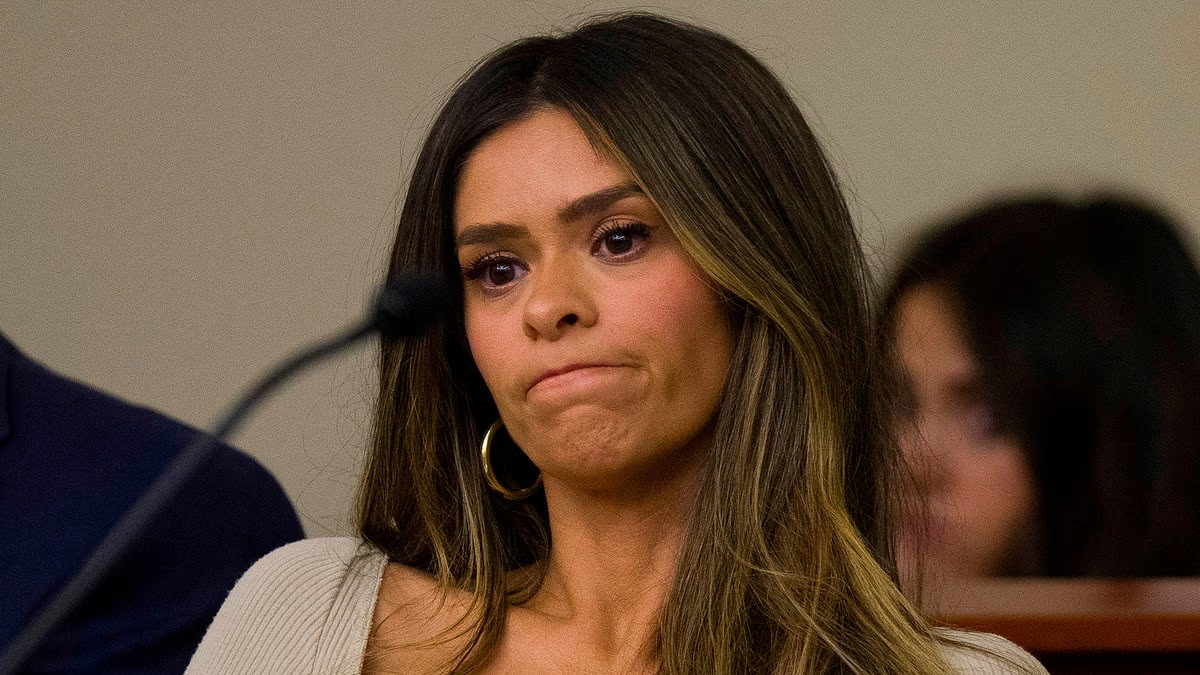

Utah child welfare officials have asked a juvenile court to place Taylor Frankie Paul’s three children under protective supervision, according to a newly filed petition.
The request, filed earlier this week, seeks an expedited hearing over concerns that the reality television personality’s children may have been “abused, neglected or dependent,” legal documents reviewed by TMZ show.
Paul, 32, is the mother of Indy, 8, and Ocean, 6, whom she shares with ex-husband Tate Paul. She also has a 2-year-old son, Ever, with former boyfriend Dakota Mortensen.
In the court filing, Utah’s Department of Children and Family Services asked a judge to determine whether the children fall under legal criteria that would allow the state to take additional protective action.
Potential next steps outlined in the petition include appointing a guardian ad litem to represent the children’s interests in court, along with further orders involving protective supervision services.
The Daily Mail has contacted representatives for Paul and Utah DCFS for comment. No response has been received so far.

Utah’s Division of Child and Family Services has filed a petition involving Taylor Frankie Paul, 32, asking a court to decide whether her children require protective supervision
The petition, submitted by the Utah Attorney General’s Office in coordination with DCFS, asks the court to move quickly by setting an expedited schedule for the juvenile court proceedings.
The reality TV star’s past history with the DCFS agency and her current custody battles were noted in the petition, according to TMZ.
Tate, Paul and Mortensen had been seen speaking with one another back in March outside a Utah courthouse, even as they were each seeking to obtain protective orders against Paul.
The Bachelorette star was seen attacking Mortensen with her minor daughter present in a 2023 clip TMZ posted on March 19.
The jarring video led ABC to abruptly shelve Paul’s season of The Bachelorette on the verge of its premiere.
Amid the latest developments, representatives for The Secret Lives of Mormon Wives alum told People that Paul ‘is not deterred by this transition.’
‘It was recently decided that the ongoing custody actions would be best suited for juvenile court, a common step for families engaged in highly contentious, complex custody matters,’ Paul’s spokesman told the outlet.
They said that Paul ‘welcomes the added structure and oversight it provides and looks forward to continuing her progress toward normalizing custody and becoming the healthiest version of herself.’

Paul ‘is not deterred by this transition’ amid the latest development in the case, according to her representatives

Paul is the mother to three children: daughter Indy, eight, and son Ocean, six, with ex-husband Tate Paul; and son Ever, two, with ex-boyfriend Dakota Mortensen
Paul ‘remains fully committed to doing whatever is necessary to reach that goal and will not be swayed from it,’ her reps said, adding that she ‘appreciates the professionalism of DCFS and its representatives.’
Utah DCFS program administrator Marnie Maxwell explained to ABC4.com in March how the agency approached situations as such.
‘Our job is to assess the overall safety of the children,’ Maxwell told the station, ‘and that could include not just what’s happening currently in the home, but also a review of the family’s history.
‘Removing a child from their home and their family can create a lot of trauma, and so we want to do what we can to create safety while leaving the children in the home whenever possible.’
Maxwell said the process ‘could involve safety planning, other resources,’ adding that at times, the family is asked ‘to bring in formal and informal support to try and help them keep the children safe while we continue to work with the family ongoing, but removal is the last option.’
Maxwell said that children taken out of their home by DCFS are sent to counseling, and that the issues in play impact all ‘different types of families.
‘There really aren’t any stereotypes,’ Maxwell told the outlet. ‘I think that’s why it’s important that we’re all familiar with the different resources, signs of potential abuse or neglect of children, so that we can help families access the resources that they might need.’